
4 Challenges Every Company Faces in an Agile Transformation
-
 Sanplex Content
 -

-
 14
14

No two agile transformations are exactly alike. Every organisation has its own structure, culture, pace of change, and internal resistance points. But if you have worked on multiple transformation programmes, you will notice a pattern: while the details vary, the biggest concerns tend to be remarkably similar.
Leaders driving agile change often wrestle with the same set of questions. Do we need outside consultants? How do we bring teams with us instead of forcing change on them? How should agile teams be evaluated? And what does business agility actually mean in practice?
Below are four challenges that almost every organisation encounters during an agile transformation.
1. Do you need external consultants to support an agile transformation?

Opinions differ, but in most cases, external support is extremely valuable, especially when the organisation does not yet have an experienced transformation lead or a mature internal coaching capability.
Even if your company already has a capable internal team, external consultants can still play an important role. What matters is balance. Companies should avoid one extreme of rejecting outside expertise altogether, but they should also avoid becoming so dependent on consultants that they fail to build their own internal capability.
One of the biggest advantages of external consultants is that they bring structure. Because they have seen similar transformations across different organisations, they can provide tested frameworks, practical ideas, and a broader perspective. Their experience often helps companies avoid common mistakes and move forward with more confidence.
External consultants also tend to have a credibility advantage. Employees often assume that an outside expert brings specialised experience and a fresh point of view. Ironically, the same message delivered by an internal colleague may be dismissed as unrealistic or overly theoretical simply because that person is already part of the day-to-day environment.
That said, external consultants should not become a substitute for internal ownership.
The way internal teams and external consultants work together should depend on the size and complexity of the transformation. In smaller teams, consultants may only need to provide methods, guidance, and short-term support. In larger organisations, they may remain involved for a longer period as strategic partners.
In either case, the goal should be the same: make full use of external expertise while continuously developing the internal team. The internal organisation must be able to continue the transformation after external support is reduced or removed. Consultants can help point the way, but long-term progress depends on the company’s own learning and execution capacity.
2. How do you work with teams during a transformation?
This is one of the most practical questions in any transformation effort. In some cases, a company assigns a leader to a team and asks that person to drive agile adoption. On paper, that sounds simple. In practice, it is anything but.
A transformation leader must do more than introduce frameworks. They need to understand the team’s current mindset, the pressures it faces, and how ready it is to change.
One common mistake is trying to change people’s beliefs too early. If you are working with a team that is already curious about new ways of working, it makes sense to run agile pilots and openly promote agile values. But if the team is cautious, sceptical, or resistant to change, the better approach is often to start with their real problems. Help them solve issues they already care about. Once the team begins to see results, it becomes much more open to discussing the thinking behind the methods.
Another mistake is rigid implementation.
Teams do not need to adopt every Scrum practice at once just because Scrum is well known. In many cases, it is far more effective to start with a few practical activities that are easy to introduce and clearly useful. Daily stand-ups and review meetings are often good entry points. Kanban can also be an effective starting method because it improves visibility and flow without requiring dramatic structural change.
Transformation leaders should also recognise that one person alone cannot drive lasting change.
If you are responsible for a team’s transformation, one of your early priorities should be to build more internal enablers. In a narrow sense, that may mean developing an internal group of agile coaches or champions. In a broader sense, it means helping everyone understand agile well enough to contribute to the change effort. That requires trust, distributed ownership, and a willingness to make use of different people’s strengths rather than centralising everything around one lead.
Leadership support is equally important, but it has to be used in the right way.
This does not mean using authority to pressure teams into compliance. It means making sure leadership actively communicates why the transformation matters, what value it creates for the business, and how success benefits both the organisation and individual employees. For that to happen, leaders themselves must understand and genuinely support the transformation. This is why transformation leaders should also invest in improving agile leadership among managers, helping them shift both mindset and management practice through coaching and training.
Ultimately, agile transformation cannot be pushed through by force. It needs to fit the context of the team and the organisation. Once pilot teams begin to see meaningful results, momentum grows naturally. If agile helps solve real problems, more teams will want to participate.
3. What is different about evaluating agile teams?
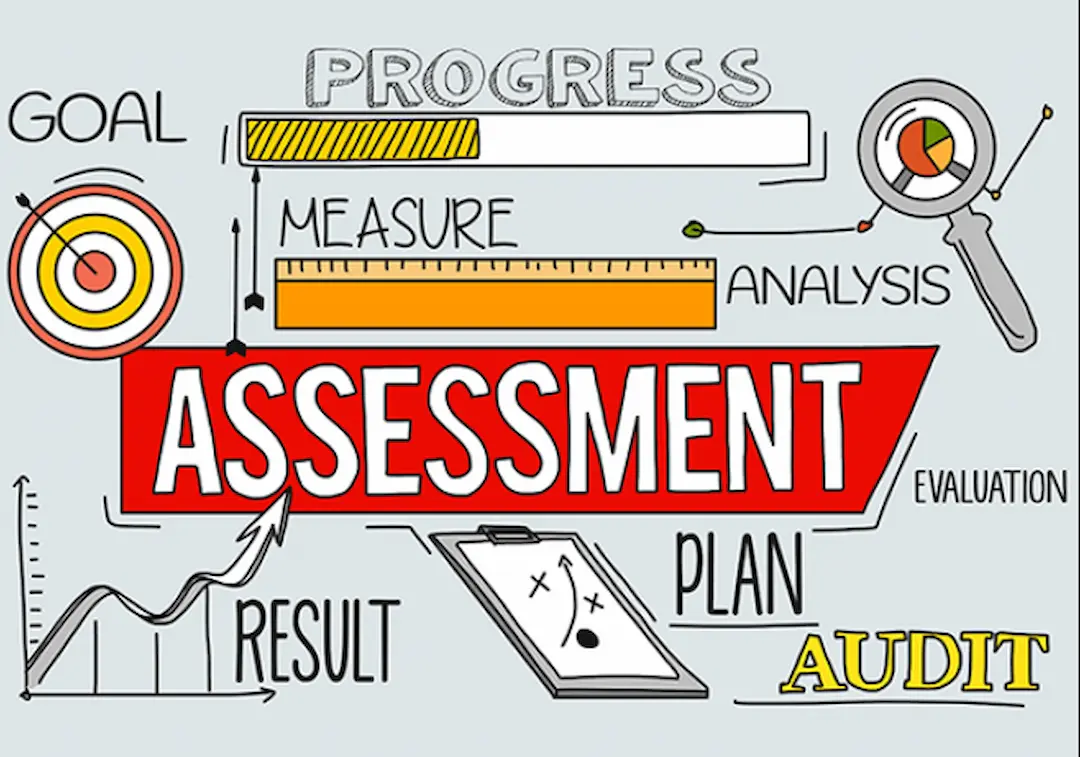
Performance assessment remains one of the most debated topics in agile transformation.
In recent years, many organisations have linked agile performance management with OKRs. Strictly speaking, OKRs are a goal-setting framework rather than a performance appraisal system. However, because many companies use OKRs as a practical alternative to traditional KPI-driven management, people often assume agile teams should move in that direction as well.
There is good reason for that. OKRs align well with agile thinking in many ways. But regardless of which method a company chooses, the deeper issue is not the label. It is the principles behind the assessment process.
The first principle is that evaluation should not depend on one person’s subjective judgement alone.
When performance reviews are driven entirely by a single manager, the results are often incomplete and sometimes unfair, especially in larger organisations. Leaders do not always see employees’ day-to-day contributions in full detail, and some high-value contributors are less visible simply because they do not actively promote their own work.
That is why multi-source input matters. If an employee reports to more than one leader, such as a functional manager and a project manager, both perspectives should be reflected. Peer feedback can also be extremely valuable, because colleagues often have a clearer view of daily collaboration, delivery quality, and team contribution than senior leaders do. A broader evaluation model usually produces more credible outcomes.
The second principle is that performance management must involve regular communication.
A common problem in traditional appraisal systems is that employees receive scores without meaningful discussion. They are left with questions, frustration, or disagreement but have no effective channel for feedback. Agile teams need a different rhythm. Frequent communication, regular review cycles, and transparent conversations about performance are essential. Assessment should not be a once-a-year event that surprises people. It should be part of an ongoing feedback loop.
The third principle is that motivation should be designed around real human needs.
The purpose of assessment is not punishment. It is to encourage growth, reinforce value-creating behaviour, and increase engagement. That means incentives cannot be limited to bonuses or ratings alone. Different employees are motivated by different things: growth opportunities, recognition, autonomy, influence, flexibility, and career progression may all matter. A more diverse and personalised incentive approach is often far more effective than relying only on financial rewards.
So even if a company still uses KPIs in some areas, agile thinking should push leaders to rethink how performance is understood, discussed, and supported.
4. What is business agility?
Business agility has become a widely discussed concept, but it is still often misunderstood.
Some people assume it simply means involving business teams in agile ceremonies or bringing non-technical departments into agile ways of working. That can be part of it, but business agility goes much further.
One useful perspective is to see business agility as the next stage in agile evolution. Agile started in software delivery, then expanded toward operations through DevOps, and now increasingly extends into how organisations respond to markets, customers, and strategic change.
At its core, business agility is about the organisation’s ability to continuously create customer value and adapt to change.
That is why the word business matters here. Business is ultimately tied to how a company survives, grows, and creates value in the market. In that sense, business agility is not just an internal management concept. It is closely related to customer satisfaction, competitive responsiveness, and long-term viability.
Some people may ask: has agile not always been about customer value?
Yes, but today’s environment is more complex and volatile. In a VUCA context, delivering customer value depends on many interdependent capabilities. Business agility relies on more than team-level agility. It also depends on organisational agility, cultural agility, technical agility, engineering practices, architectural flexibility, and even management and performance systems.
In other words, business agility reflects the organisation’s broader ability to keep delivering value while adapting to change.
Seen from this angle, digital transformation and business agility are closely connected.
Digital transformation is not just about digitising existing processes. At a more advanced level, it is about reshaping business models, capabilities, and operating methods through digital technologies. Its purpose is to help organisations evolve, innovate, and remain competitive in changing markets.
That is why digital transformation can be seen as an important enabler of business agility. The two are not identical, but they reinforce each other.
Bringing business teams into agile ways of working may be a useful first step, but it is not enough on its own. Business agility requires continuous exploration, adjustment, and learning across the organisation. It is not a one-time initiative. It is a long-term capability.
These four issues reflect some of the most common concerns organisations face during agile transformation. The road is rarely simple, and there is no single person who can deliver transformation alone. Sustainable results require collaboration, alignment, and ongoing effort across the entire organisation.