
Automotive Software PM: ISO 26262 & ASPICE Guide
-
 ali
ali -
 2026-07-10 02:44:00
 -
 0
0
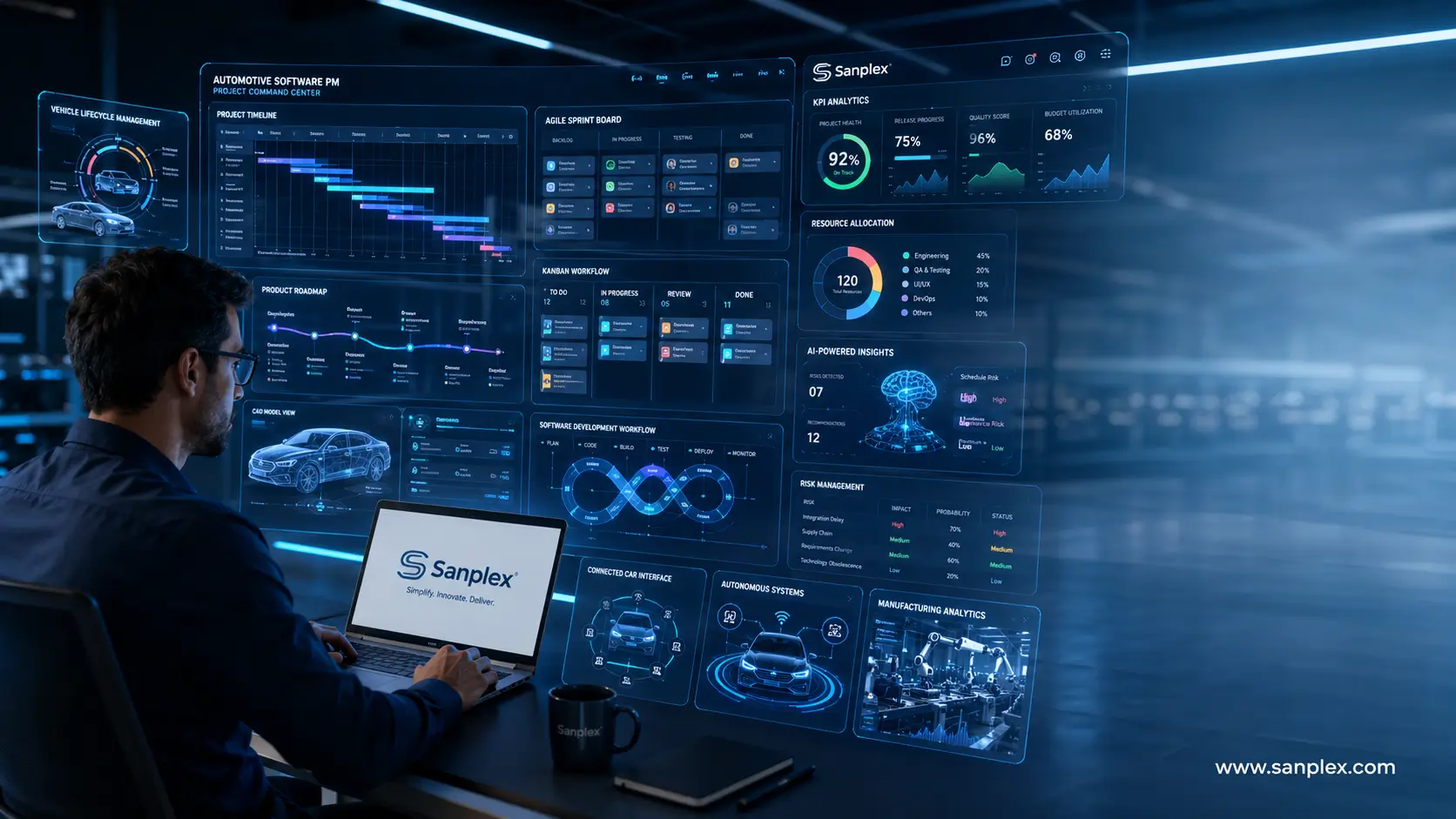
Automotive software development is at a crossroads that other industries need not endure. One wrong line of code in an infotainment software app is an annoyance. An Advanced Driver Assistance System (ADAS) is a single line of faulty code that could mean the difference between life and death. Automotive software projects are not the same sort of SaaS project or mobile application project that can be managed traditionally, however, and require a project management methodology that is functional, traceable and process-driven from the outset.
As a developer of automotive software, you've probably come across two acronyms several times: ISO 26262 and ASPICE. Both influence the way your teams inform, develop, experiment with, and record software, and both require a significant level of use of your project management software. This guide will describe what these standards mean for your PM process, how tools like Jira or Trello aren't up to the task and what real-world implications it would have to be compliant and audit-ready.
What Is ISO 26262?
The ISO 26262 standard is an international standard for functional safety in road vehicles. To ensure that if a vehicle's electrical or electronic system malfunctions, it does not create an unreasonable risk, including its software.
The essence of ISO 26262 is the introduction of ASIL (Automotive Safety Integrity Level) categorization that is based on 4 levels of risk, starting from ASIL A (lowest risk) to ASIL D (highest risk, higher demands). Your vehicle software's safety-related functions are each assigned an ASIL level, determined by a Hazard Analysis and Risk Assessment (HARA) methodology and the level of testing, documentation, and verification required to meet that ASIL.
The V-model development process is also documented in ISO 26262: every requirement listed on the left side of the "V" should have a corresponding verification or validation activity listed on the right side of the "V." This is not an optional architecture; it's the foundation of safety cases' construction and audits.
Key things ISO 26262 requires from your development process:
-
Documented hazard analysis and risk assessment for every function
-
Clear ASIL classification tied to specific software components
-
Full requirements-to-test traceability
-
Formal change management and configuration control
-
Independent verification and confirmation reviews at each safety level
What Is ASPICE?
Automotive SPICE (ASPICE) is a process assessment model—it does not dictate what you build, it dictates how well you need to define and control your process. ASPICE is structured around the process areas (SYS.2 System Requirements Analysis, SWE.1 Software Requirements Analysis, etc.), and each process is rated on a scale of 0 (incomplete) to 5 (optimizing).
While ISO 26262 is about functional safety, ASPICE is about process maturity, and evidence of the requirements flowing into design, design flowing into implementation, and implementation flowing back to requirements.
In reality, most OEMs and Tier 1 suppliers not only demand ISO 26262 compliance but also a minimum ASPICE capability level (typically Level 2 or 3) before they are ready to give an order. That is the perfect recipe for starting to collapse the generic project management tools and resources.
Why Traditional PM Tools Fall Short
Tools like Jira, Trello, or Asana were built for general software teams — they're excellent at sprints, boards, and backlogs, but they were never designed with regulatory traceability in mind. Here's where they typically fail automotive teams:
-
No native ASIL tagging — you end up bolting on custom fields and hoping they stay consistent
-
Weak traceability chains — linking a requirement to design, code, test case, and defect usually requires plugins or manual spreadsheets
-
No audit trail by default — proving who changed what, when, and why becomes a forensic exercise
-
Poor support for hybrid V-model + Agile workflows — most tools are Agile-only or Waterfall-only, not both at once
-
Fragmented documentation — compliance evidence lives outside the tool, disconnected from the actual work
This gap is exactly why automotive software teams need to think about project management software differently than a typical dev team would.
What Compliant PM Software Must Support
If you're evaluating or setting up a PM tool for ISO 26262 / ASPICE-governed projects, here's the non-negotiable feature list:
-
End-to-end requirements traceability—every requirement should trace forward to design and test, and backward to its source, with zero broken links
-
Hybrid workflow support — the ability to run V-model gates alongside Agile sprints, not one or the other
-
ASIL-based classification and tracking — safety levels should be a first-class field, not a workaround
-
Change and configuration management with full audit history — every edit logged, timestamped, and attributable
-
Built-in compliance documentation — safety cases, traceability matrices, and review records generated from actual project data, not recreated manually before an audit
-
Role-based review and sign-off workflows — independent verification steps required by ISO 26262 need to be enforced, not just encouraged
How Sanplex Supports ISO 26262 & ASPICE Workflows
Sanplex was built as a full project lifecycle management platform—covering Program, Project, Product, and Execution layers — which maps naturally onto the layered structure that automotive compliance demands.
That translates to safety-critically developed software like this:
-
There is no need to manually link or rely on third-party plugins to connect requirements, design artifacts, test cases, and defects; requirements are embedded in the platform's core structure.
-
But, with custom workflow configuration, teams can use Scrum, Kanban, Waterfall, or a hybrid model in parallel, which is just what an automotive project requires, given a V-model approach.
-
The program-to-execution hierarchy provides a clear structure to organize ASIL-classified components under their parent systems and ensure that safety-critical systems are visible at all levels of planning.
-
Audit-ready structure is one in which any changes, approvals and reviews are recorded during the use of the platform and not as if they were reconstructed after the fact for an assessor.
-
Data control options, including on-premise deployment, matter a lot for OEMs and Tier 1 suppliers with strict data residency and IP protection requirements.
Automotive teams — including manufacturers already running complex, multi-layered software programs — use Sanplex as a Jira alternative precisely because it doesn't force a choice between agility and compliance rigor.
Step-by-Step: Setting Up an ISO 26262-Ready PM Workflow
-
Map your process areas to ASPICE requirements — identify which SYS/SWE processes apply to your project scope before configuring any tool.
-
Classify components by ASIL level — complete your HARA early so risk classification exists before workflows are built.
-
Configure hybrid workflows—set up V-model gate reviews for safety-critical modules and Agile sprints for lower-risk components.
-
Establish traceability links — connect requirements to design, code, and test cases from the very first sprint, not retroactively.
-
Set up change control gates — require sign-off before any change touches an ASIL C or D component.
-
Generate documentation continuously — treat traceability matrices and review logs as living outputs, not end-of-project scrambles.
-
Run periodic internal audits — catch traceability gaps and missing sign-offs before an external assessor does.
Common Pitfalls in Automotive Software PM Compliance
-
Treating ASPICE as a one-time checklist instead of an ongoing capability that needs continuous evidence
-
Letting traceability drift—requirements change but the links to design and test aren't updated
-
Using disconnected tools for requirements, testing, and project tracking, creating gaps that auditors will find
-
Underestimating documentation overhead until right before a customer audit or assessment
-
Applying the same rigor to every component, instead of scaling process weight to each component's actual ASIL level
FAQs
Is ISO 26262 mandatory for all automotive software?
It's mandatory for any electrical/electronic system where a malfunction could create a safety hazard. Non-safety-related software, like some infotainment features, may fall outside its direct scope.
Can Agile and ISO 26262 compliance coexist?
Yes — many automotive teams run a hybrid model, using Agile sprints for implementation while maintaining V-model gate reviews and documentation for safety-critical components.
What ASPICE capability level do most OEMs require?
Requirements vary by OEM and program, but Capability Level 2 or 3 is a common minimum expectation for suppliers on safety-relevant projects.
Do I need separate tools for requirements management and project management?
Not necessarily—platforms with built-in traceability, like Sanplex, let you manage requirements, workflows, and execution in one connected system rather than stitching tools together.
How is ASIL different from ASPICE capability levels?
ASIL measures the safety risk level of a specific function under ISO 26262, while ASPICE capability levels measure how mature and well-controlled your development process is overall.
Conclusion
Compliance is not a one-time thing but a discipline that should be practiced throughout the software development lifecycle as well as an ASPICE discipline, as ISO 26262 and ASPICE are not just things to get through; they're a way to plan, build, and demonstrate safe and sound software development. If you attempt to shoehorn that discipline into a generic PM tool, you are most likely adding plugins, keeping parallel spreadsheets, and making a lot of scrambles before each audit.
A full lifecycle platform that natively supports traceability, hybrid workflow, and an audit-ready structure breaks that friction, allowing your team to concentrate on the creation of safe software rather than the administration of compliance paperwork.
In the event that your team is considering a project management platform that will truly be able to keep up with ISO 26262 and ASPICE requirements, look into Sanplex. Explore how Sanplex supports automotive software programs at sanplex.com, or reach out for a walkthrough tailored to your compliance requirements.