
Agile Practice: Why Small Releases in Scrum?
-
 Sanplex Content
 -
 2020-12-12 14:51:58
 -
 8126
8126
Extreme Programming and Small Releases
The concept of releasing frequently, rather than waiting for a massive release at the end of a long development cycle, originates from Extreme Programming (XP). Small releases are essential in XP, as they demonstrate the team's accuracy and alignment with the project goals. XP promotes small releases through continuous integration (CI) and other extreme programming practices. Small releases help deliver a working increment within a few weeks, allowing the Development Team to conduct regular weekly reviews.
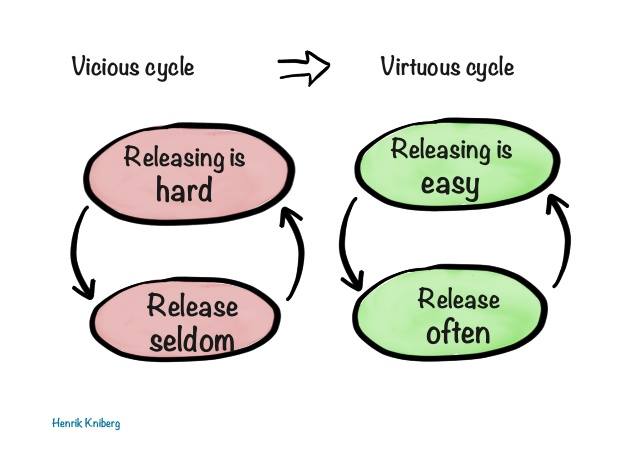
Advantages of Small Releases
There are many advantages to adopting a strategy of small, frequent releases. The primary benefit is that we deliver real business value in a very short cycle. This means we realize business value sooner, which increases customer confidence and results in happier clients.
Small releases also mean rapid feedback. By releasing software early, we receive prompt customer feedback, allowing us to adapt quickly to possible changes in the requirements. This prevents us from working on a project for six months, only to find out later that the customer wanted something else and we had gathered the wrong requirements.
Additionally, deploying and releasing product increments frequently provides developers with a continuous sense of accomplishment. It also significantly reduces risks. If we are heading down the wrong path or falling behind schedule, we will know immediately. These are key benefits of maintaining quick cycles and frequent releases.
Finally, as mentioned earlier, frequent releases allow us to quickly adapt our code to accommodate any new or changing requirements.
How to Do Small Releases
Before initiating a small release, you should ensure you are fully prepared by creating a comprehensive release plan. Release planning is used to define small units of value that can be delivered to the customer early in the project. During the release planning meeting, quantify the scope, resources, time, and quality. Ideally, keep the iteration to no more than two weeks.
After the release, conduct a retrospective to learn from the past and continuously improve your processes to better meet your customer's requirements.