Data Security Standards for Project Management Tools
September 10, 2026PUBLISHED INAgile
 ali
ali 2026-09-10 12:38:00
 0
0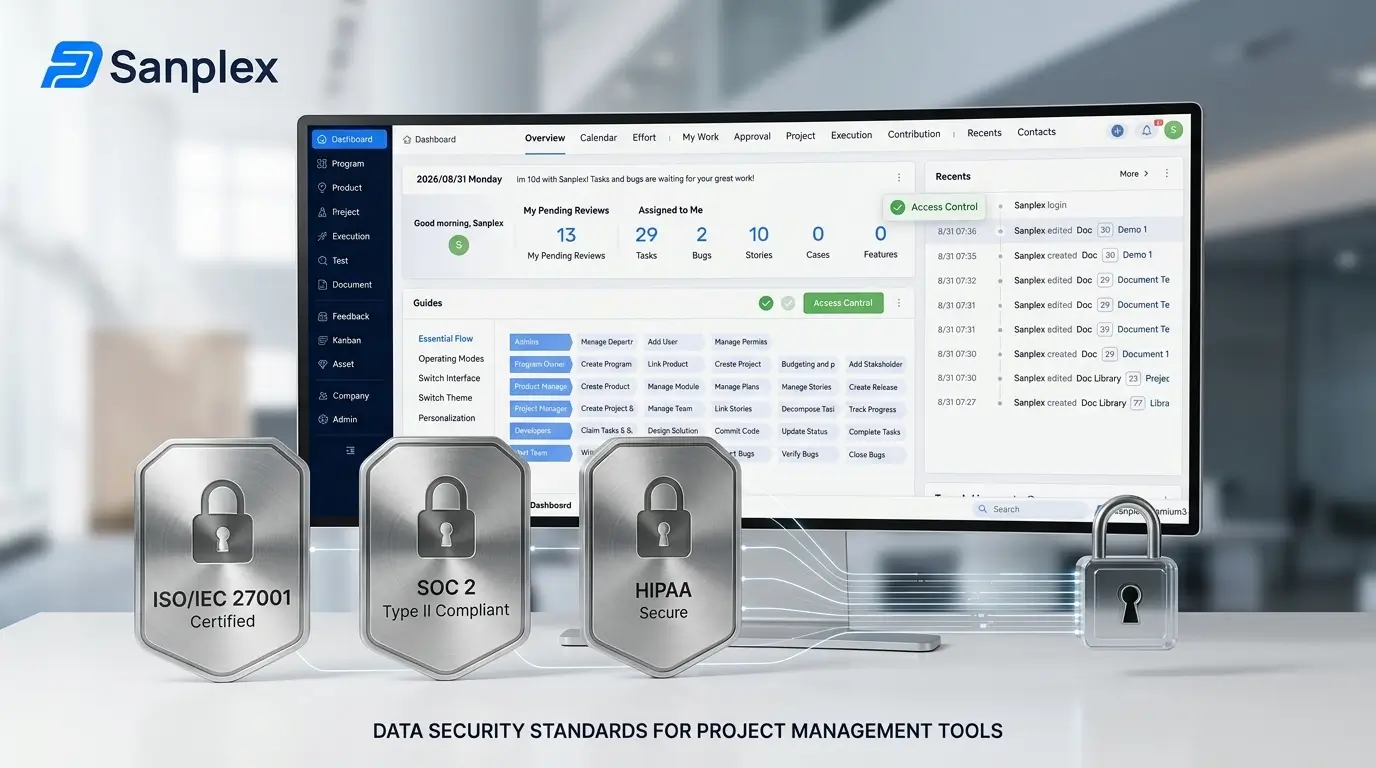
Project management tools end up holding more sensitive data than people expect, client names, internal financial figures in task descriptions, HR-adjacent information in onboarding trackers. Evaluating a tool's security posture properly means looking past marketing language like "bank-level encryption" and checking for specific, verifiable standards.
Certifications Worth Actually Checking For
-
SOC 2 Type II: verifies security controls were tested over a period of time, not just designed on paper. This is the baseline most enterprise buyers should expect.
-
ISO 27001: an international standard for information security management systems, broader in scope than SOC 2 and common among vendors serving global enterprise customers.
-
GDPR compliance: relevant if any users or customer data touch the EU, covers data handling, consent, and the right to deletion.
-
HIPAA compliance: only relevant if the tool will handle protected health information specifically, not a general-purpose requirement.
What These Certifications Actually Verify (and What They Don't)
A certification confirms a vendor's controls were audited against a defined standard, it doesn't guarantee the vendor is immune to breaches, no certification does. What it does provide is evidence of a structured security program, incident response processes, access controls, regular audits, rather than security being an afterthought. Treat certifications as a baseline filter, not a complete due diligence process on their own.
Encryption: In Transit and At Rest
Data should be encrypted both in transit (as it moves between your browser and the vendor's servers, typically via TLS) and at rest (as it sits in the vendor's database, typically AES-256). Ask specifically about both, a vendor emphasizing one without mentioning the other is worth a direct follow-up question rather than an assumption.
Access Control and Permission Granularity
Role-based access control, being able to restrict who sees what based on their actual role, not just a blanket "admin vs everyone else" toggle, matters more as an organization grows. Check whether permissions can be set at a granular level (specific projects, specific fields) or only broadly, since coarse permissions often mean people end up with more access than their role actually requires.
Data Residency and Deployment Options
For organizations with regulatory requirements about where data physically resides, or simply a preference for keeping data inside their own infrastructure, deployment flexibility matters as much as any certification. Sanplex supports both cloud and on-premises deployment, giving organizations the option to keep project data inside their own infrastructure rather than being limited to a single vendor's public cloud by default.
A Short Vendor Questionnaire Worth Asking Directly
What certifications do you currently hold, and can you provide the audit report?
A vendor confident in their security posture should readily share this, not just claim it in marketing copy.
Is data encrypted both in transit and at rest?
Get a specific yes or no for both, not a general statement about "strong encryption."
What does your incident response process look like, and how would we be notified of a breach?
A vendor without a clear answer here likely doesn't have a mature process.
Can permissions be set at a granular level, not just admin vs everyone?
Important for larger organizations with varied access needs across teams.
Do you offer on-premises or private deployment if we need it?
Relevant specifically for regulated industries or strict data residency requirements.
Want to see deployment options that fit your security requirements?
Visit Sanplex or book a demo to discuss your specific needs.
Related Blogs
Test Case Management: A Complete Guide