
Invictus: What a real Scrum Master is like
-
 Sanplex Content
 -
 2020-12-17 17:15:27
 -
 5270
5270
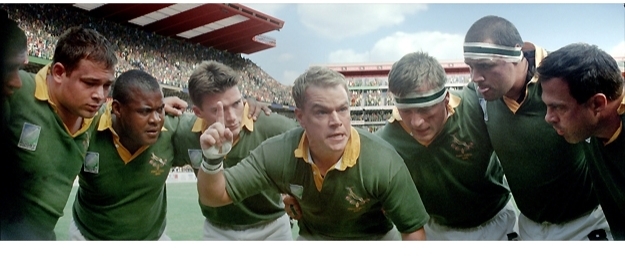
Invictus is a biographical film produced in 2009, directed by Clint Eastwood, and co-starred by Morgan Freeman, Matt Damon, and Tony Kgoroge. The film tells the story of Nelson Mandela and Francois Pienaar, the captain of the South Africa national rugby team, during the 1995 South African Rugby World Cup.
As the host of the 1995 Rugby World Cup, South Africa returned to the international sports family. However, the Springboks, South Africa's rugby team—whose players were all white—was regarded by the Black population as a symbol of racial discrimination. In order to break this barrier, Mandela (Morgan Freeman) supported the Springboks in playing against visiting teams. He talked to Pienaar (Matt Damon), the captain of the Springboks, and the two had a heart-to-heart conversation. In the end, Pienaar took the white players to visit all parts of South Africa, popularizing rugby among South Africans and making the sport a bond between Black and white citizens.
The Origins of Scrum
A scrum, short for scrummage, is a method of restarting play in rugby football that involves players packing closely together with their heads down and attempting to gain possession of the ball. Depending on whether it is in rugby union or rugby league, the scrum is utilized either after an accidental infringement or when the ball has gone out of play. Scrums occur more often, and are now of greater importance, in union than in league. Starting play from the line of scrimmage in gridiron football is derived from the scrum.
Hirotaka Takeuchi and Ikujiro Nonaka published “The New New Product Development Game” in the Harvard Business Review in 1986, attempting to describe how product development was evolving from the linear, phased approaches of the past to something entirely new. It was the first time that "scrum" was used in development to describe progress towards iterative, incremental product development practices.
“The traditional sequential or ‘relay race’ approach to product development […] may conflict with t
he goals of maximum speed and flexibility. Instead, a holistic or ‘rugby’ approach—where a team tries t o go the distance as a unit, passing the ball back and forth—may better serve today’s competitive requirements.”
The two researched how Japanese companies l
Scrum in software development means an agile framework for developing, delivering, and sustaining complex products, with an initial emphasis on software development. It is designed for small teams to break their work into goals that can be completed within a sprint, also known as a time-boxed iteration, most commonly lasting two to four weeks.
Scrum Master Responsibilities
The Scrum Master is in charge of developing and onboarding project teams, as well as incorporating them into the company and presenting a consistent view of the product. The Scrum Master also helps external groups and the project team communicate and share knowledge. They keep track of project success, give timely input, and foster an agile, learning community.
The Scrum Master holds a Daily Scrum meeting to get feedback on the project's success, fix future roadblocks, and keep the project on track. They also facil
Scrum Masters encourage the use of continuous integration (CI) and automation to increase performance. Developers use CI software to regularly merge chunks of code into a single repository, from which automatic builds and tests run in successive iterations. This repeatable technique decreases the risk,
For example, if a bug is found in one build, it can be easily patched in the next. Another agile approach Scrum Masters call for is "pair programming," in which two engineers work together in real-time at the same workstation. Overall, these methods shorten production time while improving product design and efficiency.
What Great Scrum Masters Do
The new Scrum Guide states that the Scrum Master is accountable for the Scrum team's effectiveness. Jeff Sutherland thinks the intent remains the same as in the past. But as Jeff and Ken were beginning to put this new guide together, Ken noted that the biggest problem in Scrum is the phrase "Servant Leadership." Many people have interpreted this to mean that they do not need to enable the team to improve, and that they are not responsible for that improvement. Now, Scrum Masters are explicitly defined as "leaders who serve."
Although the definition has evolved, the core responsibilities of the Scrum Master stay the same. According to Mountain Goat Software, a great Scrum Master should:
-
Never Commit the Team to Anything Without Consulting Them First
-
Remember You’re There to Help The Team Look Good
-
Don't Beat the Team over the Head with an Agile Rule Book
-
Nothing Is Permanent, So Experiment with Your Process
-
Ensure Team Members and Stakeholders View Each Other as Peers
-
Protect the Team, Including in More Ways than You May Think
-
Banish Failure from Your Vocabulary
-
Praise Often, But Always Sincerely
-
Encourage the Team to Take Over Your Job
-
Shut Up and Listen
While Scrum Masters are highly trained in several respects, they have a wide range of influence within every modern organization. Above all, they are in charge of introducing and applying agile practices to maximize team effectiveness, performance, and the consistency of the deliverables they have been charged with creating. A Scrum Master holds a significant position with vital obligations, and if you want to advance your career in this area, you should consider obtaining a Licensed Scrum Master certificate.
Happy Scrum!