Project Management for Hardware Development Teams
August 20, 2026PUBLISHED INAgile
 ali
ali 2026-08-20 16:20:00
 0
0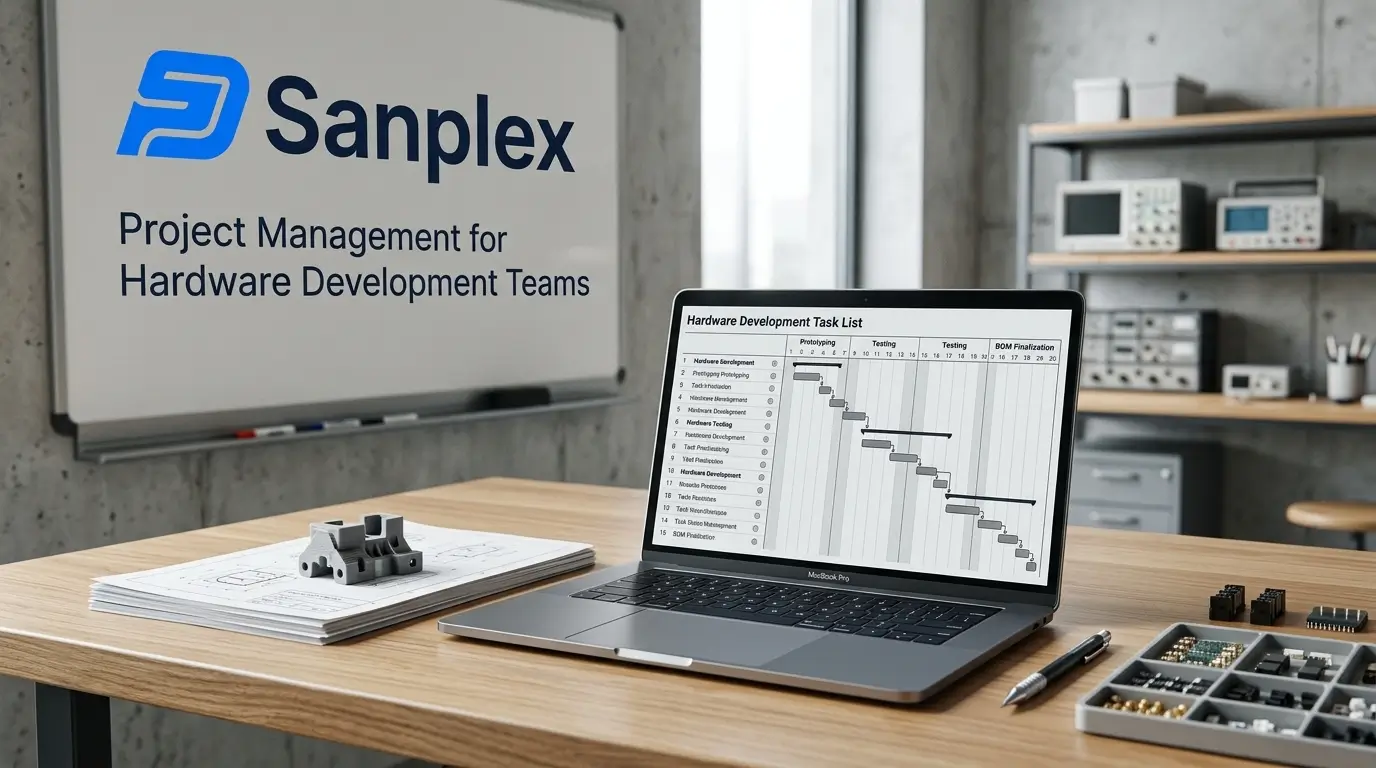
A software bug gets fixed with a deploy. A hardware bug discovered after tooling is cut can mean weeks of delay and real money spent redoing physical work. That asymmetry is the reason hardware development teams tend to outgrow software-first project management tools fairly quickly, the tools assume mistakes are cheap to reverse, and in hardware, that assumption is often just wrong.
What Actually Repeats Across Hardware Projects
A few patterns show up consistently regardless of the specific product: a bill of materials that changes as design decisions evolve, and needs version control just as much as source code does. Prototype iterations, each one a real, physical build with its own test results and issues found. Design reviews and DFM (design for manufacturing) checkpoints, formal gates before a design commits to expensive tooling. And hardware-software co-development, where firmware and embedded software need to track against a hardware revision that might still be changing underneath it.
Why Sprint-Based Tools Fit Awkwardly Here
A two-week sprint boundary doesn't map cleanly onto a six-week supplier lead time or a prototype build that takes a month to come back from a fab. Forcing hardware milestones into sprint-shaped chunks tends to produce either meaningless sprints (nothing meaningful finishes in two weeks) or a shadow tracking system running alongside the sprint tool to capture what's actually happening. Neither is a good outcome, and both point to the same root cause: the tool's underlying assumptions don't match the work.
Bill of Materials Version Control Deserves Real Structure
A BOM revision isn't just a task getting marked done, it's a specific, dated snapshot of exactly which components a design depends on, and changing it can ripple into cost, supplier lead time, and compatibility with other subsystems. Treating BOM changes with the same formality as a baselined requirement, a defined change process, a clear record of what changed and why, avoids the situation where two people are working from different, undocumented versions of what the design actually is.
Design Reviews Need a Documented Outcome, Not Just a Meeting
DFM and design review checkpoints exist specifically to catch expensive problems before they get baked into tooling or a production run. A review that happens as an informal meeting with no structured record of what was flagged and how it was resolved loses most of its value, since the whole point is having a decision trail to point back to if the same issue resurfaces later, or if a question comes up about why a particular design choice was made.
Keeping Hardware and Software Development Connected
Products with both a hardware and firmware or software component need those two workstreams to stay coordinated even though they often move at different speeds. Sanplex supports this by not forcing a single methodology across a product, a hardware workstream can run phase-gated with formal reviews and baselines while a firmware team runs sprints, inside the same Program and Product structure, so the two don't drift into separate, disconnected tracking systems that nobody's actually reconciling.
Requirements Traceability Through to Physical Testing
Just as with software, hardware requirements benefit from tracing forward to the design decisions that address them and the tests that verify them, thermal testing, EMI compliance, mechanical stress testing, whatever's relevant to the product. Sanplex's requirements and test case linkage isn't limited to software test cases specifically, the same structural traceability applies to physical test results tied back to the requirement they verify.
Frequently Asked Questions
Can Agile work for hardware development at all?
Elements of it can, particularly for the software or firmware side, but pure sprint-based Agile tends to fit poorly against physical constraints like supplier lead times and prototype build cycles.
Why does BOM version control matter so much?
Because a bill of materials change can ripple into cost, compatibility, and supplier commitments. Undocumented BOM drift is a common source of expensive, late-discovered mismatches between teams.
What's a DFM review, and why does it need formal documentation?
Design for Manufacturing review checks whether a design can actually be produced efficiently at scale. Documenting the outcome matters because it's a decision trail worth referencing if related issues come up later.
Can one platform manage both hardware and firmware development together?
Yes, if it supports multiple methodologies within the same product structure rather than assuming everything follows one process, which is common in Sanplex's approach.
Does requirements traceability apply to physical hardware testing, not just software?
Yes, the same structural linkage between requirement, design, and test result applies to physical test types like thermal, EMI, or mechanical stress testing.
Want to see how Sanplex handles hardware and firmware development together?
Book a demo and bring your current product structure to the conversation.
Related Blogs
Project Management Software for Healthcare Software Teams