Project Management Software for Finance Industry
August 19, 2026PUBLISHED INAgile
 ali
ali 2026-08-19 14:49:00
 0
0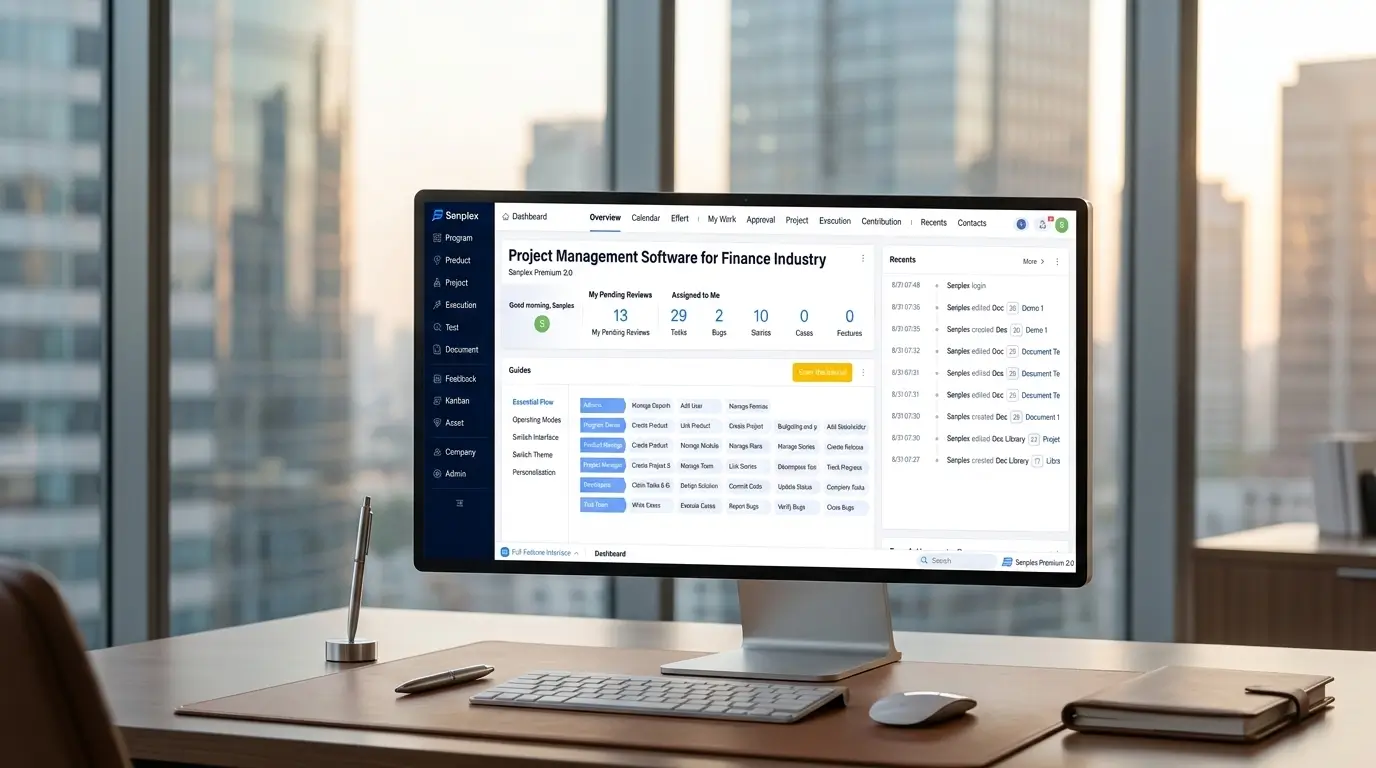
A software change at a bank or financial services firm rarely stays a purely technical decision. It usually needs sign-off from risk, a documented audit trail an examiner could review years later, and evidence that the change was tested against the specific requirement that drove it. Generic project management tools track tasks and deadlines well. They're weaker on the specific evidence trail that financial services compliance actually demands, and that gap tends to surface at the worst possible time, during an audit, not during day-to-day work.
Why Financial Services Projects Carry Different Requirements
Regulatory frameworks relevant to financial software, depending on jurisdiction and business line, can include SOX controls around financial reporting systems, PCI DSS for anything touching card payment data, and general data protection regulation for customer information. None of these are primarily about project management, but all of them create documentation obligations that flow directly into how project work needs to be tracked: who approved a change, what requirement it addressed, what was tested, and when it went live.
Change Management Needs to Be Formal, Not Informal
Many financial institutions run some version of a change advisory board process, where changes above a certain risk threshold need formal review and sign-off before deployment, not just a merged pull request. Project management software supporting this well needs explicit approval gates tied to specific people or roles, a record of what was approved and by whom, and ideally a way to tie that approval directly to the underlying requirement or risk assessment, not just a checkbox with no context behind it.
Audit Trails Need to Survive Longer Than a Typical Sprint Retrospective
A retrospective happens two weeks after a sprint and gets forgotten. A regulatory audit can happen a year or more after a change went live, and by then, institutional memory has usually faded. Software supporting this needs durable, structured records, not just chat logs or comments, that let someone reconstruct exactly what happened, why, and who approved it, well after the people involved might have moved to different roles or left the organization entirely.
Data Residency Is Frequently Non-Negotiable
Financial data sensitivity, combined with regulatory requirements that sometimes specify where certain data can legally reside, makes on-premises or tightly controlled deployment a common hard requirement rather than a preference. A project management platform that's cloud-only, with no option to keep data inside the institution's own infrastructure, is disqualified outright for a meaningful segment of financial services buyers before any feature comparison starts.
How Sanplex Fits This Specific Set of Needs
Sanplex supports CMMI-aligned process discipline, including concept item management, formal baselines, and review and configuration management, which map directly onto the kind of formal change control and traceability financial services compliance expects. Requirements link through to test cases and releases structurally, rather than through a parallel spreadsheet someone has to maintain by hand, and on-premises deployment is available for institutions that need design and project data to stay inside their own infrastructure rather than a shared public cloud.
What This Doesn't Replace
Project management software, however well suited to compliance needs, isn't a replacement for dedicated GRC (governance, risk, and compliance) platforms, core banking systems, or specialized financial reporting tools. The fit here is specifically the project and development lifecycle work, planning, requirements, testing, releases, that supports those systems, not the regulated financial systems themselves.
Frequently Asked Questions
Does project management software need to be SOX compliant itself?
The software itself isn't typically certified, but it needs to support the audit trail and change control practices that help an organization demonstrate SOX compliance for systems it's used to manage.
Is on-premises deployment always required in financial services?
Not always, but it's common enough that cloud-only platforms disqualify themselves for a meaningful share of financial institutions, particularly those with strict data residency requirements.
What's the risk of using a generic project management tool for regulated financial software changes?
The main risk is an audit trail that's incomplete or hard to reconstruct, since generic tools often weren't built with formal change approval and long-term record retention as a core requirement.
Does Sanplex replace GRC or compliance-specific software?
No, it supports the project and development lifecycle work with strong traceability and process discipline, but dedicated GRC platforms handle broader organizational risk and compliance management.
How does CMMI alignment help with financial services compliance specifically?
CMMI's emphasis on traceability, formal baselines, and documented review closely mirrors what financial audits look for, evidence of what changed, why, and who approved it.
Want to see how Sanplex handles formal change control and traceability?
Book a demo and bring your current compliance requirements to the conversation.
Related Blogs
Project Management Software for Manufacturing Teams