Top Test Management Tools Compared
August 6, 2026PUBLISHED INAgile
 ali
ali 2026-08-06 15:36:00
 0
0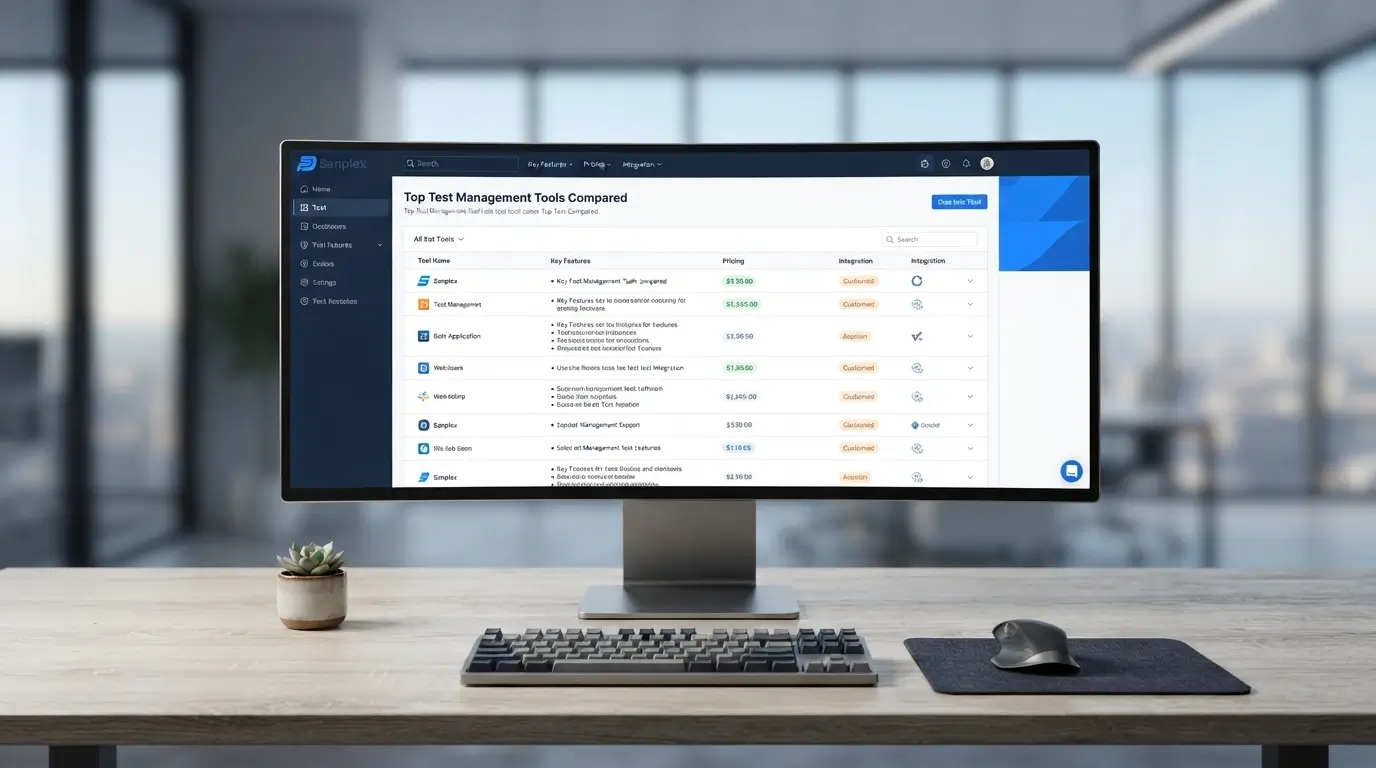
Test management tools split into two rough categories: standalone platforms built purely around test cases, execution, and reporting, and broader lifecycle tools that fold testing into requirements and release tracking. Which category fits depends on whether your team treats testing as its own discipline or as one stage in a larger development process that needs to stay connected end to end.
Here's a practical rundown of the tools QA teams actually evaluate in 2026, standalone and lifecycle-integrated alike.
Sanplex
Sanplex takes the lifecycle-integrated approach. Test cases link directly to requirements and bugs inside the same system used for planning and execution, so traceability isn't something you bolt on with a separate integration, it's how the platform is structured from the start. That matters most for teams that have been burned by test results living in one tool while requirements and releases live in another. Best for teams that want testing connected to the rest of development, not managed in isolation.
TestRail
A mature, feature-complete standalone platform, widely used for structured test case management and reporting. It's thorough and well-established, though several 2026 comparisons note it's on the pricier side with more limited AI-assisted authoring than newer entrants. Best for teams that want a proven, structured tool and don't need deep AI test generation.
Zephyr Scale
A Jira-native test management app from SmartBear, popular with teams that live entirely inside Jira and want tests managed as Jira issues without leaving that interface. The tradeoff is licensing, since Jira-native tools typically require Jira licenses for every user involved, not just testers. Best for Jira-committed teams that want richer test management features inside that ecosystem.
Xray
Another Jira-native option, often positioned as the more budget-friendly alternative to Zephyr Scale, with particularly strong support for BDD-style testing. Like Zephyr, it inherits Jira's licensing model, which can add up for larger QA teams. Best for BDD-practicing agile teams already inside Jira.
Qase
A modern, standalone platform known for a clean interface and AI-assisted test authoring, aimed at QA and dev collaboration without enterprise overhead. It's frequently recommended as a starting point for lightweight agile teams that want structure without a heavy administrative footprint. Best for smaller agile teams wanting a modern UI without enterprise complexity.
PractiTest
Positioned as a fuller lifecycle management tool rather than a pure test case repository, with stronger reporting and traceability features aimed at organizations that need audit-ready documentation. Best for teams needing enterprise-grade traceability and audit trails alongside test execution.
How to Actually Pick One
If your team already lives in Jira and has no plans to leave, a Jira-native option (Zephyr Scale or Xray) usually makes sense, since it avoids managing yet another separate tool. If testing needs to stay connected to requirements and releases without a patchwork of integrations, a lifecycle-integrated platform like Sanplex or PractiTest tends to hold up better over time. And if your team runs in a mixed toolchain, Jira plus GitHub plus CI/CD, a standalone tool built for flexible integration, like Qase, is often the more comfortable fit than forcing everything through a Jira-native plugin.
Regulated industries, banking, healthcare, government, should treat traceability and audit logging as a hard requirement, not a nice-to-have, regardless of which tool otherwise looks appealing.
Frequently Asked Questions
Do I need a separate test management tool if I already use Jira?
Not necessarily. Jira-native apps like Zephyr Scale or Xray add test management inside Jira itself. A separate standalone or lifecycle tool makes more sense if you want testing connected to a broader planning and release system beyond just Jira.
What's the difference between a test management tool and a full ALM platform?
A test management tool focuses on test cases, execution, and reporting. A full ALM platform folds that into requirements management, release coordination, and traceability across the entire development lifecycle.
Are AI-generated test cases reliable enough to use directly?
AI test generation is now standard across most leading tools in 2026, but it's best treated as a strong first draft. Human review before execution is still the norm across most QA workflows.
Is Sanplex a good fit for teams that just need basic test tracking?
It can work, but its real advantage shows up when test cases need to trace back to requirements and forward to releases. Teams needing only lightweight, standalone test tracking may find a simpler dedicated tool sufficient.
Do Jira-native test tools require licensing every user through Jira?
Generally yes, since they operate as Jira apps. That's worth factoring into total cost, especially for larger QA teams.
Want to see how Sanplex connects testing to the rest of your development lifecycle?
Book a demo and bring your current QA workflow to the conversation.
Related Blogs

Best ALM Tools for Enterprise Teams