Agile Glossary Part 2: Backlog, Iteration, and More
 Sanplex Content
 2020-12-30 15:56:59
 3244
3244

This time, we'll explain another 7 Agile terms that will help you decode this software development methodology.
- Agile Glossary Part 1: Scrum, Kanban, and Extreme Programming (XP)
- Agile Glossary Part 3: Iteration Velocity, User Story, and More
Key Terms to Cover:
- Acceptance Testing
- Backlog
- Burn Down Chart
- Daily Meeting
- Effort Estimates in Abstract Units (Points)
- Impediment
- Iteration
4. Acceptance Testing
The functional testing of a user story by the software development team during the implementation phase. Usually, the customer specifies scenarios to test whether a user story has been correctly implemented. A user story is not considered complete until it has passed its acceptance tests. This means that new acceptance tests must be created for each iteration, or the development team will report zero progress.
5. Backlog
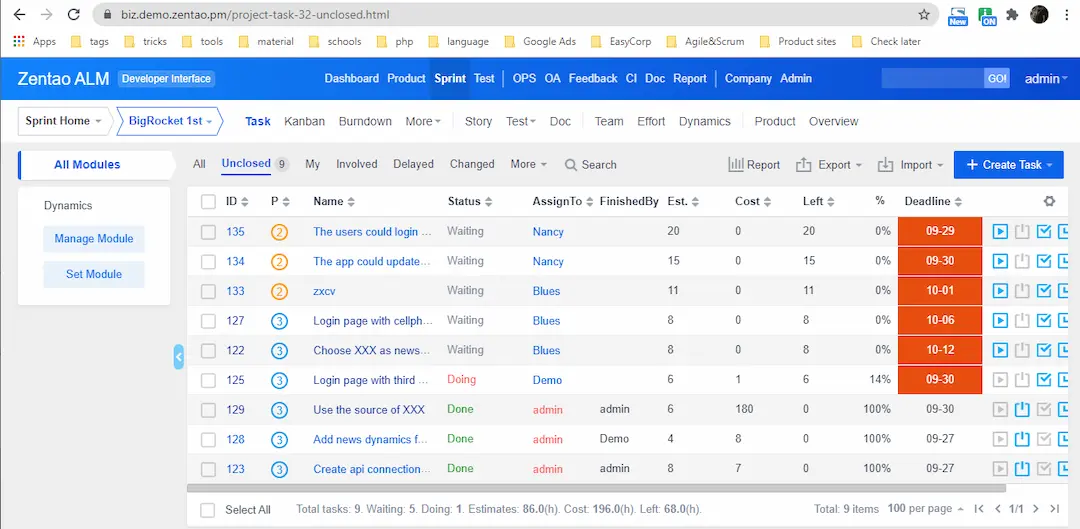
A prioritized list of user stories, bugs, and features that need to be completed.
- Product Backlog: A list of customer requirements (and user stories) for the entire product.
- Release Backlog: A list of user stories, features, and bugs that should be implemented in a defined release.
- Iteration Backlog: A list of user stories, features, and bugs that should be implemented in a defined iteration.
6. Burn Down Chart
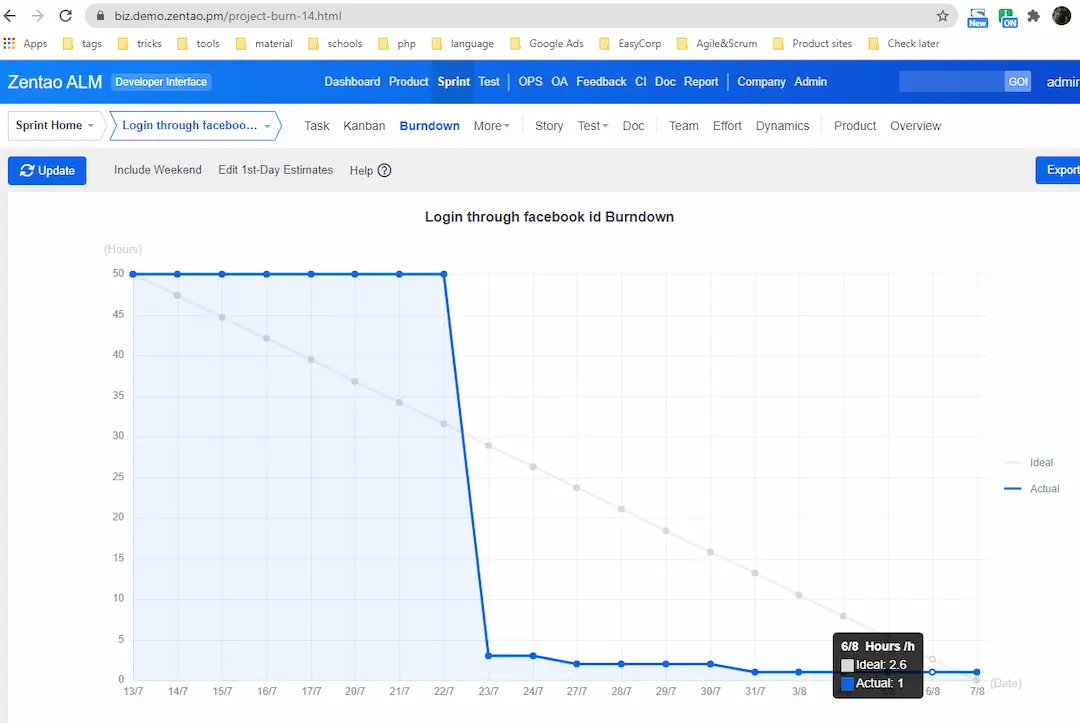
A Release/Iteration Burn Down Chart shows implementation progress during a release or iteration. It provides answers to the following questions: When can the release/iteration be completed based on previous progress? What is the highest possible team velocity in future iterations?
7. Daily Meeting
This is a status check where the team meets to share progress, impediments, and short-term assignments. Usually, three questions are asked: "What did you do yesterday?", "What will you do today?", and "What is blocking your progress?"
8. Effort Estimates in Abstract Units (Points)
Relative abstract effort units work great for experienced Agile teams. Points are a relative measure of a user story's size. It is recommended to use a discrete point scale. For example: 1, 2, 3, 5, 8, 13, 20. This scale means that a user story with 3 points is roughly twice as simple as a user story with 5 points, but no more.
Estimation with points is easier because you estimate by comparison: "We'll give this story 2 points because it seems like it's twice as big as that 1-point story and about half as big as that 4-point story."
9. Impediment
Anything that blocks a task or user story from being executed. For example, J. Mouse was working on a complex algorithm and his workstation exploded. Now he can't execute his tasks, and that is an Impediment. Usually, impediments are reported by developers during daily meetings.
10. Iteration
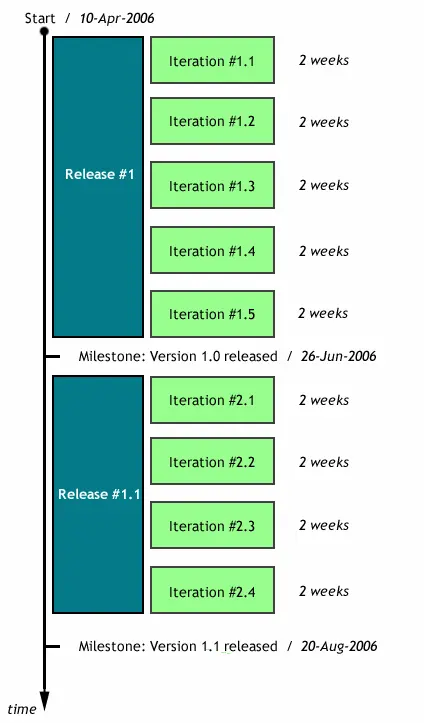
A time box (usually from 2 weeks to 2 months) in which the development team implements and delivers a set of functionality (user stories). It is highly recommended to use iterations of equal duration to maintain accurate velocity measurements.