
Best Practices for Distributed Agile Teams
2 hours agoPUBLISHED INAgile
 ali
ali 2026-09-15 17:50:00
 0
0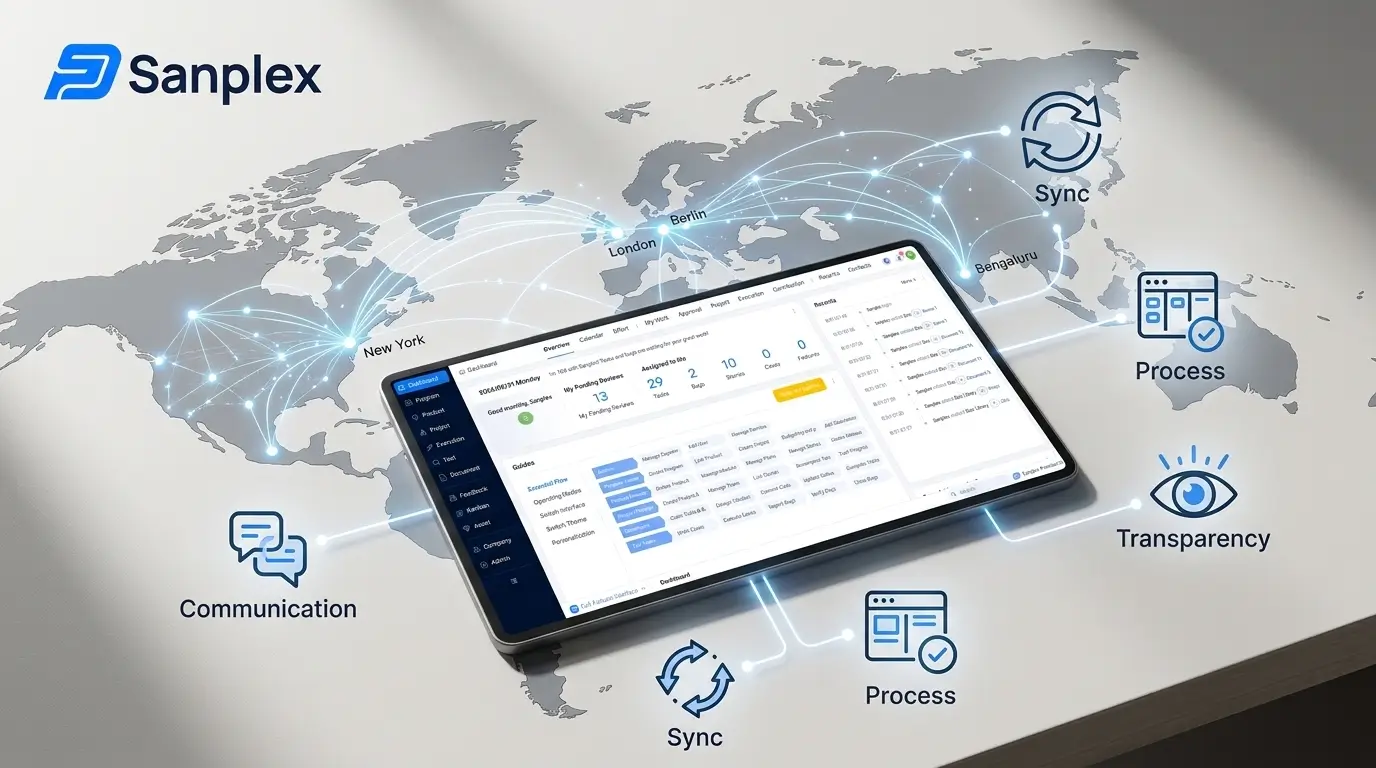
Agile ceremonies were mostly designed with everyone in the same room in mind, a daily standup where you can read the room, a planning session where a whiteboard is genuinely shared. Spread the same team across six time zones and half of those assumptions quietly stop being true, not because agile itself fails remotely, but because running it unchanged tends to produce meetings that work for whoever's awake at a convenient hour and badly for everyone else.
The Standup Problem Specifically
A live daily standup across a wide time zone spread almost always ends up scheduled for someone's early morning and someone else's late evening, and that person tends to disengage over time, showing up but not really participating. Asynchronous standups, a written update posted by a set time each day rather than a live call, solve this directly. What's lost is spontaneous back-and-forth, what's gained is genuine, sustainable participation from the whole team rather than a live meeting half of them resent.
Sprint Planning Needs More Structure, Not Less
A live planning session assumes shared context built through casual conversation earlier in the day, hallway chats a distributed team doesn't have by default. Compensate by front-loading more written context before the planning session itself, clear ticket descriptions, pre-reads on anything genuinely ambiguous, so the live time (however it's scheduled) is spent on real discussion and decisions rather than catching people up on context they'd have absorbed casually in an office.
Overlap Hours Are a Genuinely Scarce Resource
Treat whatever hours the whole team is actually online simultaneously as precious, and protect them specifically for things that truly need real-time discussion, contentious decisions, complex debugging together, relationship-building. Status updates, simple approvals, and anything that can be written down without losing meaning don't need to compete for that scarce overlap window.
Documentation Becomes Infrastructure, Not a Nice-to-Have
In a co-located team, a lot of context lives in people's heads and gets transferred through casual conversation. That transfer mechanism doesn't exist reliably across time zones, someone in a very different time zone might not see a decision made in a quick chat for 8+ hours, by which point work may have already proceeded on outdated assumptions. Decisions, especially ones affecting active work, need to be written down somewhere the whole team checks, not just mentioned in a conversation half the team wasn't awake for.
Retrospectives Need an Async Component Too
A live retro has the same time zone problem as a live standup, whoever's in an inconvenient slot tends to contribute less. Collecting written retro input asynchronously before any live discussion, then using the (shorter) live portion to discuss patterns and agree on action items, gets more honest input from the whole team than a live-only format that quietly favors people in convenient time zones.
Keeping Async Work Actually Visible
Distributed teams live or die on whether async updates are actually visible to everyone, not buried in a chat channel someone else was asleep for. Sanplex's execution tracking and Kanban views keep task status and updates visible in one place regardless of when someone was online to make them, reducing the dependency on live conversation to stay genuinely informed about where things stand.
Straight Talk
Can a fully async team still be agile?
Yes, agile's core values, working software, responding to change, collaboration, don't require live meetings specifically, just intentional adaptation of how ceremonies run.
Should standups always be fully async for distributed teams?
Not necessarily always, some teams do a hybrid: async written updates daily, plus a shorter live sync a few times a week for genuine discussion.
How do you build team cohesion without in-person time?
Protect overlap hours specifically for non-work conversation sometimes, not just status updates, relationship building needs deliberate space too.
What's the biggest mistake distributed teams make with agile?
Running every ceremony exactly as designed for co-located teams, then blaming agile itself when time zone friction makes it feel broken.
Does documentation quality actually matter more for distributed teams?
Significantly, it's the substitute for the casual context-sharing that happens automatically when people share a physical space.
Want your distributed team's work visible across every time zone?
Visit Sanplex or book a demo to see how it works.
Related Blogs

How to Structure a Cross-Functional Product Team