How to Structure a Cross-Functional Product Team
2 hours agoPUBLISHED INAgile
 ali
ali 2026-09-15 17:39:00
 0
0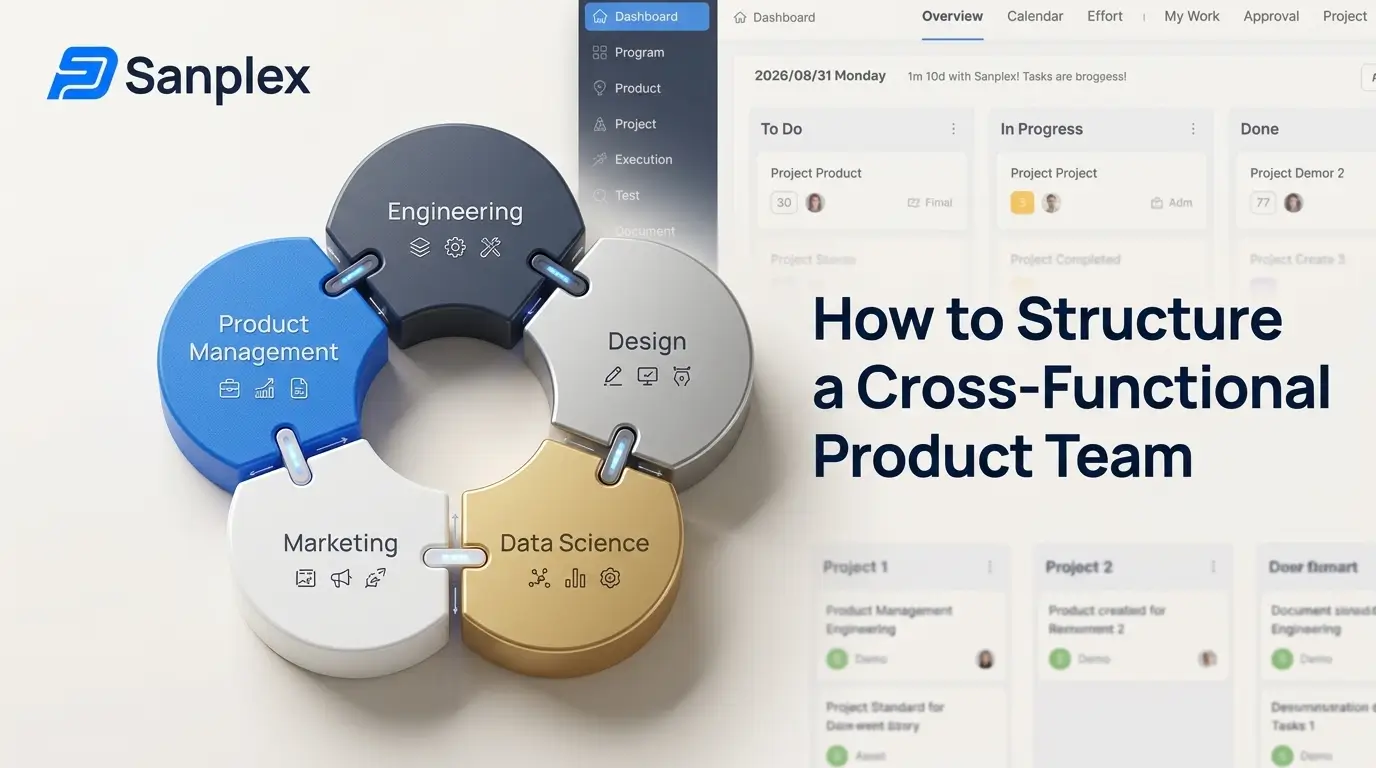
A cross-functional team, engineering, design, and product working toward one outcome instead of handing work back and forth across department lines, sounds simple until you're actually deciding who reports to whom, who owns final decisions, and how a five-person team's structure needs to change once it becomes fifteen. Most of the friction in these teams traces back to structural questions nobody answered clearly at the start.
What Makes a Team Actually Cross-Functional
It's not just seating engineers, designers, and a product manager near each other. A genuinely cross-functional team owns a specific outcome end to end, a feature area, a customer segment, a metric, rather than being organized around a function that hands off work to the next function in line. The test: can this team ship something meaningful without waiting on a different team's roadmap? If not, it's cross-functional in name only.
Core Roles and What Each One Actually Owns
The product manager owns what gets built and why, prioritization, and the connection to business outcomes. Engineering owns how it gets built and the technical tradeoffs involved. Design owns the user experience and interaction model. None of these should be reporting structures dictating who has final say on everything, they're areas of primary ownership, with the expectation that all three weigh in on decisions that touch their domain, even when someone else technically owns the final call.
Where Overlap Should Be Deliberate, Not Accidental
Product and design should overlap heavily on user experience decisions. Engineering and product should overlap on scoping and feasibility. Design and engineering should overlap on what's actually implementable without a significant quality compromise. The goal isn't rigid lanes, it's making sure the right people are in the room for the decisions that genuinely need their input, without every decision requiring everyone.
Sizing: When One Team Should Split Into Two
A single cross-functional team tends to work well up to around 8-10 people. Past that, communication overhead grows faster than output, and a team that size often has, in practice, already fragmented into sub-groups working on different things without acknowledging it structurally. The signal to split isn't a headcount number alone, it's when the team is regularly working on genuinely separate problems that don't need daily coordination with each other.
Reporting Lines vs Working Structure
Many organizations keep functional reporting (engineers report to an engineering manager, designers to a design lead) while working structure is cross-functional (day-to-day, everyone works within their product team). This isn't a contradiction, it separates career development and functional craft quality, best handled by someone in the same discipline, from day-to-day prioritization and outcomes, best handled by the team actually shipping the work.
Keeping the Structure Connected to How Work Actually Gets Tracked
A team structure that exists only on an org chart, disconnected from how work is actually planned and tracked, tends to drift from how people really collaborate day to day. Sanplex's Program, Project, Product, and Execution structure lets a cross-functional team's actual planning and execution reflect its real structure, rather than forcing a team-based way of working into a tool built around functional silos.
Common Questions
Should a cross-functional team have a single leader?
Usually yes, typically the product manager for prioritization and outcomes, though final technical or design calls often sit with the relevant discipline lead.
What happens when engineering and design disagree on a decision?
The person who owns that domain (design for UX, engineering for technical approach) should have final say after genuinely hearing the other's input, not a forced consensus.
Does every cross-functional team need a dedicated designer?
Not always at very small scale, but a team shipping user-facing work regularly benefits significantly from dedicated design capacity rather than shared, part-time access.
How do cross-functional teams avoid duplicating work across teams?
Clear ownership boundaries between teams, and regular cross-team syncs at the leadership level, rather than expecting individual contributors to coordinate across team lines informally.
Is this structure right for every company size?
It tends to work best once an organization is large enough to have multiple product areas needing dedicated ownership, very small companies often function fine without formal team boundaries yet.
Want your team structure reflected in how work actually gets planned?
Visit Sanplex or book a demo to see how it works.
Related Blogs

SOC 2 Compliance in Project Management Software