CI/CD Integration for Project Management Tools
September 10, 2026PUBLISHED INAgile
 ali
ali 2026-09-10 12:27:26
 0
0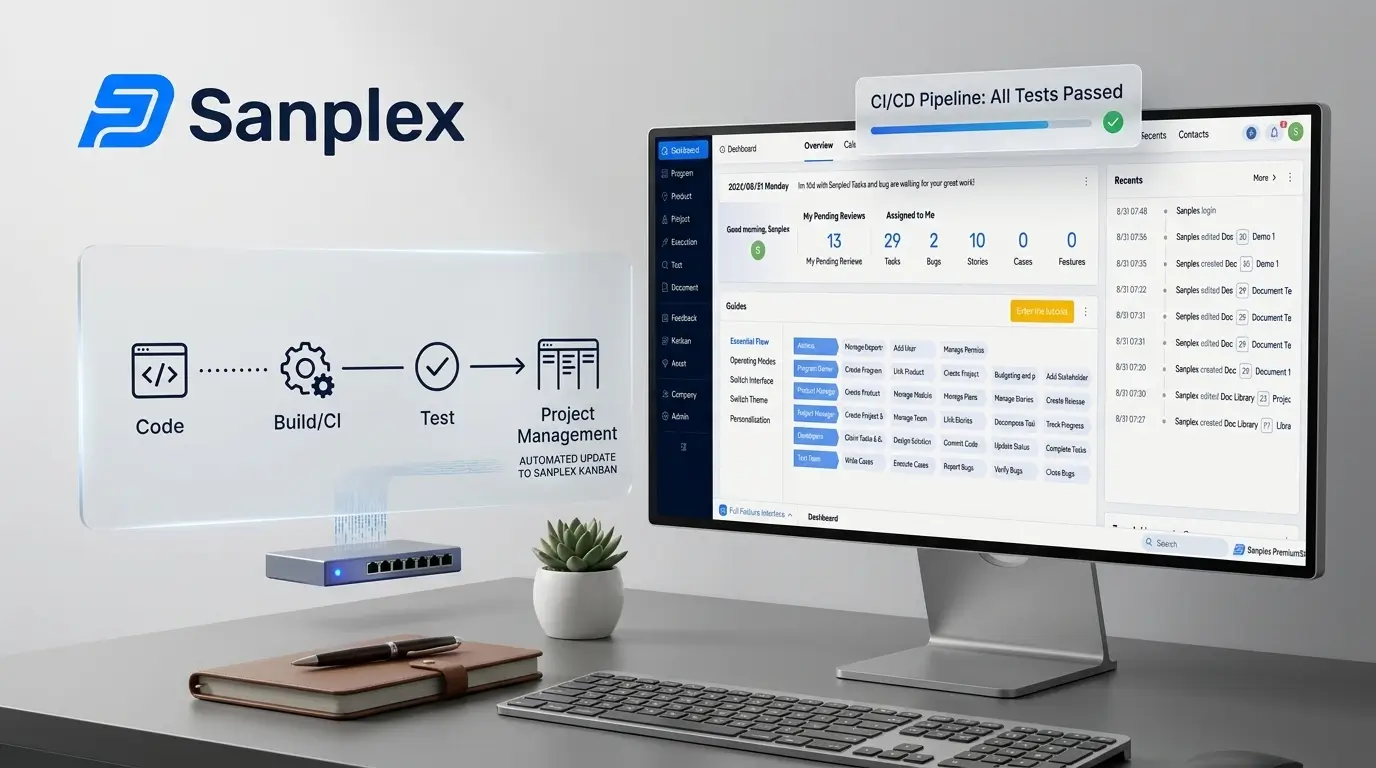
A CI/CD pipeline automates building, testing, and deploying code. Project management tracks the tickets, requirements, and plans behind that code. Kept separate, these two systems tend to drift apart, a ticket says "in progress" for a week after the code actually shipped, or a deployment goes out with no clear link back to which requirements it addressed. Integrating the two closes that gap, and it's become close to a baseline expectation for engineering teams rather than a nice-to-have.
Here's what actually matters when connecting these systems, and what to look for in a tool that claims to do it well.
What CI/CD Integration Actually Solves
The core problem is status accuracy. Without integration, ticket status is manually updated by whoever remembers to do it, which means it's frequently wrong. With integration, a commit referencing a ticket number can automatically move that ticket to "in review," a merged pull request can trigger "ready for testing," and a successful deployment can close the ticket outright. None of this requires anyone to remember to update a status field by hand, the status reflects what's actually happened in the pipeline.
Linking Commits and Builds Back to Requirements
Beyond status updates, the more valuable connection is traceability, being able to look at a requirement and see exactly which commits, builds, and releases addressed it, or conversely, look at a production incident and trace it back to the specific change and the requirement it was meant to fulfill. This is what separates surface-level integration (a status sync) from deep integration (real traceability from requirement to running code).
What to Look For When Evaluating Integration Depth
A few questions cut through most vendor claims quickly. Does the integration require a separate, third-party plugin, or is it native to the platform? Native integrations tend to stay more reliable over time, since they're not dependent on a third-party maintainer keeping a plugin updated against both platforms' API changes. Does it support your team's actual toolchain, Git-based repos, your specific CI runner, your deployment targets, or only a narrow set of "supported" tools? And does the integration flow both ways, can pipeline events update project status, and can project data (like a ticket's priority) inform pipeline behavior, or is it a one-way status sync only?
How Sanplex Approaches This
Rather than requiring a separate integration layer, Sanplex includes a built-in CI & CD solution with one-click toolchain deployment, centralized pipeline and repository management, and app management, all connected to the same system tracking requirements, sprints, and execution. The goal of this design is direct feedback between pipeline activity and project data, so a build or deployment event updates the same system the team is already planning and tracking work in, rather than syncing status between two separate tools that can fall out of alignment.
Common Pitfalls When Setting This Up
Over-automating status transitions is a frequent mistake, automatically closing a ticket the moment code merges, before it's actually been tested or deployed, creates a false sense of completion. Map automation to genuine milestones (deployed to staging, verified in production) rather than the earliest possible trigger point. It's also easy to under-invest in the traceability side, focusing entirely on status sync while skipping the deeper requirement-to-commit linkage that's actually more valuable during incident investigation or compliance audits.
Frequently Asked Questions
Does CI/CD integration require a specific version control system?
Most modern project management tools support common Git-based platforms, but it's worth confirming support for your team's specific setup before committing to a tool.
Can ticket status update automatically based on pipeline events?
Yes, this is one of the most common integration patterns, tying ticket status transitions to commits, merges, or successful deployments rather than requiring manual updates.
Is native integration always better than a third-party plugin?
Generally more reliable over time, since it doesn't depend on a separate maintainer keeping the plugin updated against both platforms independently, though a well-maintained plugin can still work well.
What's the risk of over-automating status updates?
Tickets can appear complete before work is genuinely finished, if automation triggers on an early pipeline event (like a merge) rather than a meaningful milestone (like a verified production deployment).
Does Sanplex require a separate tool for CI/CD, or is it built in?
Sanplex includes a native CI & CD solution as part of the platform, rather than requiring a separate third-party integration to connect pipeline activity to project data.
Want to see Sanplex's CI & CD solution connected to your actual pipeline?
Book a demo and bring your current toolchain to the conversation.