Free RACI Matrix Template
September 7, 2026PUBLISHED INAgile
 ali
ali 2026-09-07 15:06:00
 0
0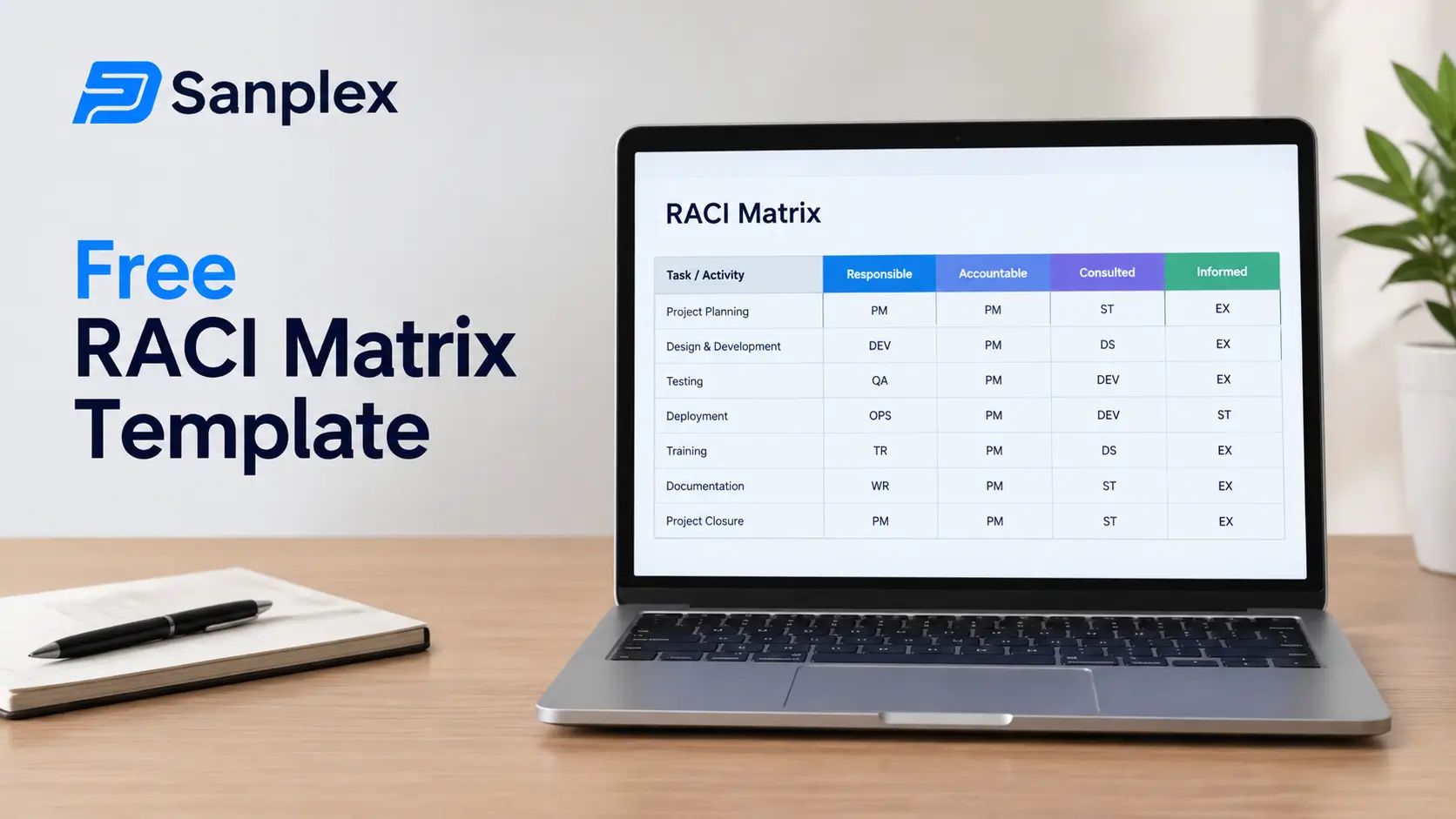
RACI stands for Responsible, Accountable, Consulted, Informed, a way of mapping exactly who does what on a project so "I thought someone else was handling that" stops happening. Most teams that try it once and abandon it made one specific mistake: assigning more than one Accountable person to a task. Here's a working template and the details that keep it useful.
The Template
|
Task |
PM |
Designer |
Engineer |
Stakeholder |
|
Define requirements |
A |
C |
C |
R |
|
Design mockups |
I |
R |
C |
A |
|
Build feature |
I |
C |
R |
I |
|
Final sign-off |
A |
I |
I |
R |
What Each Letter Actually Means
Responsible is whoever does the work. Accountable is whoever's ultimately answerable for it being done correctly, this is the person whose job is on the line if it fails. Consulted means someone whose input matters before a decision, a two-way conversation. Informed means someone who needs to know the outcome, a one-way notification, not a conversation. Mixing up Consulted and Informed is the second most common RACI mistake, treating a one-way FYI as if it required back-and-forth discussion, which slows everything down.
The One Rule That Actually Matters
Exactly one Accountable person per task. Not zero, not two. Two Accountable people on the same task effectively means nobody's accountable, since each can point to the other when something goes wrong. If a task genuinely has two people who feel responsible, that's a sign the task needs to be split into two, or the accountability needs to be explicitly resolved before work starts, not after something goes wrong.
Where RACI Charts Usually Go to Die
Built once during project kickoff, referenced never again. A RACI chart is only useful if people actually check it when they're unsure who owns something, which means it needs to be somewhere people naturally look, not buried in a folder from a planning meeting three months ago. Attach it to wherever the team already tracks tasks, not a separate document requiring someone to remember it exists.
Making It Visible Where Work Actually Happens
A RACI chart disconnected from actual task assignments in your project tool creates exactly the gap it's meant to solve, people default back to assuming, rather than checking, who owns what. Sanplex's task assignment and role structure keeps ownership visible directly on the work itself, reducing the need to cross-reference a separate document to answer a question the task assignment should already answer.
Common Sticking Points
Can a task have zero Consulted or Informed people? Yes, not every task needs input or notification beyond Responsible and Accountable. Don't force categories that don't apply.
What if the same person is both Responsible and Accountable? Common and fine for smaller tasks. It becomes worth separating on larger, higher-risk work where a second set of eyes on accountability adds value.
How detailed should the task list be? Detailed enough to resolve real ambiguity, too granular and the chart becomes tedious to maintain and nobody references it.
Should external stakeholders be included in the RACI? Yes, if their input or sign-off genuinely affects the work, clients and external partners can hold Consulted or Accountable roles too.
How often should the RACI chart be updated? Whenever roles or responsibilities genuinely shift, not on a fixed schedule, an outdated RACI chart is often worse than none at all.
Want role clarity built directly into your task assignments?
Visit Sanplex or book a demo to see how it works.
Related Blogs
Free Risk Register Template for Project Managers