Code Repository Management Best Practices
August 15, 2026PUBLISHED INAgile
 ali
ali 2026-08-15 14:43:00
 0
0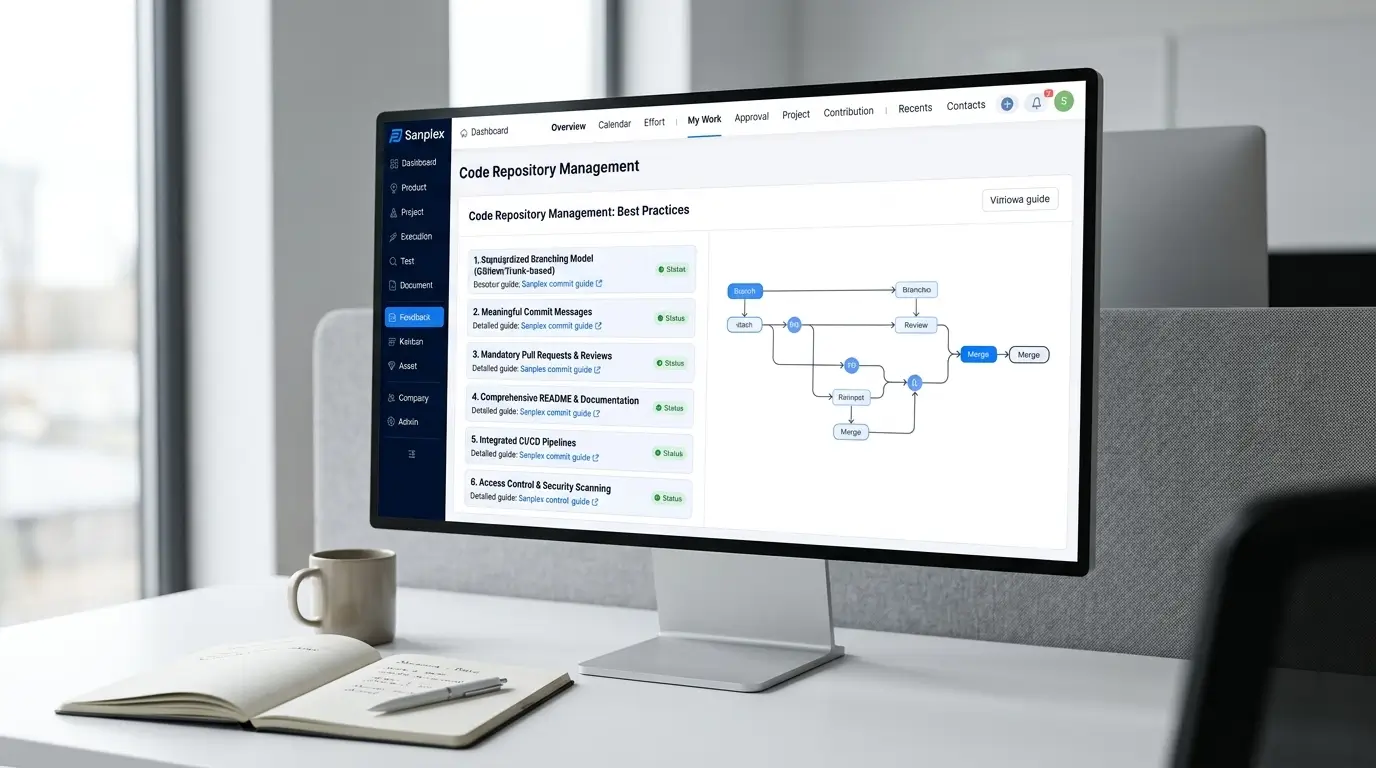
A repository is easy to keep clean for the first few months and surprisingly easy to let sprawl after that, inconsistent branch names, commit messages that say "fix" with no context, a review process that exists on paper but not in practice. None of that is really about the code itself, it's about the habits a team builds around managing it. Here's what actually holds up as teams and codebases grow.
Pick a Branching Strategy and Actually Stick to It
Trunk-based development, where changes merge into a main branch frequently through short-lived feature branches, works well for teams that deploy often and want to avoid long-lived branches drifting far out of sync with main. Git Flow, with dedicated develop, release, and hotfix branches, suits teams with more structured, less frequent release cycles. Neither is universally correct, but a team that mixes both inconsistently, some engineers branching off main, others off develop, ends up with a merge history nobody can reason about.
Write Commit Messages for the Person Reading Them Later
A commit message like "fix bug" is useless six months from now when someone's trying to understand why a particular change was made. A good commit message explains what changed and, more importantly, why, especially for anything non-obvious. Referencing the related ticket number in the commit message also matters more than it seems, it's what makes automated status updates and requirement traceability actually work when a project management tool is connected to the repository.
Keep Pull Requests Small Enough to Actually Review
A 2,000-line pull request doesn't get reviewed, it gets skimmed and approved because nobody has time to genuinely evaluate something that size. Smaller, focused pull requests get real scrutiny, merge faster, and are dramatically easier to revert cleanly if something goes wrong post-merge. If a change is large enough that it can't reasonably be reviewed in one sitting, that's usually a sign it should be broken into smaller, sequential changes.
Enforce Code Review, Don't Just Suggest It
Optional code review tends to become no code review under deadline pressure, exactly when review matters most. Branch protection rules requiring at least one approval before merging to main remove the temptation to skip review when a release is late. This isn't about distrust, it's about catching the kind of mistakes that are much cheaper to fix before merge than after deployment.
Structure Repositories to Match How Your Team Actually Works
Monorepos (one repository for multiple related projects) simplify cross-project changes and shared tooling, but can slow down as they scale without deliberate tooling investment. Multi-repo setups (separate repositories per service or project) isolate concerns cleanly, but make cross-cutting changes more painful and access control more granular to manage. Choose based on how often your team actually needs to change multiple services together, not based on which pattern is currently trendy.
Control Access Deliberately, Not by Default
Broad write access to every repository, granted once and never revisited, is a common source of both accidental and deliberate problems down the line. Role-based access, tied to what someone actually needs for their current work, is worth the upfront setup cost, particularly for repositories containing sensitive configuration or deployment credentials alongside application code.
Connect Repository Activity to Project Tracking
A repository managed in isolation from project tracking means someone has to manually cross-reference commits against tickets to understand what shipped and why. Sanplex includes repository management as part of its broader CI & CD solution, connected to the same system tracking requirements and sprints, so commits, branches, and merges stay linked to the project work driving them rather than living in a disconnected version control silo.
Frequently Asked Questions
Is trunk-based development better than Git Flow?
Neither is universally better. Trunk-based development suits frequent deployment; Git Flow suits more structured, less frequent release cycles. The mistake is mixing approaches inconsistently within the same team.
How small should a pull request actually be?
Small enough for a reviewer to genuinely evaluate it in one sitting, often a few hundred lines or less, though this varies by the nature of the change.
Should code review be mandatory or optional?
Mandatory, enforced through branch protection rules. Optional review tends to get skipped under deadline pressure, which is exactly when it matters most.
When does a monorepo make more sense than multiple repositories?
When teams frequently need to change multiple services together and want shared tooling. Multi-repo setups tend to fit better when services are more independently owned and deployed.
Why does linking commits to tickets matter?
It's what enables automated status updates and requirement traceability, letting a project management tool reflect what's actually happened in the repository without manual cross-referencing.
Want to see repository activity connected directly to your project tracking?
Book a demo and bring your current setup to the conversation.
Related Blogs

Resource Allocation Software for Project Managers