Cost of Enterprise ALM Software Explained
August 29, 2026PUBLISHED INAgile
 ali
ali 2026-08-29 21:12:00
 0
0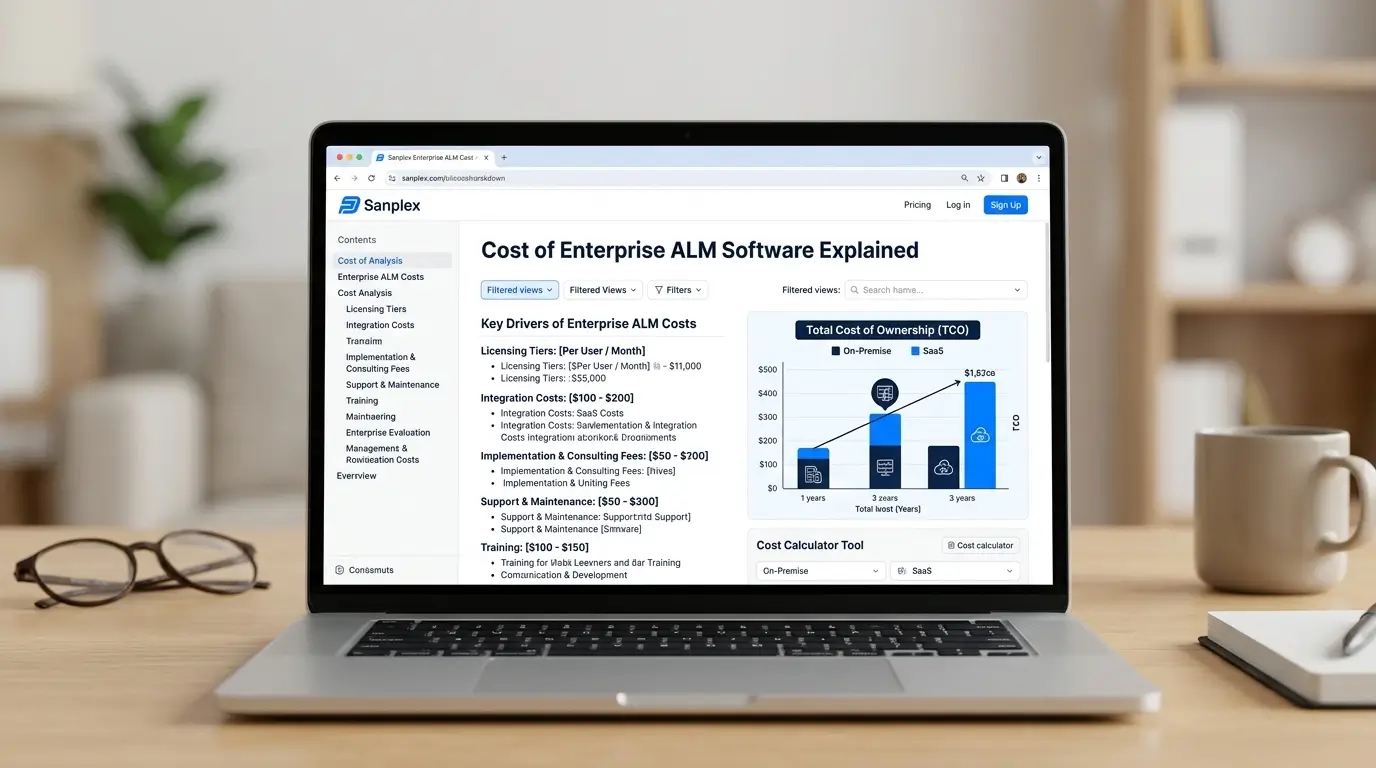
Enterprise ALM software pricing varies more than almost any other software category, entry points range from a few hundred dollars a month to seven-figure annual contracts, for tools that are technically solving similar problems. Understanding what actually drives that spread matters more than comparing any two list prices directly, since the list price is rarely the number that ends up on the invoice.
The Core Pricing Models in This Category
Most ALM platforms price on one of a few models: per-user per-month (the most common, scaling directly with team size), per-application (common in low-code-adjacent ALM tools, where cost scales with how many apps you're managing rather than headcount), or enterprise portfolio licensing (a large negotiated contract covering a defined scope of users, apps, and support, common at the high end). Knowing which model a vendor uses matters more than the headline number, since a low per-user price on a platform that also charges heavily per-app can end up costing more than a higher per-user price on a platform with unlimited apps included.
Real-World Examples of the Spread
OutSystems' entry-level Developer Cloud plan starts at $36,300 per year, covering 100 internal users and roughly one medium-sized application, with no free-forever tier, only a short trial. Mendix's published Standard tier starts around $1,090 per month for a single app, but actual contract data shows small-to-medium businesses commonly spending $80,000 to $300,000 annually, and large enterprises running many applications spending well into seven figures. These aren't outliers, they reflect how enterprise ALM pricing is genuinely structured around large, multi-year platform commitments rather than a simple per-seat rate.
What Drives the Real Cost Beyond the List Price
A few factors consistently push actual spend above the advertised entry price. Implementation and onboarding services, often a separate line item, especially for platforms with real complexity to configure correctly. Professional services and training, since platforms built around a specific modeling methodology (rather than natural language or simple visual tools) often require paid training to use effectively. Add-on modules for testing, requirements management, or compliance features that aren't included in the base tier. And support tier upgrades, since enterprise-grade SLAs and dedicated support frequently cost extra on top of the platform license itself.
On-Premises vs Cloud: A Real Cost Difference, Not Just a Preference
On-premises or self-hosted deployment shifts some costs from the vendor's subscription price to your own infrastructure and IT operations budget, server costs, maintenance, security patching, become your responsibility rather than bundled into a SaaS fee. This isn't automatically more or less expensive overall, it depends heavily on your existing infrastructure and IT capacity, but it's a genuinely different cost structure worth modeling explicitly rather than assuming cloud pricing translates directly.
Why Sanplex's Pricing Looks Different From This Category
Compared to the enterprise portfolio licensing common among established ALM platforms, Sanplex's pricing runs on a straightforward per-user annual model, a free tier, a Standard plan around $39.9 per user per year, and a Premium plan around $59.9 per user per year, with requirements management, testing, and release coordination included natively rather than gated behind add-on modules. For teams evaluating ALM software without a six or seven-figure enterprise budget, that structural difference matters as much as any individual feature comparison.
How to Actually Budget for This Category
Before comparing vendors, get clear on three things: your realistic user count over the next 1-2 years (not just today), how many applications or projects you actually need to manage under this platform, and whether your organization has the infrastructure and IT capacity to make on-premises deployment cost-effective versus cloud. Ask every vendor directly what's included in the base price versus what requires add-ons, implementation services, or a support tier upgrade, since that's where most budget surprises come from after signing.
Frequently Asked Questions
Why do ALM platforms have such a wide price range?
Different pricing models (per-user, per-app, enterprise portfolio licensing) combined with varying levels of included versus add-on functionality create a much wider spread than more standardized software categories.
Is on-premises ALM software cheaper than cloud?
Not inherently, it shifts costs to your own infrastructure and IT operations rather than eliminating them, so the real comparison depends on your existing IT capacity.
What typically isn't included in an ALM platform's base price?
Implementation services, specialized training, advanced testing or compliance add-on modules, and premium support tiers are common separate costs beyond the base license.
Do smaller teams need enterprise-tier ALM pricing?
Often not, several platforms in this category, including Sanplex, offer simpler per-user pricing without requiring a large enterprise portfolio commitment.
What's the best way to compare ALM pricing across vendors?
Ask each vendor explicitly what's included in the base price and what requires add-ons or professional services, rather than comparing headline per-user or per-app numbers alone.
Want to see straightforward ALM pricing without the enterprise negotiation process?
Visit Sanplex, check the pricing page, or book a demo to see exactly what's included.
Related Blogs
Asana Pricing 2026: Full Breakdown