Differences Between Agile and Waterfall Methodologies
-
 Sanplex Content
 -
 2020-12-21 16:20:00
 -
 4979
4979
What is the Waterfall methodology?
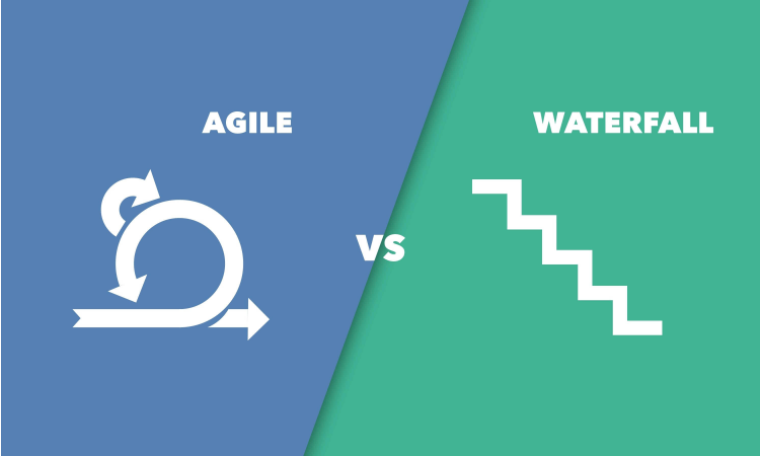
The Waterfall Model methodology is also known as the Linear Sequential Life Cycle Model. The Waterfall Model follows a strict sequential order; therefore, the project development team only moves to the next phase of development or testing if the previous step has been completed successfully.
What is the Agile methodology?
Agile methodology is a practice that facilitates continuous iteration of development and testing throughout the software development process. In this model, development and testing activities are concurrent, unlike the Waterfall model. This process allows for more frequent communication among customers, developers, managers, and testers.
Waterfall vs. Agile: Key Differences
- Waterfall is a Linear Sequential Life Cycle Model, whereas Agile is a continuous iteration of development and testing in the software development process.
- Regarding their differences, the Agile methodology is known for its flexibility, whereas Waterfall is a highly structured software development methodology.
- Agile follows an incremental approach, whereas Waterfall is a sequential design process.
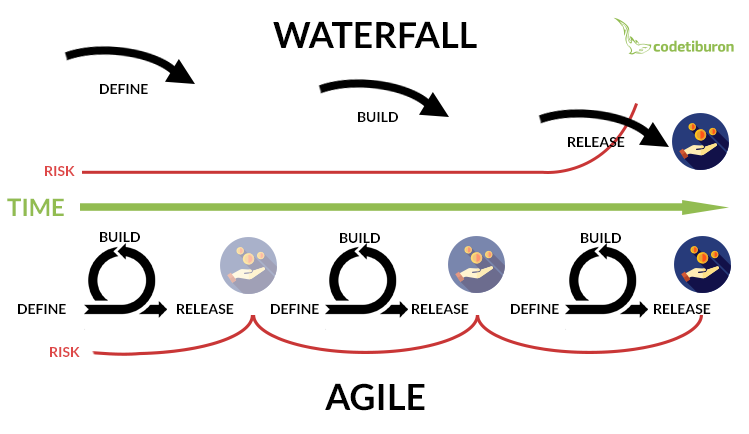
- Agile performs testing concurrently with software development, whereas in the Waterfall methodology, testing comes only after the "Build" phase.
- Agile allows for changes in project development requirements, whereas Waterfall has virtually no scope for changing requirements once project development starts.
Advantages of the Waterfall Model:
- It is one of the easiest models to manage. Because of its nature, each phase has specific deliverables and a strict review process.
- It works well for smaller-sized projects where requirements are easily understood and well-defined.
- It can lead to faster delivery of the project if the scope is completely fixed.
- The process and results are thoroughly documented.
- It is an easily adaptable method for shifting teams.
- This project management methodology is beneficial for managing strict dependencies.
Advantages of the Agile Model:
- It is a client-focused process. It ensures that the client is continuously involved during every stage.
- Agile teams are highly motivated and self-organized, which is likely to provide a better result for development projects.
- The Agile software development method ensures that the quality of development is consistently maintained.
- The process is completely based on incremental progress. Therefore, the client and team know exactly what is complete and what is not, reducing overall risk in the development process.
Limitations of the Waterfall Model:
- It is not an ideal model for large-scale or complex projects.
- If the requirements are not clear at the beginning, it is a highly ineffective method.
- It is very difficult to move backward to make changes in previous phases.
- The testing process only starts once development is over. Hence, there is a high chance of bugs being found late in development, where they are much more expensive to fix.
Limitations of the Agile Model:
- It is often not a useful method for very small development projects.
- It requires experts to make important decisions quickly during meetings.
- The cost of implementing an Agile method can be slightly higher compared to other development methodologies.
- The project can easily go off track if the project manager (or Product Owner) is not clear about the desired outcome.
Differences Between Agile and Waterfall Models (Comparison Table):
| Feature | Agile | Waterfall |
|---|---|---|
| Lifecycle | Separates the project development lifecycle into sprints. | The software development process is divided into distinct, linear phases. |
| Approach | Follows an incremental approach. | A sequential design process. |
| Flexibility | Known for its high flexibility and adaptability. | A structured methodology that can often be quite rigid. |
| Project Scope | Can be considered a collection of many different mini-projects (sprints). | Software development must be completed as one single large project. |
| Requirement Changes | A flexible method that allows changes in project requirements even after initial planning. | There is no scope for changing requirements once development starts. |
| Phase Repetition | Follows an iterative approach; phases like planning, development, and prototyping may appear more than once. | All project phases (designing, development, testing, etc.) are completed only once. |
| Testing Plan | The test plan is reviewed after each sprint. | The test plan is rarely discussed outside the designated test phase. |
| Evolution | A process in which requirements are expected to change and evolve. | Ideal for projects with definite requirements where changes are not expected. |
| Testing Execution | Testing is performed concurrently with software development. | The "Testing" phase comes strictly after the "Build" phase. |
| Mindset | Introduces a product mindset; the software satisfies the end customer's needs and adapts to their demands. | Shows a project mindset; places its focus completely on accomplishing the fixed project scope. |
| Funding/Contracts | Works exceptionally well with Time & Materials or non-fixed funding. | Reduces risk in firm fixed-price contracts by securing an agreement at the beginning. |
| Team Structure | Prefers small, dedicated teams with a high degree of coordination and synchronization. | Team coordination/synchronization across different functional phases is very limited. |
| Requirement Prep | The Product Owner and team prepare requirements almost every day during the project. | Business analysts prepare all requirements before the beginning of the project. |
| Test Team Involvement |
The testing team can take part in requirement changes without problems. | It is difficult for testers to initiate any changes in requirements. |
| SDLC Details | Project details can be altered anytime during the SDLC process. | Detailed descriptions are strictly required upfront to implement this approach. |
| Management | Team members are interchangeable and highly collaborative. The entire team manages the project, minimizing the need for traditional project managers. | The process is straightforward; the project manager plays an essential, top-down role during every stage of the SDLC. |
Whether you choose the structured phases of Waterfall or the flexible sprints of Agile, Sanplex provides the ultimate project management platform to support your team. Switch effortlessly between methodologies, manage your requirements, and track bugs all in one place with Sanplex today.