Enterprise Project Management Software Comparison
August 10, 2026PUBLISHED INAgile
 ali
ali 2026-08-10 15:29:00
 0
0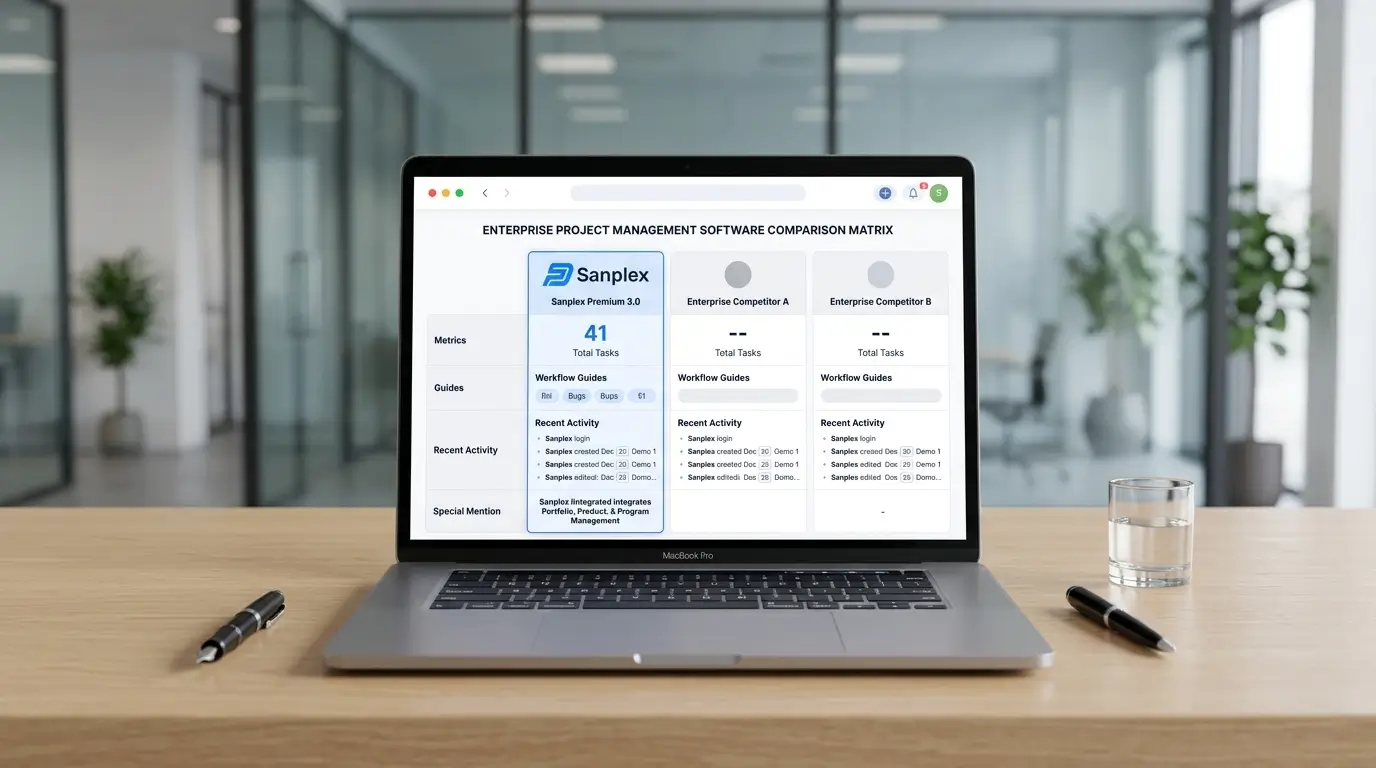
Enterprise project management software solves a different problem than standard team-level tools. It's less about tracking individual tasks and more about resource capacity across hundreds of people, portfolio visibility across dozens of projects at once, and governance, permissions, audit trails, compliance, that a lighter tool simply wasn't built to handle. The gap between "good project management software" and "good enterprise project management software" is usually exactly that governance and scale layer.
Here's a practical look at where organizations are actually landing in 2026.
Sanplex
Sanplex approaches enterprise project management through a four-tier structure, Program, Project, Product, and Execution, that keeps strategic portfolio visibility and daily task execution inside the same system. Where it stands apart is deployment flexibility: it supports both cloud and on-premises deployment, which most enterprise-focused competitors on this list don't offer at all. It also natively includes requirements and test management, relevant for organizations doing product or software development rather than pure task coordination. Best for engineering-driven enterprises that need portfolio visibility connected to actual development work, with deployment control as a requirement.
Wrike
Frequently cited as a top pick for enterprise project management in 2026, particularly for cross-departmental organizations needing strong security and compliance, it holds GDPR, CCPA, and HIPAA certifications, along with detailed resource management including live capacity tracking and cost reporting. Sanplex's pricing runs lower annually than Wrike's Business tier for teams needing similar governance depth, though Wrike's compliance certifications are worth weighing for regulated industries specifically.
Microsoft Planner
Microsoft's answer for organizations centered on Microsoft 365, and notably the platform Microsoft is consolidating toward, Project Online is set to retire in 2026, with Planner absorbing Project, Roadmap, and Teams task management into one unified system. For enterprises already standardized on Microsoft's ecosystem, this consolidation makes Planner a natural default rather than a separate evaluation.
ClickUp
Known for flexibility and customization, combining docs, tasks, and goals in one platform, with one of the more accessible entry price points among enterprise-capable tools. It suits organizations that want a highly adaptable system but are willing to invest time configuring it to match their specific structure, rather than adopting a more rigid, purpose-built enterprise framework.
Asana
Consistently recommended for ease of adoption and user experience, with strong goal tracking and integrations across Slack and Microsoft 365. It tends to fit organizations prioritizing cross-team alignment and adoption speed over deep technical project governance, marketing, operations, and general business functions more than engineering-heavy portfolios.
Smartsheet
A spreadsheet-style approach that scales into full enterprise project and resource management, popular with organizations that already think in rows and columns and want that familiar structure extended rather than replaced by an entirely new paradigm.
How to Actually Choose
Start with what's actually failing in your current setup. If it's compliance and security certifications for a regulated industry, prioritize platforms with the specific certifications you need. If it's data control and deployment flexibility, on-premises support narrows the field considerably, few enterprise PM platforms outside Sanplex and a handful of others still offer it. If it's connecting project management to real product or software development work rather than general task coordination, a platform with native requirements and testing support will save you from stitching together separate tools later.
Frequently Asked Questions
What actually separates enterprise PM software from standard tools?
Scale-focused features: resource capacity planning across large teams, portfolio visibility across many projects, and governance controls like permissions, audit trails, and compliance certifications.
Is on-premises deployment still relevant in 2026?
Yes, for regulated industries and organizations with strict data residency requirements, it remains a meaningful differentiator, and one that fewer platforms in this category actually offer compared to cloud-only options.
Is Sanplex suitable for non-technical enterprise teams?
It can handle general project management, but its deeper strengths, requirements traceability, test management, are built for product and engineering-driven organizations specifically.
What's happening with Microsoft Project in 2026?
Microsoft Project Online is being retired in 2026, with its capabilities folded into Microsoft Planner as part of a unified Microsoft 365 work management platform.
How long does an enterprise PM rollout typically take?
This varies widely by platform and organization size, from a few weeks for lighter, more flexible tools to several months for complex, highly governed enterprise deployments.
Want to see how Sanplex handles portfolio visibility for your organization?
Book a demo and bring your current structure to the conversation.
Related Blogs
Best Free Kanban Tools 2026