Best Requirements Management Tools
August 10, 2026PUBLISHED INAgile
 ali
ali 2026-08-10 15:49:00
 0
0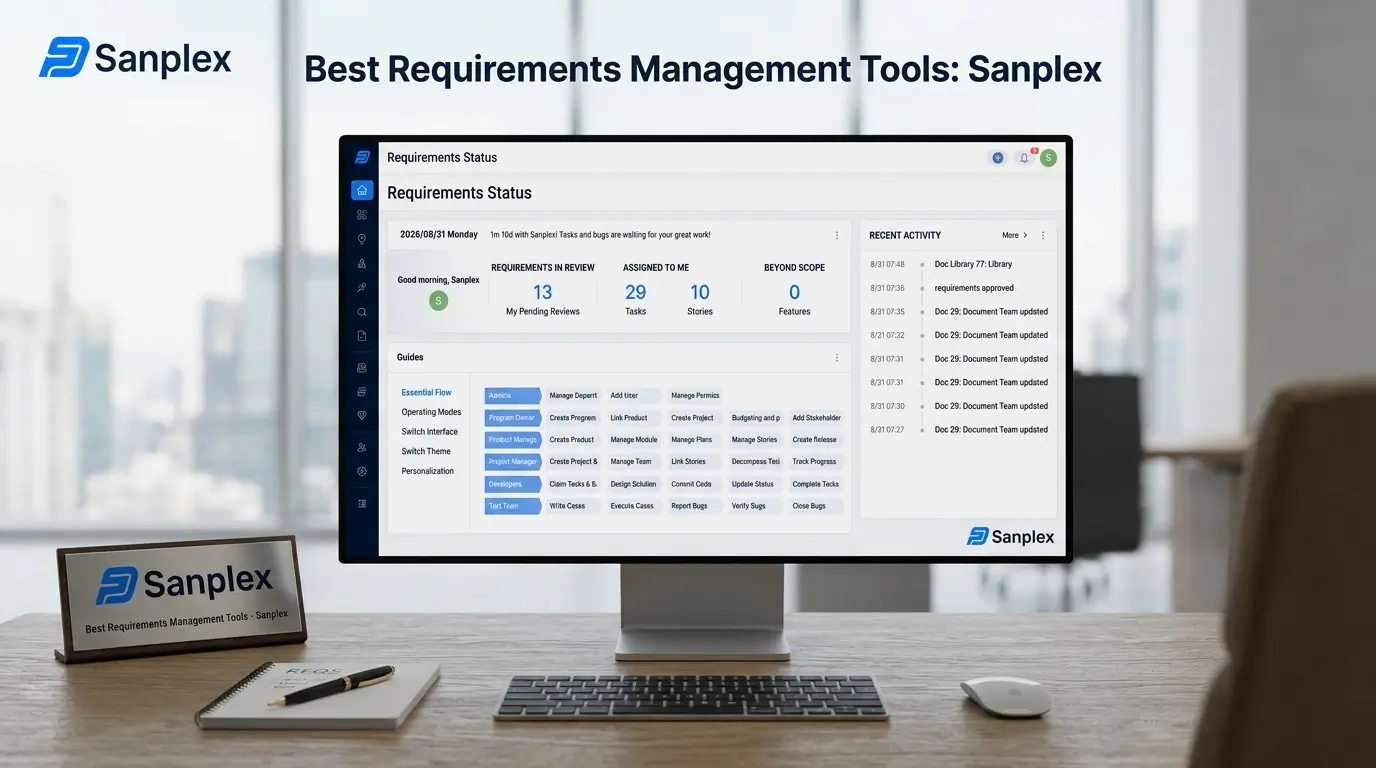
Requirements management tools split along a fairly clear line: dedicated, traceability-heavy platforms built for regulated industries where a missed requirement has real compliance consequences, and lifecycle-integrated tools where requirements live alongside planning, development, and testing rather than in a separate specialized system. Neither approach is universally better, it depends on how much standalone traceability rigor your industry actually demands.
Here's a practical look at where teams are landing in 2026.
Sanplex
Sanplex takes the lifecycle-integrated route. Requirements live inside the same four-tier structure, Program, Project, Product, and Execution, used for planning and execution, and link directly to test cases and bugs without a separate integration layer. That connection matters most for teams that have experienced requirements drifting out of sync with what actually got built and tested. Best for product and engineering teams that want requirements connected to delivery, not managed as an isolated specification document.
Jama Connect
Widely regarded as a top pick for enterprise and regulated-industry requirements management, with strong live traceability and cloud deployment. It's purpose-built for complex, safety-critical product development where formal validation and change impact analysis are non-negotiable. Best for large enterprises in regulated sectors needing deep, dedicated traceability.
IBM DOORS Next
One of the longest-established names in this category, still entrenched in organizations with long product lifecycles and significant historical investment in the platform. It's thorough but often considered heavier to administer than newer, more streamlined tools. Best for organizations already invested in the IBM Jazz ecosystem with complex, long-running product lines.
Siemens Polarion
Part of Siemens' broader ALM portfolio, combining requirements management with testing and lifecycle tools in one platform, common in aerospace, automotive, and medical device development where compliance documentation and testing need to stay tightly linked. Best for regulated industries wanting requirements and full ALM in a single Siemens-backed platform.
PTC codebeamer
Known for strong out-of-the-box integrations and traceability across requirements, code, and tests, often used as a connective layer between several existing tools rather than a full replacement for all of them. Best for organizations with a fragmented existing toolchain that need unified traceability across it.
Modern Requirements
Built directly into Microsoft Azure DevOps, extending it with requirements and traceability capabilities without introducing a separate platform. Best for teams already committed to Azure DevOps that want requirements support inside that existing environment.
What's Changing in 2026
AI-assisted requirements quality has become a standard feature across most leading platforms this year, several tools now support generating draft specifications from clustered stakeholder input rather than starting from a blank document. Integration depth has also become a bigger differentiator than raw feature count, since most teams still execute requirements through Jira or Azure DevOps regardless of which dedicated tool they use for documentation, meaning bidirectional sync quality often matters more than any single standalone feature.
How to Actually Choose
If you're in a regulated industry with formal audit requirements, prioritize dedicated platforms like Jama Connect, Polarion, or IBM DOORS Next built specifically for that rigor. If your bigger problem is requirements living disconnected from what actually gets built and tested, a lifecycle-integrated platform like Sanplex closes that gap more directly than a standalone tool ever will, since traceability is structural rather than something maintained through a sync integration.
Frequently Asked Questions
Do I need a dedicated requirements tool if I already use Jira?
It depends on your industry's compliance needs. Many teams execute requirements through Jira regardless, but regulated industries often still need a dedicated tool for formal traceability and audit documentation.
Is Sanplex suitable for regulated industries?
It can work, particularly with its on-premises deployment option for data control, but organizations with the heaviest compliance and audit demands may still lean toward specialized platforms like Jama Connect or Polarion.
What does requirements traceability actually mean in practice?
It means being able to trace a requirement forward to the code and tests that fulfill it, and backward from a test failure to the requirement it relates to, so nothing gets built or changed without a clear link to why.
Are AI-generated requirements reliable?
AI-assisted drafting is increasingly common in 2026, but it's best treated as a starting point. Human review remains standard practice across the leading platforms.
Can requirements tools integrate with existing test management software?
Most leading platforms support integration with common test and delivery tools, though the depth and reliability of that sync varies significantly by platform, worth confirming directly before committing.
Want to see how Sanplex keeps requirements connected to real delivery work?
Book a demo and bring your current process to the conversation.
Related Blogs
Enterprise Project Management Software Comparison