Free Sprint Retrospective Template
September 3, 2026PUBLISHED INAgile
 ali
ali 2026-09-03 16:45:00
 0
0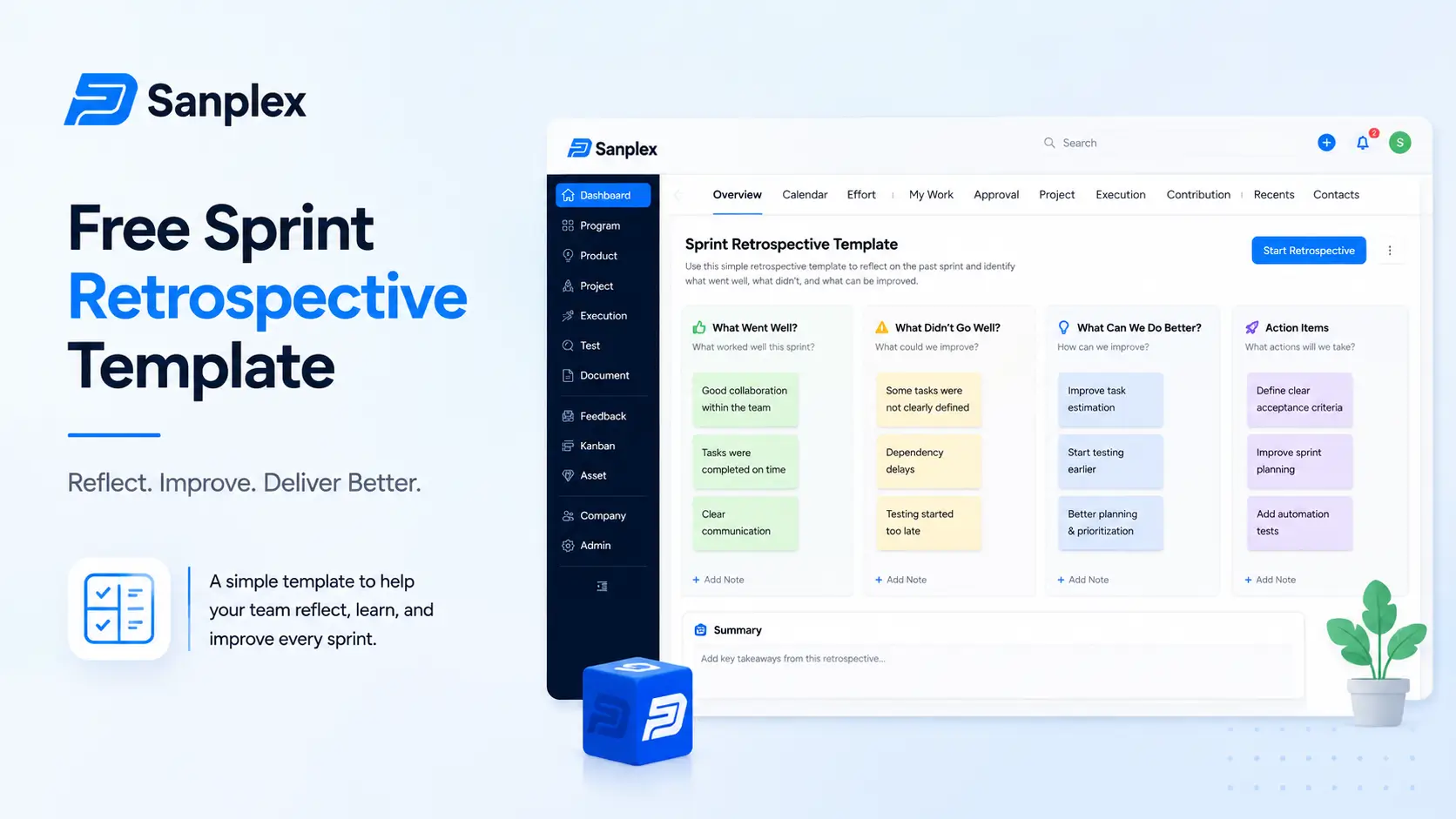
A retrospective template is only as useful as the meeting it structures. The most common failure isn't a badly designed template, it's a well-designed one used to generate a list of feelings nobody acts on. Here's a template built around producing actual action items, plus the format decisions that make the difference between a useful retro and a ritual nobody looks forward to.
The Template
|
Section |
Prompt |
|
What went well |
What worked this sprint that we should keep doing? Be specific, not just "communication was good." |
|
What didn't go well |
What slowed us down, caused rework, or created friction this sprint? |
|
What we learned |
Anything the team discovered this sprint, about the product, the process, or a technical approach. |
|
Action items |
Specific, owned, and time-bound changes we're committing to for next sprint. Not vague intentions. |
|
Follow-up on last sprint's actions |
Did we actually do what we said we'd do last time? If not, why not? |
Why This Structure Specifically
The "follow-up on last sprint's actions" section is the one most templates skip, and it's arguably the most important. A retrospective that never checks whether previous action items actually happened trains the team, correctly, to stop taking the action items seriously. Starting each retro by reviewing what got done (or didn't) from last time closes that loop and keeps the whole exercise credible.
Alternative Formats Worth Knowing
Start-Stop-Continue (what should we start doing, stop doing, continue doing) is a good fit for teams that find open-ended "what went well" prompts too vague to generate specific feedback. Mad-Sad-Glad focuses more on team sentiment and morale, useful periodically even for teams that mostly run process-focused retros, since it surfaces things a purely process-oriented format can miss. Rotating formats every few sprints keeps the retro from feeling stale, which matters more for engagement than picking the theoretically "best" format.
Running the Meeting Itself
Give people a few minutes of silent, individual writing time before opening discussion, groups that jump straight to talking tend to have the loudest person's opinion dominate and quieter perspectives never surface. Time-box each section rather than letting one topic consume the whole meeting. And end with the action items read aloud, with an owner and rough timeline attached to each one, an action item with no owner is a wish, not a commitment.
Keeping Action Items From Disappearing
The template only works if action items actually get tracked somewhere visible, not buried in a meeting notes doc nobody reopens. Platforms that connect retrospective action items directly to the next sprint's actual work, rather than living in a separate notes tool, make the follow-up section meaningfully easier to run honestly. Sanplex's sprint and execution tracking keeps this connected structurally rather than requiring someone to manually carry items forward each time.
Frequently Asked Questions
How long should a sprint retrospective take?
For a two-week sprint, 45 minutes to an hour is typical. Shorter tends to rush the discussion; much longer tends to lose focus.
Should the whole team attend the retrospective?
Generally yes, since the people doing the work are best positioned to identify what actually helped or hurt, though very large teams sometimes split into smaller groups first.
What if the same issues keep coming up retro after retro?
That's usually a sign the action items from previous retros aren't actually being followed through on, worth addressing directly rather than just re-logging the same feedback again.
Is it okay to skip a retrospective if the sprint went smoothly?
Retros are useful even after smooth sprints, understanding why something worked well is as valuable as diagnosing what went wrong, and skipping regularly tends to make the practice easy to drop entirely.
Should retrospective notes be shared outside the team?
Generally kept within the team to encourage honest feedback, though action items and broader themes are often worth summarizing for stakeholders who need visibility into process improvements.
Want retrospective action items connected directly to your next sprint?
Visit Sanplex or book a demo to see how it works.
Related Blogs
Hidden Costs of Project Management Software