Free Product Requirements Document (PRD) Template
September 3, 2026PUBLISHED INAgile
 ali
ali 2026-09-03 16:52:00
 0
0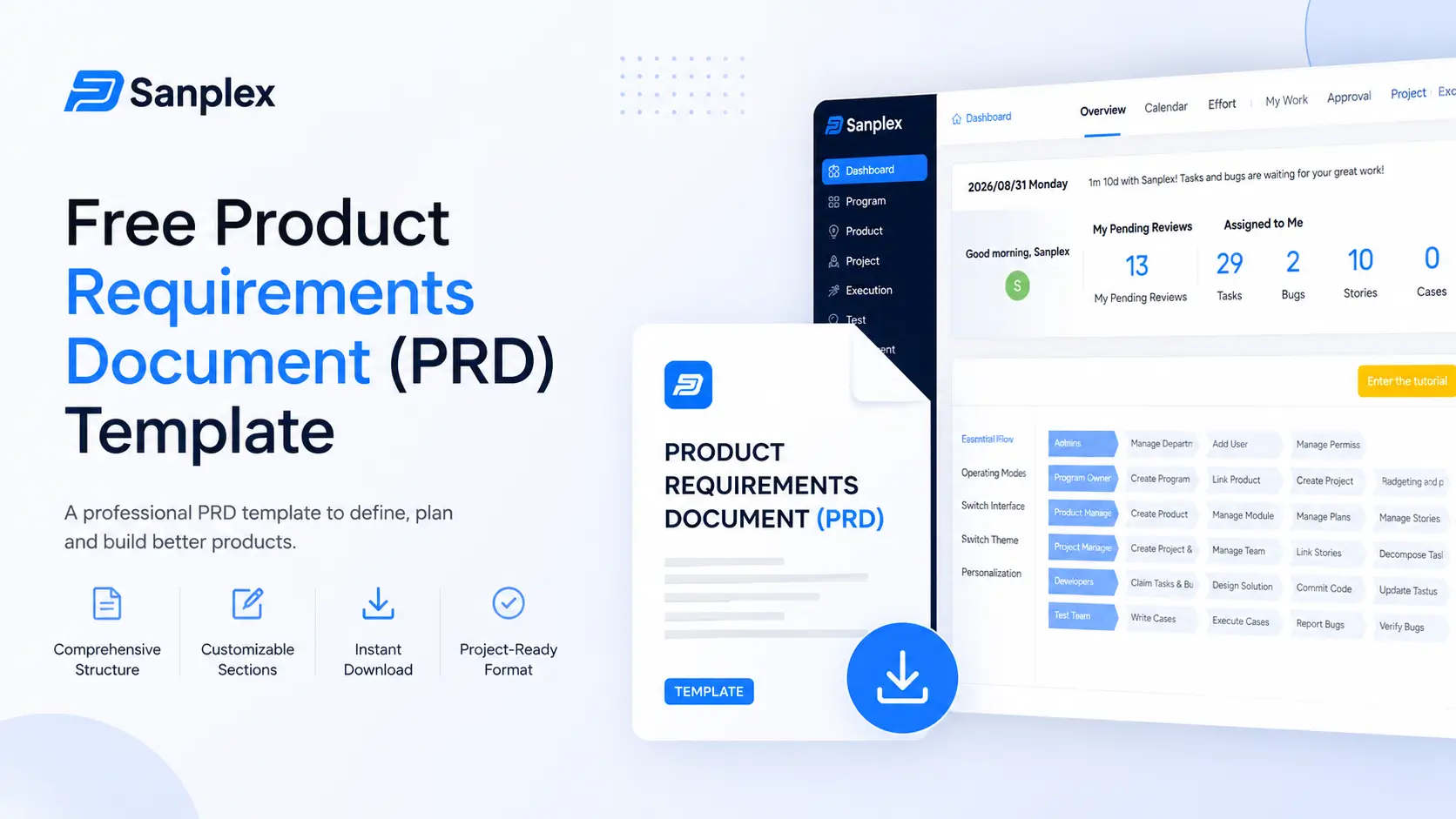
Most PRD templates fail the same way: they're comprehensive enough to look thorough and vague enough that engineering still has to ask clarifying questions before building anything. A good PRD isn't the longest one, it's the one that answers the questions people actually have when they sit down to build. Here's a template built around that, section by section, with notes on what each part needs to actually accomplish.
Problem Statement
What problem are we solving, and for whom, specifically? Not "users want better reporting," but "finance managers currently spend 3 hours a week manually reconciling data across two tools because there's no shared view." A vague problem statement produces a vague product. Include what happens if this problem stays unsolved, that context is what lets people push back intelligently if the proposed solution doesn't actually address it.
Goals and Non-Goals
List what this specific release is trying to accomplish, in measurable terms where possible. Just as important: list what it's explicitly not trying to solve. Non-goals prevent scope creep more effectively than almost anything else in a PRD, when someone proposes an addition mid-build, pointing back to "that's explicitly out of scope for this release" ends the debate faster than a judgment call in the moment.
User Stories or Use Cases
Describe the specific scenarios this feature needs to handle, written from the user's perspective: "As a [role], I want to [action], so that [outcome]." Keep these concrete and specific rather than abstract, "as a user, I want a better experience" tells a developer nothing actionable. Include edge cases here too, what happens when a required field is empty, what happens with a duplicate entry, these are exactly the details that get skipped in early planning and discovered painfully during QA.
Requirements
Break this into functional requirements (what the system must do) and non-functional requirements (performance, security, accessibility standards it must meet). Each requirement should be specific enough that someone could write a test case directly from it, "the system should be fast" isn't a requirement, "search results should return within 2 seconds for queries under 50 characters" is.
Success Metrics
How will you know if this actually worked, after it ships? Define this before building, not after, teams that skip this step tend to declare success based on whether the feature shipped rather than whether it achieved anything. Tie metrics back to the problem statement, if the problem was "3 hours a week lost to manual reconciliation," the metric should measure whether that time actually dropped.
Out of Scope
A dedicated section listing what's explicitly not included in this version, separate from the Non-Goals section above, this one is more tactical: specific features, edge cases, or platforms being deliberately deferred to a later release. Naming these explicitly prevents them from being silently assumed as included by someone reading the document quickly.
Open Questions
List what's genuinely still unresolved, rather than presenting the document as more finished than it is. A PRD with an honest "open questions" section is more trustworthy than one that pretends everything's been decided when it hasn't, and it gives reviewers something specific to weigh in on instead of a vague "any thoughts?" request.
What to Leave Out
Sections that sound thorough but rarely earn their place: exhaustive competitive analysis (link to a separate doc if this genuinely matters), detailed UI mockups (these belong in design tools, not embedded in a PRD where they go stale immediately), and a full technical architecture breakdown (that's an engineering design doc's job, not the PRD's). A PRD that tries to be everything ends up being read by no one in full.
Keeping the PRD Connected to What Gets Built
A PRD that lives in a separate doc from actual development tracking tends to drift out of sync, requirements get discussed once at kickoff and then forgotten as the build evolves. Sanplex's requirements management links requirements directly to the tasks and test cases built against them, so the PRD's requirements stay connected to what's actually being tracked and tested, rather than existing as a static document nobody revisits after week one.
Quick Answers
How long should a PRD be?
Long enough to answer the sections above clearly, short enough that people actually read it in full. A one-page PRD for a small feature is fine; a ten-page one is usually a sign of scope creep in the document itself.
Who should write the PRD?
Typically a product manager, though input from engineering and design during drafting produces a more realistic document than one written in isolation and handed off.
Does every feature need a full PRD?
No, small, low-risk changes often just need a brief written description. Save the full template for features with real scope, ambiguity, or cross-team dependencies.
Should the PRD include a technical design?
Generally no, that belongs in a separate engineering design document. The PRD defines what and why; engineering owns how.
What's the most commonly skipped section?
Success Metrics and Out of Scope. Both feel less urgent when a team is eager to start building, which is exactly why they're worth forcing before work begins.
Want requirements connected directly to execution and testing?
Visit Sanplex or book a demo to see how it works.
Related Blogs
Free Sprint Retrospective Template