Sanplex vs Asana
August 6, 2026PUBLISHED INAgile
 ali
ali 2026-08-06 14:31:00
 0
0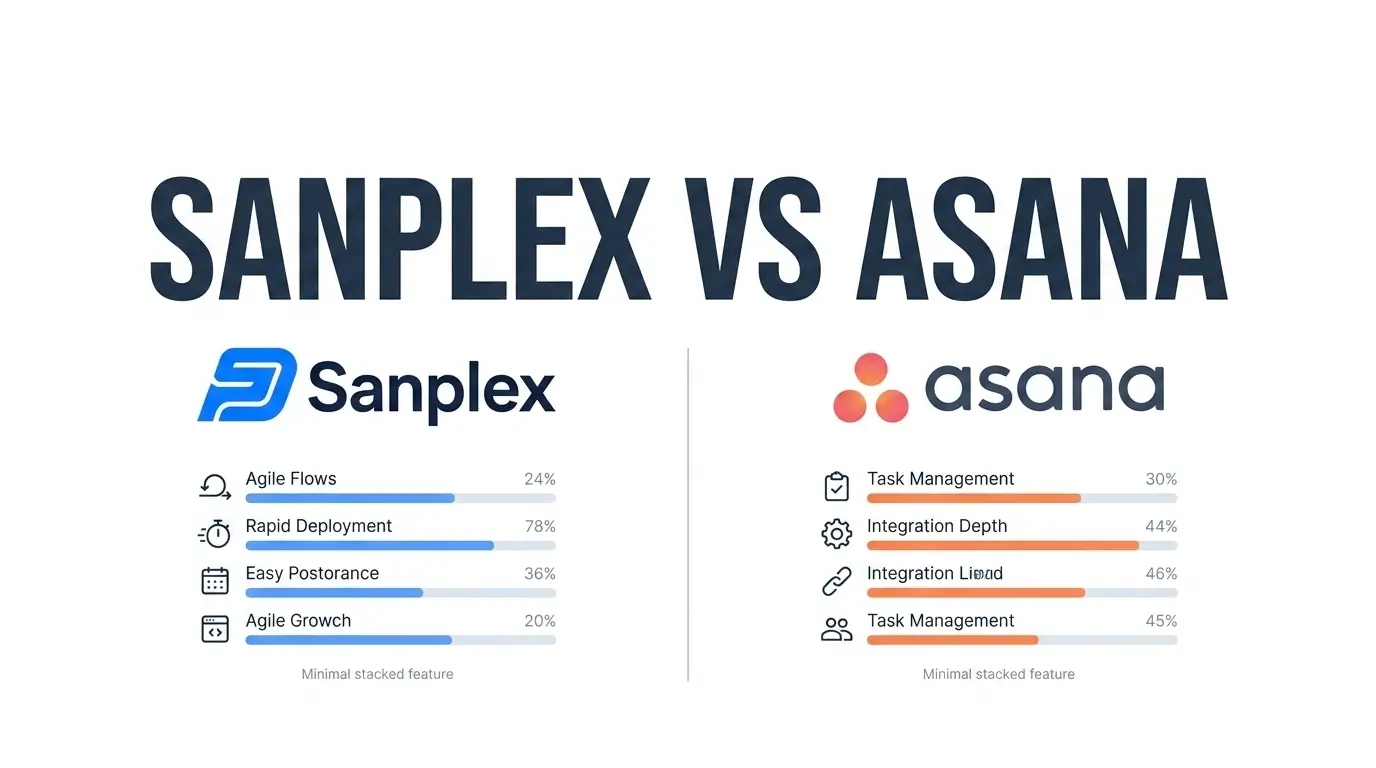
Asana and Sanplex both get lumped into the same "project management software" bucket, but they were built for fairly different jobs. Asana grew up as a general work management tool, good for marketing calendars, campaign tracking, cross-team task lists. Sanplex comes from a different direction entirely, built around full software and hardware development lifecycle management, the kind of thing engineering and QA teams need when a simple task list stops being enough.
That difference shapes almost everything else in this comparison, so it's worth understanding before you look at a single feature list.
The Short Version
If your team is mostly non-technical, coordinating marketing campaigns, ops tasks, or general cross-department work, Asana is probably the more comfortable fit. If you're managing software or hardware development with real requirements traceability, test case management, bug tracking, and release planning, Sanplex tends to cover that ground more natively, without needing three or four other tools bolted on.
Feature Comparison
Asana's strength is flexibility for general work. Boards, lists, timelines, and a workflow builder cover a wide range of use cases without much setup. It's genuinely easy to onboard a team onto, and its automation and AI features (rolled out through late 2025 and into 2026) have added real capability around smart workflows and reporting.
Sanplex takes a narrower but deeper approach. It's structured around a four tier hierarchy, Program, Project, Product, and Execution, so strategic planning and day to day task tracking exist in the same system instead of being handled by separate tools. It also natively covers requirements management, test case linkage, bug tracking, and release coordination, the pieces that most general work management tools either lack entirely or handle through third party plugins.
Neither approach is wrong. It depends on whether "project management" means coordinating people around tasks, or managing an actual product development lifecycle with technical traceability.
Pricing Comparison
Asana's current pricing runs on a per seat, per month model. There's a free Personal tier, a Starter plan around $10.99 per user per month billed annually, an Advanced plan around $24.99 per user per month billed annually, and custom priced Enterprise and Enterprise+ tiers for larger organizations needing SSO, advanced compliance, and similar controls.
Sanplex's pricing works differently: a free tier, a Standard plan around $39.9 per user per year, and a Premium plan around $59.9 per user per year. Priced annually rather than monthly, that ends up noticeably lower than Asana's paid tiers for teams that need the deeper feature set, since you're not paying separately for the reporting, testing, and traceability features Asana would require an add-on or a different tool entirely to match.
Deployment: Cloud-Only vs Your Choice
This is one of the clearer differences. Asana is cloud-only. There's no self-hosted option, so your data lives on Asana's infrastructure no matter which plan you're on.
Sanplex offers both. You can run it as a cloud service the same way Asana works, or deploy it on-premises and keep everything inside your own infrastructure. For teams in regulated industries, or anyone whose compliance team has opinions about where company data physically sits, that's often the deciding factor before any feature comparison even starts.
Who Should Pick Which
Asana tends to make more sense for marketing teams, operations groups, and organizations doing general cross-functional work where the main need is visibility and task coordination, not deep technical traceability.
Sanplex tends to make more sense for software and hardware development teams that need requirements tracking, test management, and bug tracking to actually connect to each other, and for any organization that wants the option to self-host rather than being locked into a single vendor's cloud.
Frequently Asked Questions
Is Sanplex a direct replacement for Asana?
Not exactly. It can replace Asana for task and project tracking, but it's built with a lot more depth around development-specific workflows, requirements, testing, releases, that Asana doesn't natively cover.
Does Asana offer on-premise deployment?
No. Asana is cloud-only across all of its plans. If self-hosting matters to your organization, that alone may rule it out regardless of feature comparisons.
Which is cheaper, Sanplex or Asana?
At list pricing, Sanplex's paid tiers run lower per user per year than Asana's Starter and Advanced plans, and Sanplex includes development lifecycle features that would otherwise require separate tools alongside Asana.
Can I migrate existing data if I switch?
Sanplex supports data migration tooling for teams moving from other project management platforms. Check with the Sanplex team directly for what a migration from Asana specifically involves, since the two tools structure data differently.
Is Sanplex only for software teams?
No. It's used across software, hardware, manufacturing, finance, and engineering sectors. Software and hardware development teams tend to get the most immediate value from its lifecycle-specific features, but it isn't limited to them.
Want to see how Sanplex handles your team's actual workflow?
Book a demo and walk through it with someone who can answer your specific questions.