What Is a PMO? Roles, Structure & When You Need One
yesterdayPUBLISHED INAgile
 ali
ali 2026-09-30 14:11:00
 0
0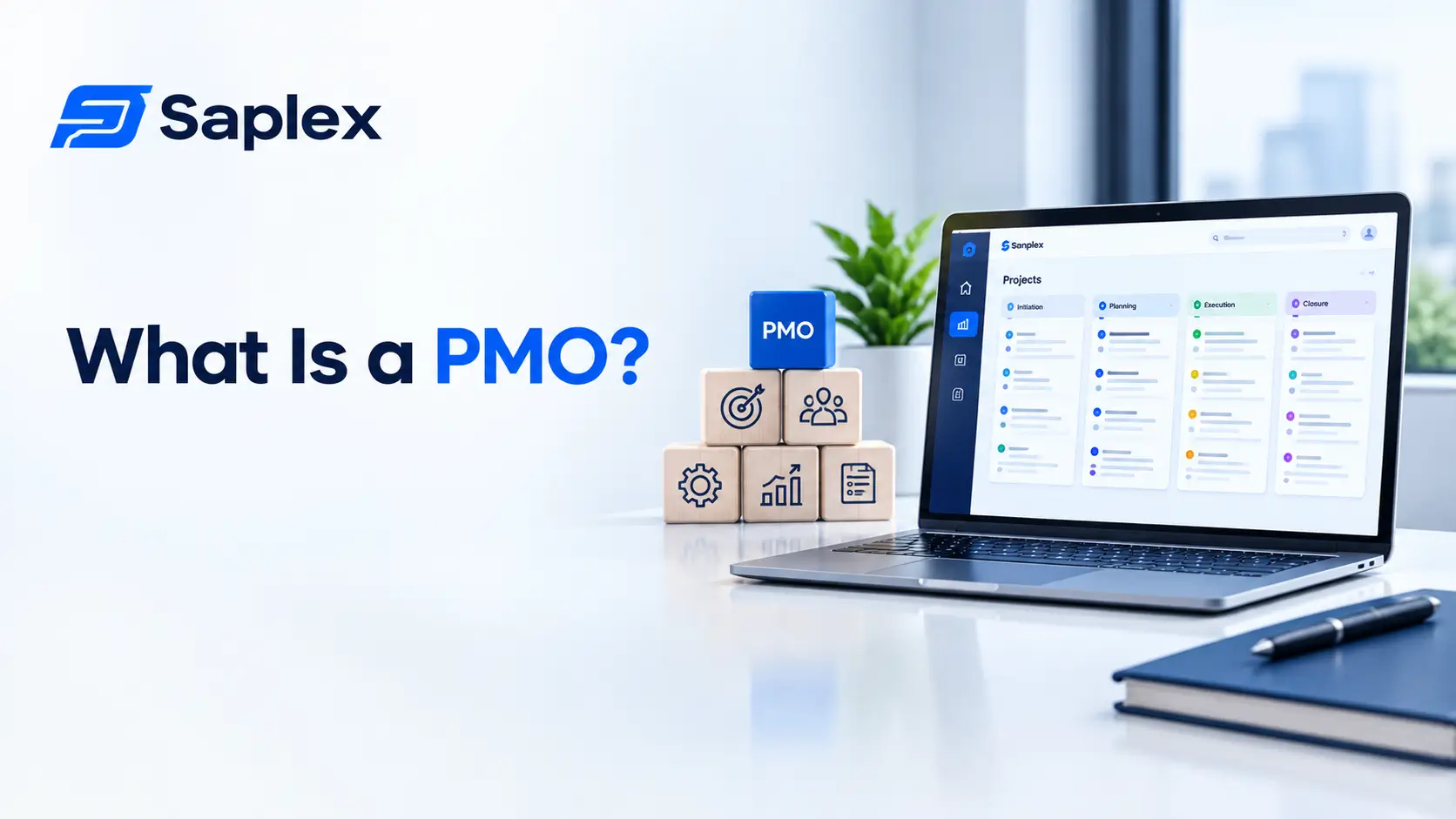
A PMO, or project management office, is the group responsible for setting and maintaining how projects get planned, tracked and reported across an organization. Not every company needs one, and the ones that do need one don't all need the same version of it.
What Does a PMO Actually Do?
A PMO standardizes how projects run, templates, reporting formats, status definitions, so leadership can compare progress across projects using the same language instead of every project manager inventing their own system.
A PMO Isn't the Same as Project Management
Project managers run individual projects. A PMO sets the standards those project managers work within, and often supports them with training, tooling and portfolio level visibility, rather than running the day to day work itself.
What Are the Common PMO Structures?
|
Type |
Level of control |
What it does |
|---|---|---|
|
Supportive |
Low |
Provides templates, training and best practices, doesn't enforce them |
|
Controlling |
Medium |
Requires specific tools, templates and governance to be used |
|
Directive |
High |
Directly manages projects and assigns project managers itself |
Most Companies Start Supportive and Grow Into Controlling
A supportive PMO is a reasonable starting point for most organizations, it offers structure without heavy enforcement. Companies typically shift toward a controlling model once inconsistent project reporting starts causing real problems at the leadership level.
What Roles Exist Inside a Typical PMO?
-
PMO Director or Head, owns the overall standards and reports to leadership
-
Portfolio Manager, tracks how projects compete for resources and prioritization across the company
-
PMO Analyst, maintains reporting, dashboards and data quality across projects
-
Project Managers, may sit inside the PMO directly in a directive structure, or report elsewhere in a supportive one
A Small PMO Often Starts as One Person
Plenty of PMOs begin as a single person handling standardization part time alongside other responsibilities. The formal role structure above is what it grows into once the workload justifies dedicated headcount, not a requirement from day one.
What Does a PMO Typically Report On?
-
Portfolio level status, which projects are on track, at risk, or blocked, in one consistent view
-
Resource utilization across projects, so the same person doesn't get quietly overbooked across three teams
-
Standard project artifacts, charters, risk registers, status reports, kept in a consistent format
-
Lessons learned across closed projects, so the same mistakes don't repeat on the next one
Reporting Only Matters If Someone Acts On It
A PMO that produces detailed dashboards nobody actually reviews in a decision making meeting isn't adding value, it's adding a maintenance task. The reporting has to feed into a real decision point, budget reallocation, staffing changes, project cancellation, or it tends to get deprioritized within a year.
How Does a PMO Fit Into a Larger Project Hierarchy?
A PMO typically sits above individual projects, setting standards that apply across the portfolio. Sanplex's own four tier project management hierarchy covers Program, Project, Product and Execution levels, and a PMO's influence usually spans the top two, setting the structure that individual projects and their execution work then follow.
What Skills Does a Good PMO Leader Need?
Running a PMO well overlaps heavily with being a strong project manager to begin with, plus the ability to standardize without over engineering. The guide on how to become a good project manager covers the foundational skills that a PMO leader needs before adding the portfolio level responsibilities on top.
What Are Signs a Company Actually Needs a PMO?
-
Two projects are competing for the same people and nobody notices until it's already a crisis
-
Leadership gets a different status report format from every project manager and can't compare them directly
-
Projects regularly repeat the same mistakes because nothing captured what went wrong last time
-
Nobody can say with confidence how many active projects the company is currently running
One Clear Symptom Is Usually Enough to Justify Starting Small
A company doesn't need all four symptoms before it's worth acting. Even one of these showing up consistently is often reason enough to start with a lightweight, supportive PMO rather than waiting for the problem to get worse across the board.
Does Every Company Need a PMO?
No, and forcing one onto a small team usually adds process overhead without a matching benefit. A PMO earns its cost once an organization is running enough concurrent projects that inconsistent reporting and duplicated effort start becoming a real, measurable problem, not a theoretical one. Below that point, a lightweight shared template and a regular status meeting often gets most of the benefit without the dedicated headcount.
What to Look For Before Standardizing on a Tool
Once a PMO does form, the tooling question comes up quickly, since portfolio level reporting is hard to do well across a patchwork of spreadsheets and disconnected tools. The enterprise project management software comparison is a reasonable starting point for that evaluation.
A Few More Questions
Does a PMO replace individual project managers?
No, it sets the framework project managers work within. Individual project managers still run their own projects day to day.
How big does a company need to be for a PMO to make sense?
There's no fixed headcount, it's more about the number of concurrent projects and how much inconsistency is causing real pain. Some 30 person companies need one, some 300 person companies don't yet.
Is a directive PMO always better than a supportive one?
No, more control isn't automatically better. A directive PMO fits organizations with high risk, tightly regulated projects. A lighter touch usually works better where teams need flexibility.
Can a PMO exist without dedicated headcount?
Yes, especially early on. A single person handling standardization part time, alongside their normal project work, is a common starting point.
What's the biggest reason PMOs fail?
Adding process that doesn't clearly reduce a real, felt pain point. A PMO that exists mostly to produce reports nobody reads tends to get dismantled within a year or two.
If a growing PMO needs portfolio level visibility across projects, programs and execution in one place, sanplex.com covers how that structure works, or the team can walk through specifics on a short call.
Related Blogs

ITSM Glossary: ITIL, CMDB, CAB