
Result
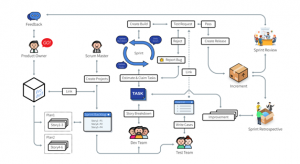
discover the core of scrum framework: its 3 roles 3 artifacts 5 events 5 values and empirical foundations.scrum is a framework for developing and maintaining complex products. it is an incremental and iterative development process. the entire development process in scrum consists of several short sprint cycles. a short sprint cycle is called a sprint and the recommended sprint length is 2-4 weeks. the product backlog is used to manage stories. the product backlog is a list of stories sorted by business value and the items are mainly user stories. the scrum team always first develops stories of higher value to customers. during the sprint the scrum team selects the stories with top priority from the product backlog for
explore the history similarities and differences between traditional and agile project management to choose the best framework for your team. traditionalproject management and agile project management are two main directions. what is the difference between traditional project management and agile project management? the history of project management before 1969 there were not too many rules and regulations for project management whether it was manufacturing cars or ships. in 1969 the united states established the pmi and introduced a set of pmbok rules and pmp certification. project management started to have rules and regulations. until now most industries still use this set of to manage projects: the traditional project management. in 2001 17 software developers gathered in snowbird a ski

this article examines the paradigm shift from viewing code as a disposable project output to treating it as a strategic long-term digital asset within the software factory model particularly in military contexts. it outlines the core principles of code asset management value appreciationspecialized maintenance and systematic quantification. the piece details the six critical lifecycle stages creationreview build testing deployment archiving and emphasizes the unique military requirements for high security traceability and cross-generational maintainability. in traditional software research and development systems code is often regarded as a one-time product of project delivery with its lifecycle terminating upon the project s conclusion. this leads to significant challenges such as the inability to consolidate organizational technical capabilities redundant development efforts
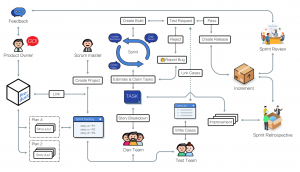
this article explains the standard workflow of project management software using sanplex as an example. it details the core agile roles product owner scrum master development team and test team and how they collaborate across products projects and testing phases to deliver high-quality software efficiently. more and more project management software solutions are being widely used by individual developers and software teams. despite this many beginners do not know how to use project management tools efficiently or understand who the core roles are in these systems. today we will introduce the process and roles of project management software taking sanplex as an example. as a professional alm tool sanplex supports development project management and helps manage and track the
arcsolu a french software provider transitioned from jira to sanplex to manage 2 000 client projects. by leveraging sanplex & 039 s integrated story task and bug management the team reduced costs and simplified their r& d lifecycle while maintaining high-quality delivery for their erp and pos solutions. arcsolu is an enterprise based in paris france. founded in 2006 the company has been providing reliable and nf 525 certified cash register software solutions since 2017 in accordance with government regulations. their portfolio includes arcresto restaurant management systems and specialized erp management software. arcsolu boasts a multidisciplinary team of it engineers professional consultants and marketing experts. regardless of a customer s specific business activity the team endeavors to provide the

the final installment of the agile glossary explains critical concepts like iterationvelocity test-driven development user stories and work-in-progress wip limits. understanding these terms is essential for managing workflows planning releases and maintaining sustainable agile practices. in this article the remaining 11 of the 19 key agile terms will be introduced. check out the other two articles in this series: agile glossary part 1: scrum kanban and extreme programming xp agile glossary part 2: backlog iterationand more key terms to cover: iterationplanning iterationvelocity kanban board release planning task board test-driven development user story workflow work-in-progress wip 11. iterationplanning the goal of iterationplanning is to define a set of user stories that will be developed

this second part of the agile glossary defines seven essential terms including acceptance testing backlog burn down chart and iterationproviding foundational knowledge to streamline software development workflows and enhance team communication. this time we ll explain another 7 agile terms that will help you decode this software development methodology. agile glossary part 1: scrum kanban and extreme programming xp agile glossary part 3: iterationvelocity user story and more key terms to cover: acceptance testing backlog burn down chart daily meeting effort estimates in abstract units points impediment iteration4. acceptance testing the functional testing of a user story by the software development team during the implementationphase. usually the customer specifies scenarios to test whether a user
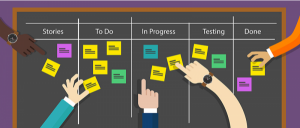
this agile glossary part one explains the core principles and practices of three major software development methodologies: scrum kanban and extreme programming xp . it highlights key concepts like iterative development visualizing workflows and core agile values. in this agile glossary we ll explain 19 key agile terms that will help you decode this software development methodology. agile glossary part 2: backlog iterationand more agile glossary part 3: iterationvelocity user story and more key terms to cover: scrum kanban extreme programming xp acceptance testing backlog burn down chart daily meeting effort estimates in abstract units points impediment iterationiterationplanning iterationvelocity kanban board release planning task board test-driven development user story workflow work-in-progress wip 1. scrum
discover the crucial role of the " on-site customer" in extreme programming xp . this practice enhances communicationbuilds trust and ensures developed features meet real user expectations through continuous feedback scenario-based user stories and active collaboration. in scrum customers are typically only involved in product feedback and acceptance. in extreme programming xp having an on-site customer is an important practice to ensure that the deliverables meet the customer s expectations. the customer in extreme programming is not necessarily the personwho pays for the system but the personwho actually uses the system. responsibilities of on-site customers as mentioned in our previous blog on the extreme programming: planning game user stories originate from customers. teams that have used
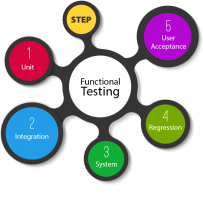
learn the core methodologies advantages and disadvantages of functional testing along with essential entry and exit criteria for quality assurance. functional testing disadvantages it requires a large number of test cases. test cases can often produce a lot of redundancy. achieving 100 test coverage is practically impossible. functional testing advantages it is completely independent of how the software is implemented. if the underlying code or implementationchanges the existing functional test cases remain valid and can still be used. commonly used methods: functional decomposition: through functional decompositionthe scope of software functional testing can be clearly outlined. this makes functional testing measurable which is highly conducive to testing supervisionand project management. equivalence partitioning class division: this method