
Sprint Planning Best Practices for Agile Teams
August 11, 2026PUBLISHED INAgile
 ali
ali 2026-08-11 17:35:00
 0
0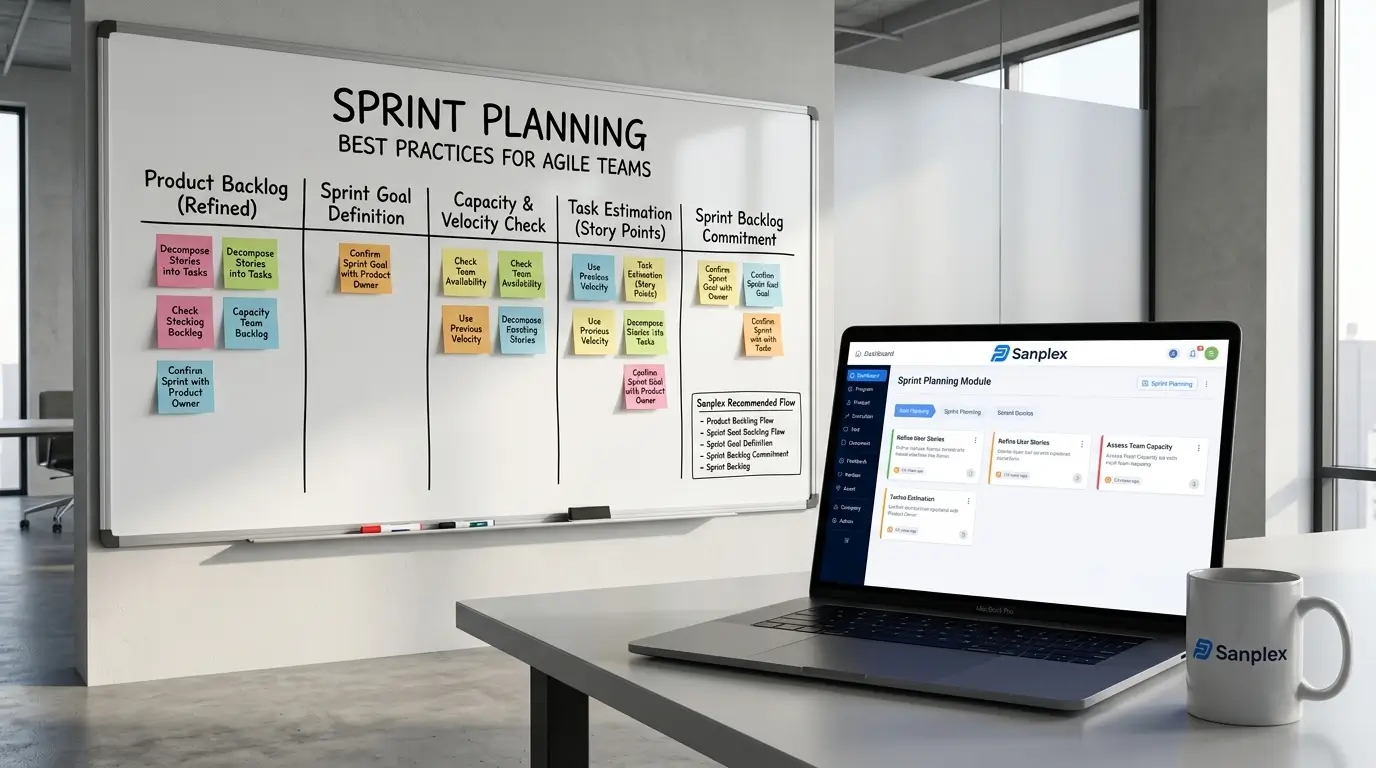
Sprint planning goes wrong in fairly predictable ways: teams commit to more than they can finish, the backlog going into planning wasn't actually ready, or the meeting turns into a two-hour re-litigation of every ticket's priority. None of that is inevitable. Most of it comes down to a handful of habits that either get built into how a team plans, or don't.
Here's what actually holds up across teams that run sprint planning well.
Come in With a Groomed Backlog, Not a Raw One
Sprint planning shouldn't be the first time anyone looks closely at the tickets under discussion. Backlog grooming, ideally a separate session earlier in the sprint, is where ambiguous requirements get clarified, tickets get roughly sized, and anything clearly out of scope gets pushed down or removed. Walking into planning with a groomed backlog is the single biggest difference between a 30-minute planning session and a two-hour one.
Size Based on Team Capacity, Not Wishful Thinking
Look at actual velocity from the last few sprints, not what the team could theoretically do in a perfect week with no interruptions, no meetings, and nobody out sick. Teams that plan against real historical capacity consistently finish what they commit to. Teams that plan against best-case capacity consistently don't, and that gap erodes trust in the process over time, both from the team and from whoever's watching the sprint burn down.
Write a Clear Sprint Goal, Not Just a Ticket List
A sprint goal is a single sentence describing what success looks like by the end of the sprint, not a restatement of the ticket list. "Ship the updated checkout flow" is a goal. "Complete tickets 401 through 415" is not, it's just an inventory. A real goal gives the team something to make tradeoffs against mid-sprint when priorities inevitably shift, which ticket list alone can't do.
Break Down Anything That's Still Too Big
If a ticket can't reasonably be finished within a few days of the sprint, it usually needs to be broken down further before it goes into planning, not during it. Oversized tickets are one of the most common reasons sprints run long, since a task that's actually three days of work but estimated as one usually only reveals that gap once it's already too late to adjust.
Leave Room for the Unexpected
Production issues, urgent requests, and unplanned interruptions happen regardless of how well a sprint is planned. Teams that plan every available hour of capacity against sprint work consistently get derailed by the first unplanned fire. Building in some buffer, even informally, tends to produce more predictable sprint outcomes than planning at full theoretical capacity.
Keep the Meeting Focused on Decisions, Not Discovery
If a ticket sparks a long debate about requirements or technical approach during planning, that's usually a sign it wasn't actually ready for the sprint, table it and move on rather than letting one ticket consume the whole session. Tools that keep requirements, estimates, and sprint history connected, like Sanplex, make it easier to catch underspecified tickets before planning even starts, since the gaps tend to be more visible when everything's tracked in one connected system rather than scattered across a ticket tool and a separate requirements doc.
Review What Actually Happened Last Sprint Before Planning the Next One
A quick look at what got finished, what didn't, and why, should inform the next sprint's planning, not just live in a retrospective that nobody references again. If the same type of ticket consistently gets underestimated, that's a pattern worth adjusting for directly rather than repeating every two weeks.
Frequently Asked Questions
How long should sprint planning take?
For a two-week sprint, most well-prepared teams finish planning in under an hour. Sessions that regularly run much longer are usually a sign the backlog wasn't groomed beforehand.
Should sprint planning include the whole team?
Generally yes, since the people doing the work are best positioned to size it accurately and flag concerns early, rather than having capacity decided for them.
What's the difference between a sprint goal and a sprint backlog?
The sprint goal is the single outcome the sprint is working toward. The sprint backlog is the specific list of tickets the team believes will get there. The goal gives the backlog its purpose.
How much buffer should a team leave for unplanned work?
This varies by team and how frequently interruptions actually occur, but reviewing past sprints for how much unplanned work showed up is a more reliable guide than picking an arbitrary percentage.
What should happen if a sprint's scope needs to change mid-sprint?
A clear sprint goal makes this decision easier, changes that support the goal can be considered, while unrelated requests are more easily deferred to the next planning session.
Want to see how Sanplex keeps sprint planning connected to requirements and past sprint history?
Book a demo and bring your team's current process to the conversation.
Related Blogs
Best Requirements Management Tools