
How to Run a Daily Standup Meeting (Agenda + Examples)
2 hours agoPUBLISHED INAgile
 ali
 2026-10-26 15:48:00
 0
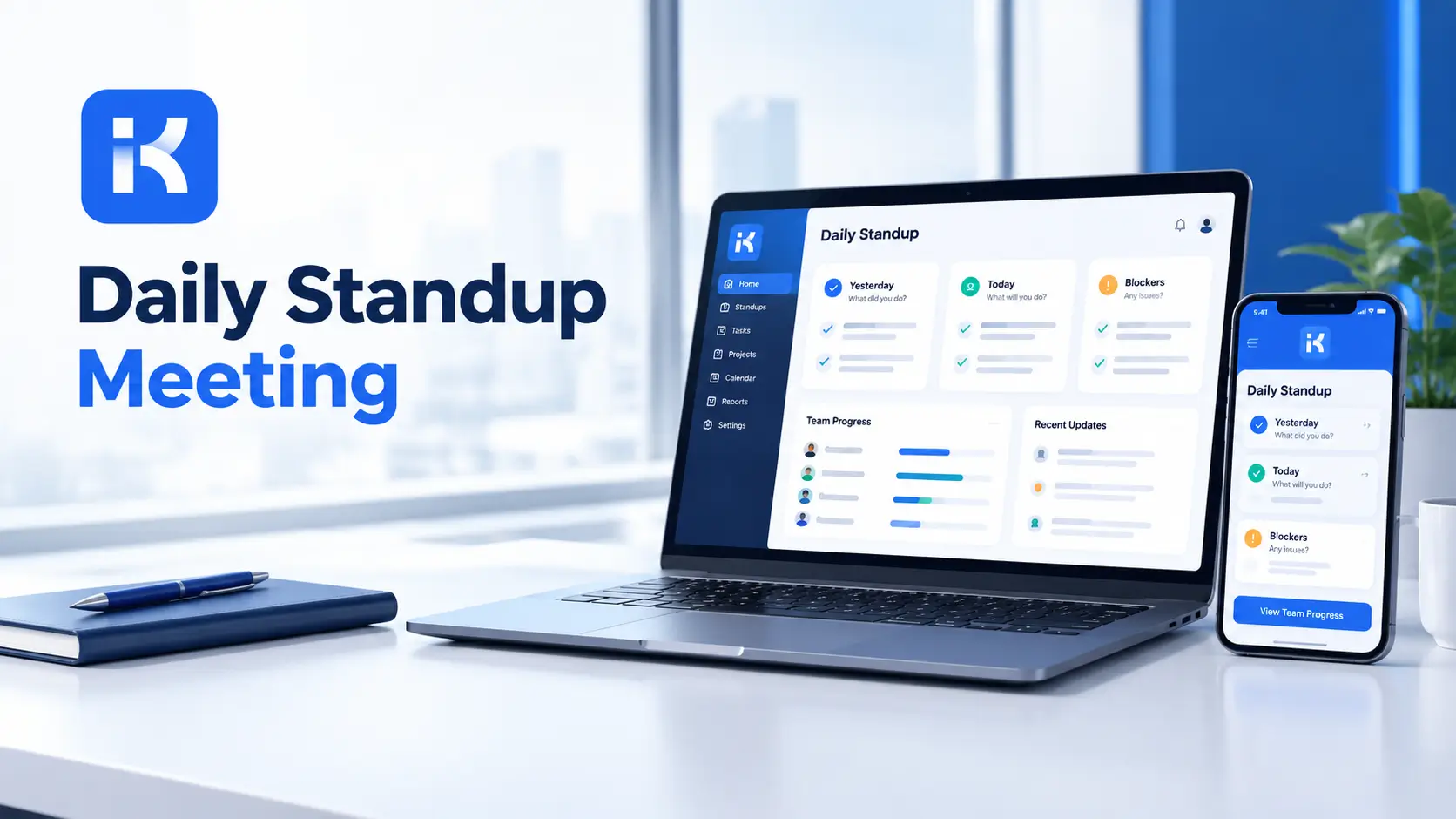
A standup can last forty five minutes, with a manager asking each person to justify their time. It can also take eight minutes and fix three problems before ten in the morning. Same meeting, same name. The only difference is how it's run.
A daily standup meeting is one of the simplest agile habits, and one of the easiest to get wrong. Here's how to keep it short and useful, with a sample agenda, examples of good updates and fixes for the problems that crop up most.
What is a daily standup meeting?
A daily standup is a brief meeting where the team gets together to share what's happening and coordinate the day. It's called a standup because people traditionally stood, which discourages long speeches. In Scrum it's called the Daily Scrum, and it's timeboxed to fifteen minutes.
Its purpose is to help the team work together. It isn't for reporting to a manager, solving long technical debates or logging hours. If a topic needs more than a minute, take it offline.
The three classic questions
-
What did I do yesterday that helped the team make progress?
-
What will I do today?
-
Is anything blocking me?
Simple, and it works. But the questions are only a starting point. Many mature teams drop them in favor of walking the board, which we'll cover below.
A sample fifteen minute agenda
|
Time |
What happens |
|---|---|
|
0 to 1 min |
Start on time, even if someone is missing |
|
1 to 11 min |
Each person gives a short update, or the team walks the board |
|
11 to 14 min |
Raise blockers and decide who'll follow up |
|
14 to 15 min |
Confirm the plan for the day, then stop |
Starting on time is a bigger deal than it sounds. If you wait for latecomers, you teach everyone that being late is fine.
Examples of good and bad updates
A weak update
"Yesterday I worked on the login thing, today I'll keep working on it, no blockers." It tells the team nothing they couldn't guess.
A useful update
"Yesterday I finished the login form validation. Today I'm adding the error messages, and I'll need five minutes with Priya on the wording. I'm blocked on the test account, which expired." It states progress, a plan, a need and a blocker.
Good updates are short, specific and aimed at teammates, not the manager.
Walking the board instead of going person by person
Many experienced teams start from the board, right to left, focusing on the work closest to done. The question becomes, what will it take to move this card forward today? It keeps the discussion on the work, not on who's busy, and it spots stuck items quickly. Our Scrum and Kanban boards in Sanplex are built for this style of standup.
Who should come
The people doing the work. Others can listen, but they should stay quiet. The product owner and scrum master usually attend. Managers are welcome as observers, though if they start directing the conversation, the meeting stops belonging to the team.
Running a standup remotely
Distributed teams can run a good standup too, with a few adjustments. If your team spans several time zones, read our best practices for distributed agile teams. A few quick rules of thumb:
-
Use video, even if it's only for a few minutes
-
Share the board on screen so everyone sees the same thing
-
Use a consistent order, so people know when it's their turn
-
If time zones don't line up, use a written standup in a chat channel, but keep a live one weekly
-
Keep it at fifteen minutes. Remote meetings feel longer
How standups connect to your sprint
A standup isn't a stand alone ritual. It checks progress against the plan you made in sprint planning. If you aren't sure how to set that plan up, our sprint planning best practices is a good place to start. Each day's standup is a small chance to ask whether the sprint goal is still in reach.
Standup formats worth trying
Round the room
Each person speaks in turn. It's simple and easy to learn, which is why new teams start here. The downside is that updates can become a list of activities nobody listens to.
Walk the board
The team looks at the board and discusses cards, starting with the ones closest to done. It keeps the focus on finishing work, and people only speak about items that matter.
Written standup
Everyone posts a short update in a chat channel at a set time. It suits teams across several time zones, though it loses the quick back and forth of a conversation.
What a good standup sounds like
Imagine a five person team looking at their sprint board. The tester says the checkout story failed in testing on Monday and is back with the developer. The developer says she'll fix it by noon and ask for a quick retest. The designer notes the next story is waiting for a copy decision and asks the product owner for it by lunch. The whole exchange takes ninety seconds, three people leave knowing exactly what to do, and nobody has said a single sentence that started with "I was in meetings."
How to start if your team has never done one
-
Pick a fixed time that suits everyone, ideally in the morning
-
Agree on the format for the first two weeks, and then review it
-
Choose someone to keep time, rotating the job weekly
-
Keep a visible parking lot for side topics
-
Ask the team after two weeks whether it helps, and change what doesn't
Be patient. The first few standups are always awkward, and it usually takes a couple of weeks before people settle into a rhythm.
Common mistakes and how to fix them
The meeting runs long
Set a timer and use a parking lot. Anything that needs discussion goes on a list for after the standup, with the relevant people only.
It becomes a status report
People talk to the manager instead of each other. Ask the manager to step back, or have team members address teammates directly.
Nobody mentions blockers
Make it safe. If someone raises a problem and gets blamed, they'll stop. Thank people for speaking up.
The same updates every day
If the answers never change, the work items are probably too big. Split them so progress is visible every day.
Skipping it when busy
The busier you are, the more a short check in helps. Skip it on a few days and watch how many problems turn up later.
A word on tone
The mood of a standup spreads fast. A relaxed, curious tone gets honest updates. A tense one gets polished ones. If you're facilitating, ask questions like "what would help?" instead of "why isn't this done?"
When the standup stops working
Even good teams hit a point where the meeting feels stale. Look at the signs. People look at their phones. Updates repeat day after day. Problems are raised in side chats instead of the meeting. These are signals to change something, not to cancel the meeting.
Try a new format for two weeks, shorten it to ten minutes or move it to a different time. Ask the team what would make it more useful, then act on the answers. A standup that evolves with the team stays valuable for years.
Making standups easier in Sanplex
Keep the board up to date and the standup nearly runs itself. In Sanplex your team can open the sprint board, filter by person if needed and walk through the cards in a few minutes.
Frequently asked questions
What is a daily standup meeting?
It's a short daily meeting, usually fifteen minutes, where the team shares progress, plans the day and raises blockers.
What are the three standup questions?
What did I do yesterday, what will I do today, and what's blocking me. Many teams also walk the board instead.
How long should a daily standup be?
Fifteen minutes at most. If it regularly runs longer, use a parking lot for discussions and keep updates brief.
Who should attend the daily standup?
The team doing the work, plus the product owner and scrum master. Others can observe but shouldn't take over the meeting.
Should remote teams hold a daily standup?
Yes, ideally live on video. Where time zones make that hard, a written standup in a chat channel can work, with a live meeting once a week.
|
Run standups from the board Use Scrum and Kanban boards in Sanplex to keep every standup focused. Start free. Start with Sanplex |
Related Blogs
How to Write a User Manual for Software (Template)