Free Release Notes Template
September 3, 2026PUBLISHED INAgile
 ali
ali 2026-09-03 17:00:00
 0
0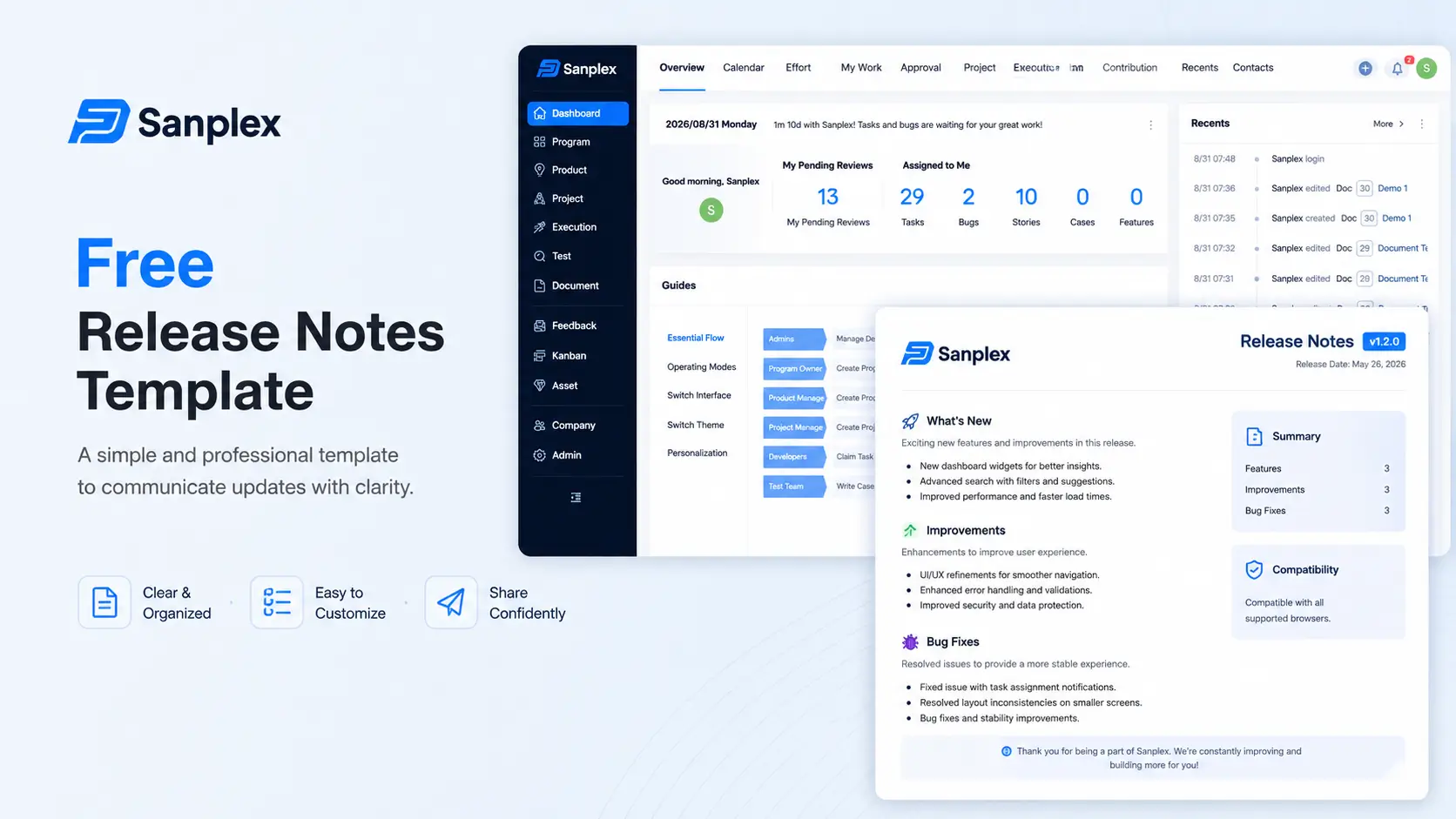
Most release notes get written for the person writing them, a raw list of what changed, in whatever order it happened to ship. Good release notes get written for the person reading them, someone trying to quickly answer "does this affect me, and do I need to do anything." That's a different document, and it's worth building from a template designed around the reader rather than the changelog.
What a Release Entry Actually Needs
Version 4.2.0 — March 14, 2026
New: Bulk approval for expense requests. Managers can now approve or reject multiple pending requests at once from the approvals dashboard, instead of opening each one individually.
Improved: Search results now load in under a second for most queries, previously this could take 3-4 seconds on accounts with large data sets.
Fixed: Resolved an issue where notification emails were occasionally sent twice for the same event.
Deprecated: The legacy reporting dashboard will be removed on May 1, 2026. Switch to the new Analytics view before then.
Notice what each line does: it names the category (New, Improved, Fixed, Deprecated) so a scanning reader can filter mentally, it's written in plain language rather than internal ticket titles, and the Deprecated entry includes a specific date and a specific action, not just a warning.
The Four Categories Worth Standardizing On
New covers features that didn't exist before. Improved covers changes to something that already existed, faster, clearer, more capable. Fixed covers bugs, described in terms of the problem the user experienced, not the internal root cause. Deprecated covers anything being removed or changed in a breaking way, always with a specific timeline. Keeping to these four, consistently, means readers learn to scan for the category they care about rather than reading every line.
Writing for the Reader, Not the Ticket System
The most common mistake is copying internal ticket titles directly into release notes. "Fixed JIRA-4521" or "Refactored approval service" means nothing to someone outside the engineering team. Translate every entry into what changed from the user's perspective, and what, if anything, they need to do about it. If nothing needs to change on their end, say so explicitly, "no action needed", rather than leaving them to wonder.
Before and After: The Same Change, Two Ways
Internal ticket version: "PROJ-892: Migrate approval workflow to new state machine, deprecate legacy status field."
Release notes version: "Approval statuses now update in real time. If you have any saved filters using the old status names, you'll need to update them, see our migration guide for details."
Same underlying change. One tells a user nothing actionable. The other tells them exactly what's different and what to do about it.
Keeping Release Notes From Falling Behind the Actual Releases
Release notes written well after the fact tend to be vague, thin, or skipped entirely, since nobody remembers the specifics of a change from three weeks ago. Sanplex's release and build tracking keeps release notes tied to the actual builds and the requirements or tickets behind them, so drafting notes from what genuinely shipped is easier than reconstructing it from memory after the fact.
Common Questions
Should every bug fix be listed, even minor ones?
Not necessarily, very minor, invisible fixes can be batched into a general "various stability improvements" line rather than listing dozens of small entries nobody needs individually.
How technical should release notes be?
As non-technical as the audience requires. For an internal engineering tool, some technical detail is fine. For a business-facing product, plain language wins every time.
Who should write release notes?
Often product or a technical writer, translating engineering's raw changelog into reader-facing language, rather than engineers writing directly from ticket titles.
Should breaking changes get special treatment?
Yes, always flag them clearly, with a specific date and required action, rather than burying them in a general list alongside minor improvements.
How often should release notes go out?
Match your actual release cadence, weekly for frequent shippers, per-release for less frequent ones. Consistency matters more than frequency.
Want release notes tied directly to what actually shipped?
Visit Sanplex or book a demo to see how it works.
Related Blogs
Free Product Requirements Document (PRD) Template