Sanplex vs Wrike
August 6, 2026PUBLISHED INAgile
 ali
ali 2026-08-06 15:14:00
 0
0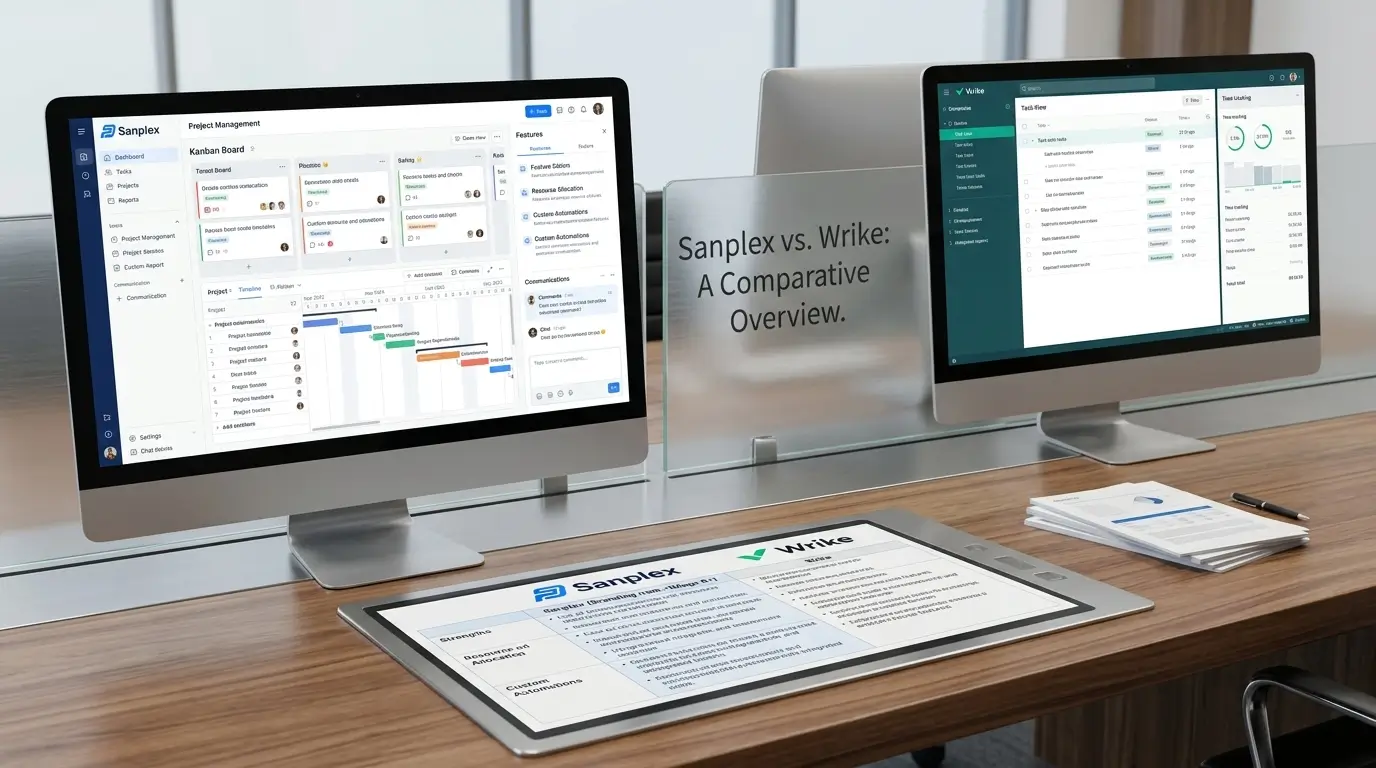
Wrike and Sanplex both go well beyond a basic task board, but they're built around different definitions of "more capable." Wrike leans into general work and resource management, Gantt charts, portfolio views, cross-team scheduling. Sanplex leans into product and software development specifically, with requirements, testing, and releases treated as connected parts of the same system rather than separate concerns.
If you're comparing the two, that difference in focus matters more than any single feature on a checklist.
The Short Version
Wrike tends to fit teams managing multiple projects and resources across an organization, marketing, operations, client services, where scheduling and visibility across teams is the main challenge. Sanplex fits better when the work itself is software or hardware development, and you need requirements, test cases, and bug tracking to actually connect rather than living in separate tools stitched together with integrations.
Feature Comparison
Wrike's core strength is resource and portfolio management. Gantt charts, custom workflows, approval chains, and AI-driven automation give teams visibility across many projects running at once, which is genuinely useful for organizations juggling client work or cross-department initiatives. It's a strong general-purpose tool for teams that need structure without being locked into a development-specific data model.
Sanplex is built differently from the ground up. Its four-tier structure, Program, Project, Product, and Execution, keeps strategic planning and daily execution in one system. It also natively handles requirements management, test case linkage, bug tracking, and release coordination, the kind of workflow that Wrike doesn't cover out of the box and would typically need a separate tool (a dedicated test management platform, for instance) to fill in.
Pricing Comparison
Wrike runs a five-tier structure: a genuinely usable Free plan for up to 5 users, a Team plan around $10 per user per month, a Business plan around $24.80 to $25 per user per month (with a 5-seat minimum), and custom-priced Pinnacle and Apex tiers for larger organizations.
Sanplex's pricing is simpler: a free tier, a Standard plan around $39.9 per user per year, and a Premium plan around $59.9 per user per year. Because Sanplex bills annually rather than monthly, and because it includes development lifecycle features Wrike doesn't offer natively, the two aren't quite an apples-to-apples comparison on price alone. Wrike's Business tier, priced monthly, adds up faster over a year than it might first appear, especially once you factor in Wrike's 5-seat minimum for that plan.
Deployment: Cloud-Only vs Your Choice
Wrike runs entirely as a cloud service. There's no self-hosted option at any tier, so your project data lives on Wrike's infrastructure regardless of plan.
Sanplex offers both. Run it in the cloud the same way Wrike works, or deploy it on-premises to keep everything inside your own infrastructure. For organizations with compliance requirements or specific data residency needs, that's often the deciding factor before any feature-by-feature comparison even matters.
Who Should Pick Which
Wrike makes the most sense for teams managing multiple cross-functional projects at once, marketing agencies, operations teams, client services groups, where resource visibility and scheduling across many initiatives is the core need.
Sanplex makes more sense for software and hardware development teams that need requirements, testing, and release management to function as one connected system, and for organizations that want the flexibility to self-host rather than being tied to a single vendor's cloud.
Frequently Asked Questions
Does Wrike support test case management?
Not natively as a core feature. Teams typically pair Wrike with a separate test management tool if that's part of their workflow. Sanplex includes test case and bug tracking as part of the core platform.
Is Wrike or Sanplex cheaper?
It depends on team size and which Wrike tier you need. Wrike's free plan (up to 5 users) is genuinely usable for small teams. Once you need Wrike's Business tier for larger teams, the annual cost tends to run higher than Sanplex's paid tiers, especially once you account for tools Sanplex includes natively that Wrike doesn't.
Can Wrike be self-hosted?
No. Wrike is cloud-only across all its tiers. If on-premise deployment is a requirement for your organization, that alone may rule it out.
Is Sanplex a good fit for general project management, not just software development?
It can handle general project and portfolio work, but its deeper features, requirements traceability, test management, release coordination, are built specifically for product development. Teams without that need may find Wrike's general-purpose approach a more direct fit.
Can I migrate from Wrike to Sanplex?
Sanplex supports data migration for teams moving from other project management platforms. Reach out to the Sanplex team for specifics on what a Wrike migration involves, since the two tools structure data differently.
Want to see how Sanplex handles your team's actual development workflow?
Book a demo and bring your real use case to the conversation.