Waterfall Project Management Templates
August 18, 2026PUBLISHED INAgile
 ali
ali 2026-08-18 15:18:00
 0
0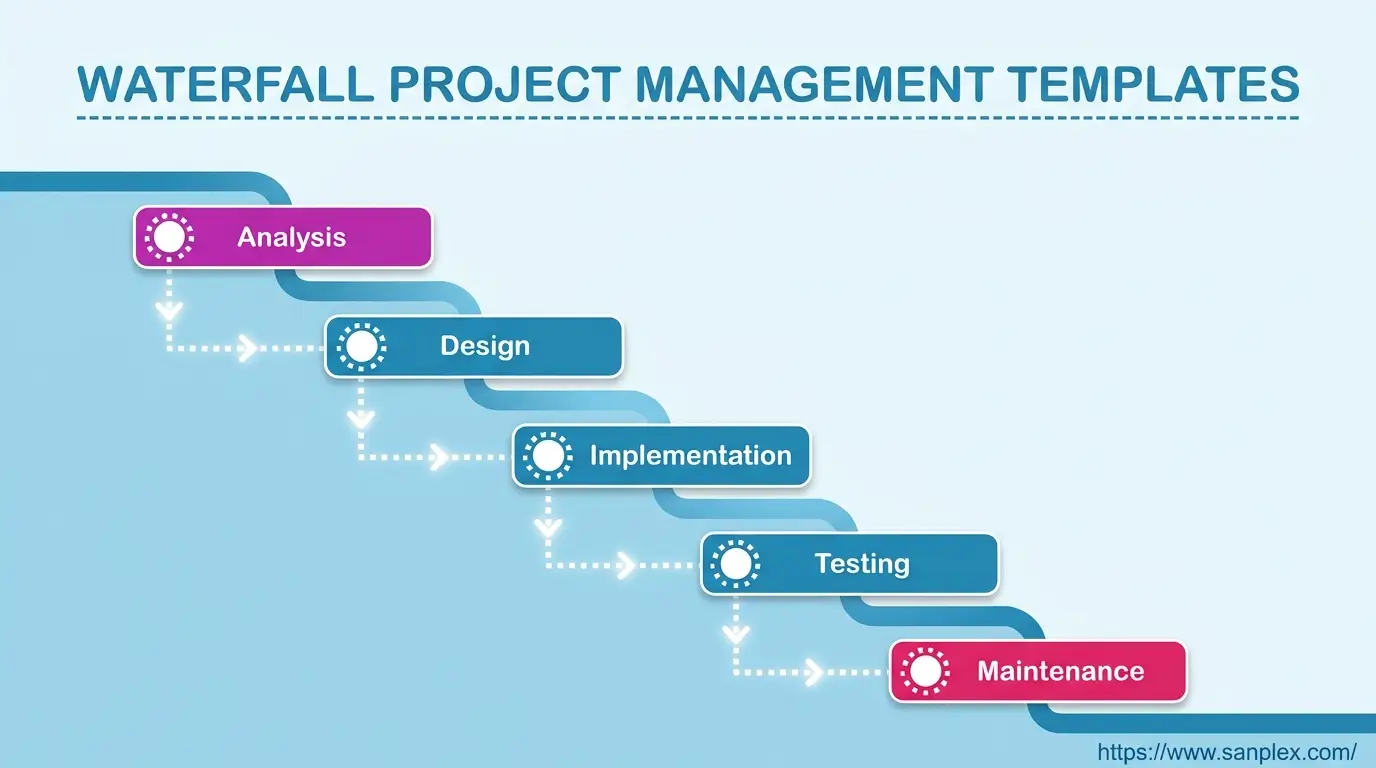
A generic waterfall template, a spreadsheet with phase names and a Gantt bar, covers the surface of waterfall project management without the structure that actually makes it work: formal sign-off between phases, baselined requirements, and traceability from what was specified to what was delivered. Here's what a genuinely useful template needs at each phase, not just a list of phase names.
Requirements Phase Template
This phase needs more than a requirements list. Each requirement needs a unique ID, a clear owner, a priority or criticality rating, and an explicit acceptance criterion, what specifically has to be true for this requirement to be considered met. A formal sign-off field, who approved this requirement set and when, matters more in waterfall than in agile approaches, since the whole downstream process assumes requirements are locked once this phase closes.
Design Phase Template
The design phase template should map directly back to the requirements it addresses, every design decision should trace to at least one requirement, and every requirement should have at least one corresponding design element. This is also where a formal design review record belongs, who reviewed it, what was flagged, how issues were resolved, since design defects caught here are dramatically cheaper to fix than the same defects caught during implementation or testing.
Implementation Phase Template
Beyond a simple task list, this phase benefits from tracking implementation status against the design elements it's built from, not just against a generic task board. A template that links implementation work items back to specific design components (and through them, back to requirements) preserves the traceability chain that makes waterfall's structure actually valuable, rather than just a naming convention.
Verification and Testing Phase Template
Test cases in this template should trace directly to the requirements they verify, and each test result should be recorded with enough detail to reconstruct what was actually tested and what happened, not just pass or fail. A defect log that links back to both the specific test case and the requirement or design element it relates to closes the loop, letting anyone trace a bug back to exactly where in the process it originated.
Maintenance and Closure Phase Template
This phase needs a formal closure record, confirmation that all requirements were met or formally deferred with a documented reason, along with a structure for ongoing maintenance requests that references the original project's requirements and design rather than starting from scratch. A lessons-learned section, what worked, what didn't, what would change next time, is easy to skip but genuinely valuable for the next waterfall project this template gets reused for.
Why Spreadsheet Templates Usually Fall Short
The core problem with a spreadsheet-based waterfall template is that the traceability links, requirement to design, design to implementation, implementation to test, have to be maintained manually, and manual links decay as a project runs long enough. Sanplex supports waterfall management natively, with concept item management, formal baselines, reviews, and over 120 built-in concepts covering the full waterfall structure, plus Gantt charts, weekly reports, and milestone reports for visual tracking, so the traceability that a template tries to represent on paper is actually structural in the system rather than something a project manager has to manually keep in sync.
Frequently Asked Questions
Can a spreadsheet template work for a small waterfall project?
For a small, short project with few requirements, yes, it can be manageable. The traceability maintenance burden grows significantly as project size and duration increase.
What's the most commonly skipped part of a waterfall template?
Formal sign-off and review records. Teams often track tasks and dates but skip documenting who approved a phase and when, which matters if a dispute or audit ever requires reconstructing the decision trail.
Does waterfall still make sense in 2026?
Yes, particularly for projects with well-understood, stable requirements, regulated industries, hardware development, or contractual deliverables where formal phase sign-off genuinely matters.
Can waterfall and agile coexist in the same project?
Yes, hybrid approaches are common, often using waterfall structure for overall phase gates while managing execution within a phase using agile methods.
Does Sanplex only support waterfall, or other methodologies too?
Sanplex supports Scrum, Kanban, Waterfall, CMMI, and hybrid approaches natively within the same platform, not just waterfall specifically.
Want to see structural traceability instead of a manual spreadsheet template?
Book a demo and bring your current project structure to the conversation.
Related Blogs
Kanban vs Scrum: Which Fits Your Team