
Work Breakdown Structure: Definition, Examples & Free Template
2 hours agoPUBLISHED INAgile
 ali
ali 2026-09-27 21:25:00
 0
0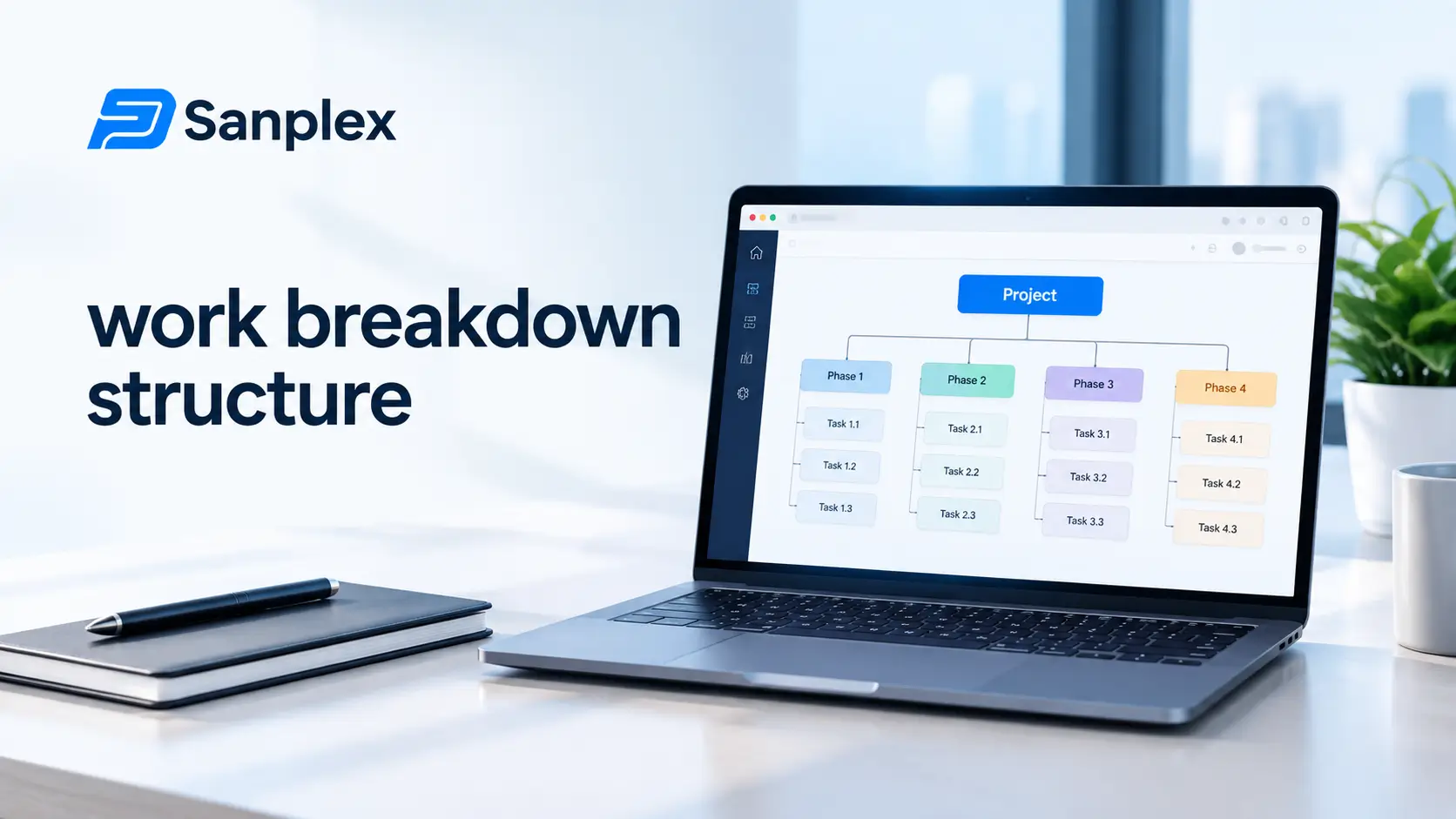
A work breakdown structure, or WBS, breaks a project down into smaller, manageable pieces until each one is small enough to estimate, assign and track on its own. It's one of the oldest tools in project planning, and it's still useful today, even on agile teams that would never call it by that name.
What Is a Work Breakdown Structure?
A WBS is a hierarchical breakdown of a project's total scope, organized around deliverables rather than a chronological task list. Each level splits the one above it into smaller pieces until the bottom level is small enough for one person or team to own.
A WBS Is About Deliverables, Not Tasks
The most common mistake is building a WBS out of action verbs, design the login screen, write the API docs, instead of deliverables, login screen, API documentation. Deliverables stay stable even when the specific tasks needed to produce them change.
What Does a WBS Actually Look Like?
|
Level |
Example |
|---|---|
|
Level 1: Project |
Launch customer self-service portal |
|
Level 2: Deliverable |
User authentication system |
|
Level 3: Work package |
Password reset flow |
|
Level 4: Task |
Build reset token expiration logic |
A Worked Example
Under the authentication deliverable, the work packages might be login, password reset, and two factor setup. Under password reset specifically, the tasks might be building the reset token logic, the email template, and the confirmation screen. Each level is a clean subset of the one above it, nothing floats outside the hierarchy.
How Do You Build a WBS Step by Step?
-
Start with the project's final deliverable, then break it into major deliverables, not phases
-
Keep breaking each deliverable down until a work package is small enough for one owner to estimate confidently
-
Stop once a work package would take roughly one to two weeks of work, going smaller usually adds overhead without adding clarity
-
Number each level so dependencies and reporting stay traceable back to the top
The 100% Rule
The total scope at any level has to equal 100% of the level above it, no more and no less. If the sum of your work packages doesn't fully account for the deliverable above them, either something's missing from the plan or something's been double counted.
What Mistakes Do Teams Make When Building a WBS?
-
Breaking work down by department instead of by deliverable, which creates handoff confusion instead of clarity
-
Going too deep, five or six levels for a project that didn't need that much granularity
-
Building the WBS once at kickoff and never updating it as scope actually changes
-
Letting the WBS and the schedule become the same document, which makes both harder to update independently
A WBS That Never Changes Is Probably Being Ignored
Scope shifts on almost every real project. A WBS that looks identical at project close as it did at kickoff usually means it stopped being a working document early on and became a formality instead.
How Does a WBS Relate to Resource Planning?
Once the work packages exist, they need people and time assigned to them. That's where multi project resource planning explained becomes relevant, especially once the same person shows up as the owner on work packages across more than one project at the same time.
How Does a WBS Feed Into the Backlog?
A WBS and a backlog aren't the same thing, but they connect. The work packages at the bottom of a WBS often become the epics or larger tickets that get broken down further during how to set up a product backlog, especially on projects that mix fixed scope planning with sprint based execution.
Who Should Own Each WBS Item?
Every work package needs exactly one owner, even if several people contribute to it. A free RACI matrix template next to the WBS clears up who's accountable versus who's just consulted, which matters once the breakdown gets more than two levels deep and it's no longer obvious from the structure alone.
How Do You Communicate a WBS to Stakeholders Who Aren't Project Managers?
A five level WBS with full numbering makes sense to a project manager and looks like noise to a stakeholder who just wants to know what's being delivered and roughly when.
-
Show only the top two levels in a stakeholder update, deliverables and major work packages, not individual tasks
-
Pair each deliverable with a plain language description of what it means for the end user, not just its internal name
-
Keep the full detailed WBS available as backup, but don't lead with it in a status meeting
The Full WBS Is a Working Document, Not a Presentation
Trying to present the complete WBS in a stakeholder meeting usually backfires, it reads as more complexity than progress. Save the full structure for planning sessions and hand stakeholders the summarized version instead.
Is a WBS Still Relevant for Agile Teams?
For teams running pure Scrum on a single product backlog, a formal WBS often feels like overhead the backlog already handles. Where it earns its place is fixed scope projects, client deliverables with contractual milestones, hardware adjacent work, or CMMI style environments where a clear, auditable breakdown of scope is expected rather than optional. It's worth being honest that forcing a WBS onto a fast moving, backlog driven team usually creates a document nobody keeps updated.
Fast Answers
How many levels should a WBS have?
Three to five levels covers most projects. Going deeper than that usually adds maintenance overhead without adding useful clarity.
What's the difference between a WBS and a project schedule?
A WBS defines what needs to be delivered. A schedule adds when each piece happens and in what order. The WBS should exist before the schedule, not the other way around.
Should a WBS include time estimates?
The WBS itself doesn't need to, that comes later once work packages are handed off for estimation. Mixing estimation into the breakdown step tends to slow down the structuring itself.
Who typically creates the WBS?
Usually the project manager, often with input from leads on each deliverable, since they know their piece well enough to spot missing sub items.
Does a WBS work for non software projects too?
Yes, it originated in construction and engineering long before software adopted it, and it still applies to any project with a definable set of deliverables.
If your work breakdown needs to connect directly to actual tickets, owners and releases instead of staying in a static document, sanplex.com shows how that fits together, or you can walk through it with the team.
Related Blogs

ISO 27001 Compliance Checklist for Project Management Software