
Result
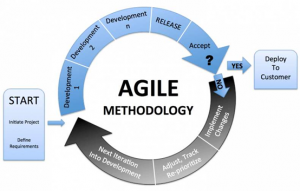
a beginner-friendly guide explaining the core concepts of agile development: iterative processes incremental delivery core values and principles. agile development is a very popular software development method. according to statistics 90 of software development in 2018 adopted agile development. however not many people can explain exactly what agile development is. this article attempts to explain agile development in simple and easy to understand language. 1. iterative development the core of agile development is iterative development. agile must be an iterative development approach.so what is iterative development ? literally translated as repetitioniterative development is actually repetitive development . for large software projects the traditional development method is to use a large cycle such as one year for development and

byd a global leader in evs and green energy utilized sanplex to unify its hardware productionand software development lifecycles. by integrating scrum workflows with manufacturing oversight byd improved cross-departmental collaborationoptimized resource allocationand achieved data-driven productionefficiency. at sanplex we are proud to showcase a landmark use case from one of our most distinguished global clients: byd. as a titan in the automotive and green energy industries byd faces the unique challenge of synchronizing high-speed hardware manufacturing with complex software r& d. by implementing sanplex enterprise byd has successfully streamlined its dual-track operations fostering a culture of transparency and precision. the challenge of convergence in the modern electric vehicle ev sector hardware and software are no longer
2026-04-28
recommended agile readings 2021

this curated 2021 reading list presents top books on agile scrum and lean methodologies. organized into five categories philosophy leadership general management agile management and agile technical it highlights highly recommended titles gathered from online communities and reviews to guide your agile journey. this book list is perfect for those interested in agile scrum or lean this list was compiled by keeping track of which books were mentioned the most in online project management communities. to compile our ultimate list of agile books we combed through amazonreviews and evaluated their star ratings. many of the principles described in these books are used to teach agile project management courses which are becoming increasingly common. (note: the symbols mark

this article explains why " zombie scrum" teams fail to self-organize primarily blaming the blind adoptionof off-the-shelf solutions and external best practices. it highlights that true agility requires cultivating an autonomous environment for double-loop learning rather than rigidly copying other organizations& 039 structures. self-organizationis a concept that is central to the scrum framework. despite its significance it is remarkably hard to define. it is often confused with self-management or the idea that teams should make their own decisions. instead self-organizationis the process by which order arises spontaneously from something that is initially disorganized camazine 2001 . this distinctionmay seem trivial but it helps us understand two essential truths about scrum. the first is how it
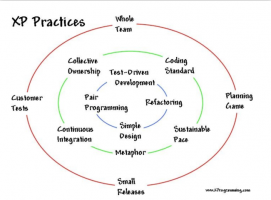
explore the 12 core practices of the extreme programming xp agile methodology from test-driven development and pair programming to continuous integrationand collective code ownership designed to deliver high-quality software efficiently. 1. the planning game 1 create plans quickly and refine them as details change. 2 explanation: determine the scope of the system to be developed and released in the next stage taking into account project progress and technical conditions. the plan must be updated continuously to reflect actual changes. 2. small releases 1 the system should be designed to be delivered as early and frequently as possible. 2 explanation: this emphasizes releasing new versions incrementally in very short cycles. this makes it easier to estimate the progress of
2026-04-25
agile practice: why small releases in scrum?

discover the origins and benefits of small releases in agile including faster feedback reduced risk and better alignment with changing requirements.extreme programming and small releases the concept of releasing frequently rather than waiting for a massive release at the end of a long development cycle originates from extreme programming xp . small releases are essential in xp as they demonstrate the team s accuracy and alignment with the project goals. xp promotes small releases through continuous integrationci and other extreme programming practices. small releases help deliver a working increment within a few weeks allowing the development team to conduct regular weekly reviews. advantages of small releases there are many advantages to adopting a strategy of small frequent releases.

transitioning into the it industry with zero experience requires a strategic approach across four stages: selecting the right programming language mastering the underlying coding mindset gaining hands-onproject experience and deeply understanding client business requirements. the it industry is currently booming and many people are looking to transitioninto it. while the barrier to entry might seem low it s not a field where just anyone with a keyboard can succeed without effort. in particular for absolute beginners with zero foundationentering the industry without a clear goal and plan will only lead to wasted time. today we will walk you through the four essential stages for beginners breaking into the it industry. stage 1: choose your language first
2026-04-25
po: how to write user stories?

learn the 3cs and invest principles of agile user stories to facilitate communicationand drive value-focused development.the origin of user stories user stories are the concepts first proposed in extreme programming. it has also been used in scrum. compared with requirement documents or prototypes user stories are organized in an itemized way which is simple to maintain easy to estimate and sort and facilitate development teams to complete delivery in small iterations. whether a product can be split into user stories with appropriate granularity is the prerequisite for the entire team to be agile. what is a user story user stories describe the features from the perspective of users. a good user story includes three elements namely role activity