
Catalog
Import Jira Data
We support importing Jira data since Sanplex Free16.4. From Sanplex Standard Edition11.6 onwards, newly added issue types, custom fields, and workflows in Jira are supported for migration.
This feature is only available to super administrators for safety reasons.
Please make sure to back up the database and attachments for both Sanplex and Jira before importing the data.
Before starting the import, you need to map Jira to Sanplex.
Jira data can't be imported if the PHP version is below 5.6 due to the low performance for processing imported data.
The import process will take a while, please wait patiently.
1. Steps for Importing Jira Data
- Export the Jira database if it uses MySQL database; export Jira's XML format files if it uses a non-MySQL database; export Jira's attachment.
- Back up the database of Sanplex. Post a reminder of preparing for Jira data import, don't let others use Sanplex during the import process.
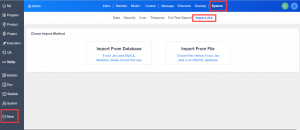
- The super administrator goes to More - Admin - System - Import Jira, and then selects the import method: Import from database or Import from file.
- Follow the prompts to place Jira data, attachments, and files into the specified directory, and make sure the directory has permissions.
- Follow the prompts to map Jira to Sanplex: objects, relates, resolution, status, user password and privilege grouping.
- Once finishing all the settings, click Import Data.
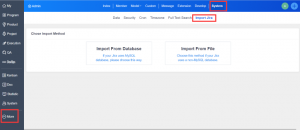
Entrance to the Import Jira:
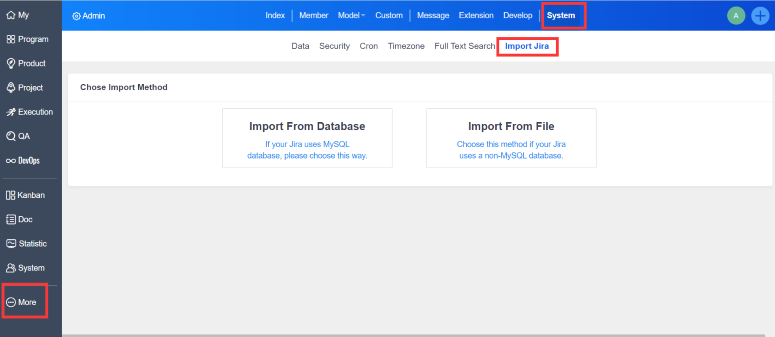
We can see that there are 2 methods to import Jira:
- Import from Database (Supported only for Jira users using MySQL databases)
- Import from File (Supported for all Jira users)
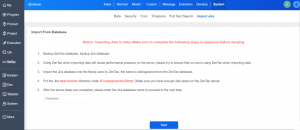
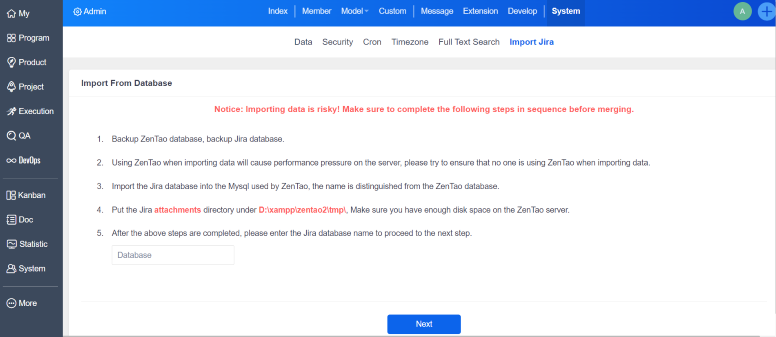
Import from Database:
Please follow the prompts to place the files and attachments in the specified location.
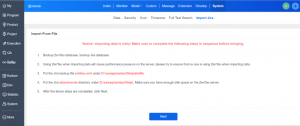
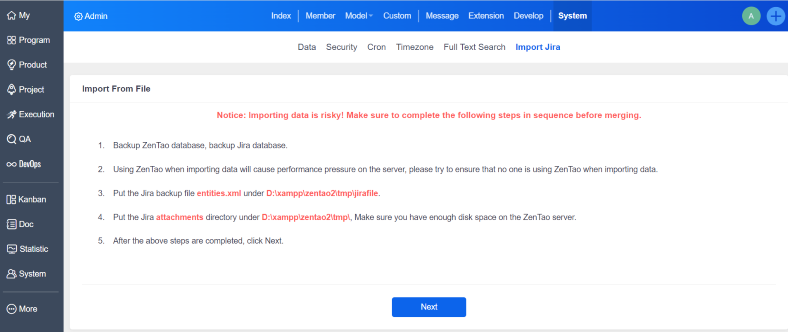
Import from file:
You need to create a jirafile folder in Sanplex's tmp directory, and make sure that the jirafile folder has directory read and write permissions.
2. Map Jira to Sanplex
Because there are risks in the process of importing data, please kindly make a database backup before importing.
We made the import program into multiple executions in order to respond to the large amount of data in Jira. Meanwhile, processing a small amount of data in each execution. The import process consumes a large amount of memory. So please try to ensure that no users access Sanplex during the import process.
In addition to importing Jira data, it's also needed to import Jira attachments, so please place the Jira attachments in the specified location on the server.
Next, import Jira database into the MySQL used by Sanplex, and then enter the name of the Jira database imported into MySQL on the page to proceed to the next step.
If all the above operations go well, click Next to go to the page for mapping Jira to Sanplex. Please follow the prompts to set the map. If you leave the map blank, the data under that type in Jira will not be recognized nor imported into the Sanplex.
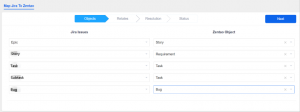
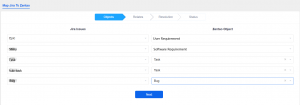
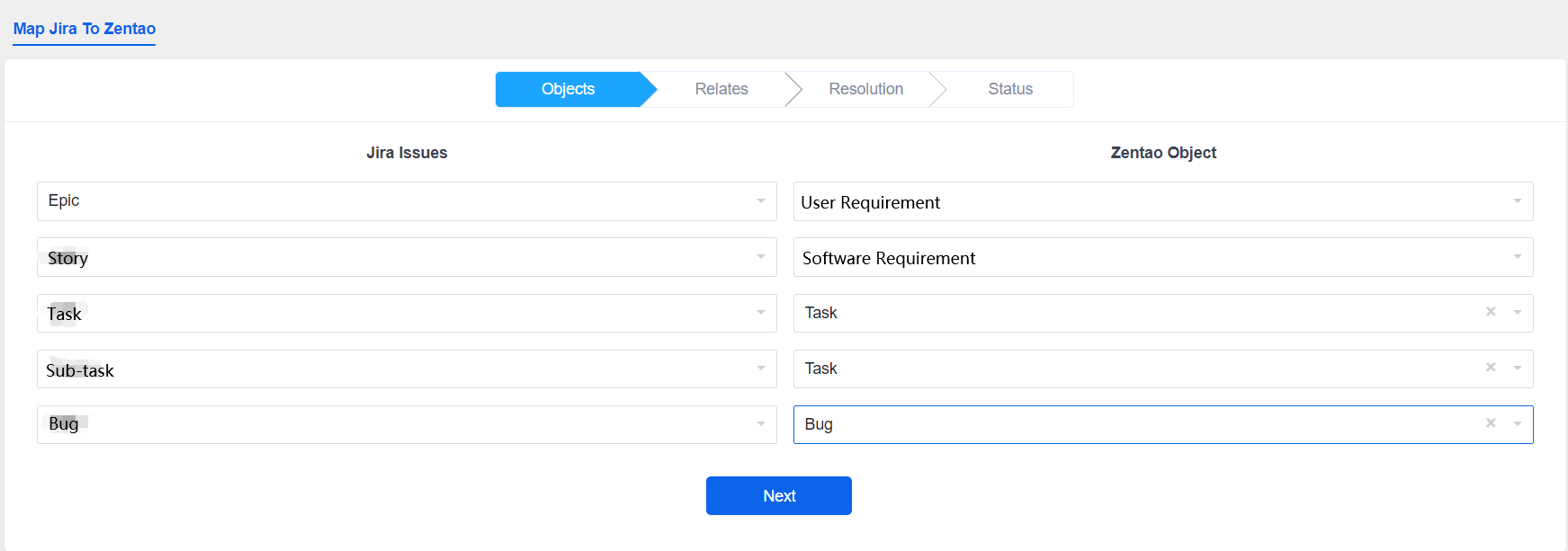
2.1 Jira Issues and Sanplex Objects
Map Jira issues to Sanplex objects. The Sanplex objects include User Story, Software Story, Task, and Bug.
Click Next after finishing the settings.
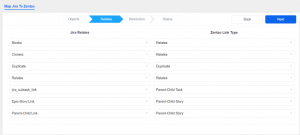
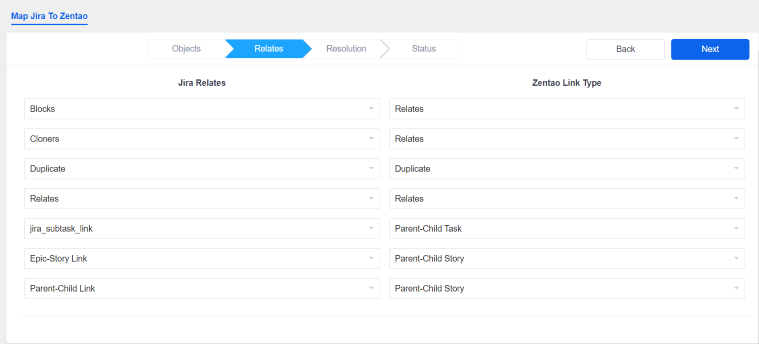
2.2 Jira Relates and Sanplex Link Type
Map Jira Relates to Sanplex Link Type. The Sanplex Link Types include Relates, Duplicate, Parent-Child Task, and Parent-Child Story.
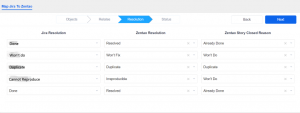
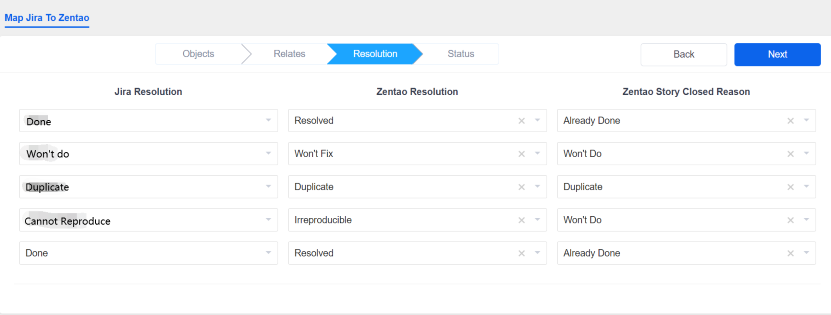
2.3 Jira Resolution and Sanplex Resolution
Map Jira resolution to Sanplex resolution and Sanplex story closed reason.
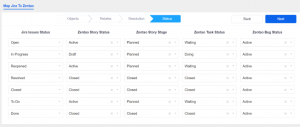
2.4 Jira Status and Sanplex Status
Map Jira status to Sanplex status, Zentao story stage, Zentao task status, and Zentao bug status.
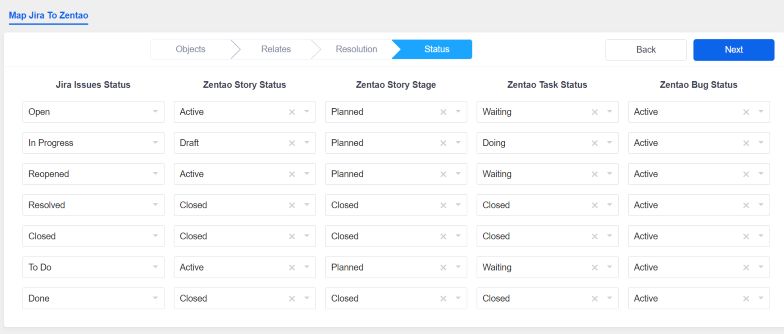
Because Jira issues, relate, resolution, and status are customized, we need to set mapping of relationships before import. Leave it blank if you don't want the data imported to Sanplex. The pages for setting map are similar, so just choose according to your actual situation. After all the mapping is completed, click Next to set Jira user.
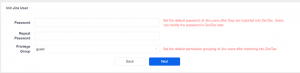
2.5 Jira User
Set the password and privilege group for Jira users.
Because the encryption algorithm for user passwords in Sanplex is different from Jira, we need to set the default passwords and privilege groups for the imported users.
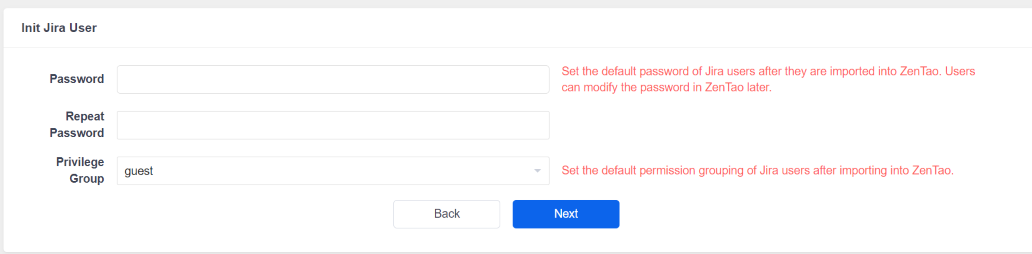
After the password and privilege groups are set, click Next to the final page.
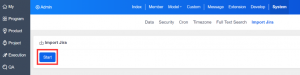
2.6 Start Import
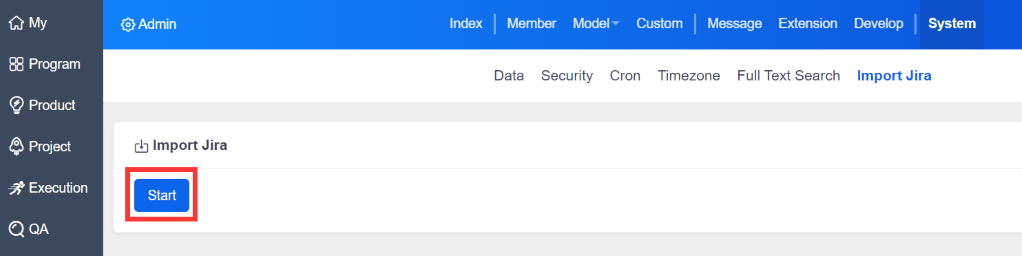
Click Start. The import process will take some time, please wait patiently.
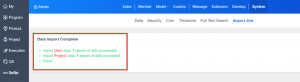
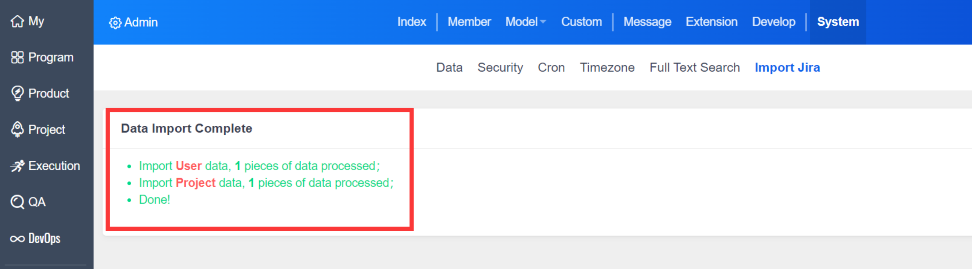
There will be a prompt "Data Import Complete" once all the data is imported successfully.
The second import method "Import from File" is similar to "Import from Database" above, not to be repeated here.
All the best with the data import, and welcome to Sanplex world!