
Kanban
1. Introduction of Sanplex features
1.1. Core Management Framework
1.1.1 Program
1.1.2 Project
1.1.3 Product
1.1.4 Execution
1.1.5 Management Models
1.2. Dashboard
1.2.1 Getting Started with Tutorials
1.2.2 Quick Add
1.2.3 Notification Center
1.2.4 Effort Tracking
1.2.5 Dashboard - Project and Execution
1.2.6 Dashboard - My Work, Contribution, and Recents
1.2.7 Dashboard - Approval
1.2.8 Contacts
1.3. Program
1.3.1 Program List
1.3.2 Program Kanban
1.3.3 Create Program
1.3.4 Create Sub-Programs
1.3.5 Project Charter Management
1.4. Product
1.4.1 Create Product
1.4.2 Manage Modules
1.4.3 Multi-Branch and Multi-Platform Management
1.4.4 Manage Plans
1.4.5 Manage Requirements
1.4.6 Requirement Reviews
1.4.7 Requirement Status and Phase
1.4.8 Create Releases
1.4.9 Track Progress
1.4.10 Business Requirements and Multi-Level Requirements
1.5. Project
1.5.1 Scrum Project
1.5.2. Waterfall Project
1.5.2.1 Manage Project Phases
1.5.2.2 Project Design
1.5.2.3 Project Matrix
1.5.2.4 Project Reports and Earned Value Management
1.5.2.5 Project Baselines
1.5.2.6 Project Change
1.5.3. Kanban Project
1.5.3.1 Set Up Kanban Projects
1.5.3.2 Configure Kanban Boards
1.5.3.3 Use Kanban Boards
1.5.4 Hybrid Agile Project
1.5.5 Hybrid Waterfall Project
1.5.6. Project Settings
1.5.6.1 Project Setup
1.5.6.2 Project Executions
1.5.6.3 Project Requirements
1.5.6.4 Project Builds
1.5.6.5 Project Tests
1.5.6.6 Project Docs
1.5.6.7 Project Releases
1.5.6.8 Project Reports
1.5.6.9 Project Risks
1.5.6.10 Project Issues
1.5.6.11 Project Opportunities
1.5.6.12 Project Deliverables
1.5.6.13 Project Reviews
1.5.6.14 Project Process
1.5.6.15 Deliverables
1.5.6.16 Quality Assurance
1.5.6.17 Project-specific Workflow Management
1.5.7 Project Templates
1.6. Execution
1.6.1 Product Planning and Task Breakdown
1.6.2 Task Assignment and Daily Tracking
1.6.3 Build Creation and Test Requests
1.6.4 Bug Confirmation and Resolution
1.6.5 Execution Kanban Boards
1.7. Testing
1.7.1 Write Test Cases
1.7.2 Execute Test Cases
1.7.3 Bug Submission and Reports
1.7.4 Verify and Close Bugs
1.7.5 Test Case Scenes
1.7.6 Submit a Test Request
1.7.7 Test Report
1.8. Agent
1.8.1 Conversation
1.8.2 Sanplex Agents
1.8.3 General Agents
1.8.4 Skill Management
1.8.5 AI Knowledge Library
1.8.6 Models
1.8.7 ZAI Service Installation
1.8.8 ZAI Service Control Panel
1.8.9 ZAI Configuration
1.9. Kanban
1.9.1 Kanban Spaces
1.9.2 Kanban Regions
1.10. Admin Settings
1.10.1. System Settings
1.10.1.1 Mode
1.10.1.2 Backup
1.10.1.3 Trash
1.10.1.4 License
1.10.1.5 Security
1.10.1.6 Cron Job
1.10.1.7 Time Zone
1.10.1.8 Rebuild Index
1.10.1.9 LDAP
1.10.1.10 Table Engine
1.10.2 Feature Options
1.10.3. Users Management
1.10.3.1 Set Departments and Edit Company Profile
1.10.3.2 Manage Users
1.10.3.3 Set Permisions
1.10.4. Feature Configuration
1.10.4.1 Dashboard
1.10.4.2 Product
1.10.4.3 Project
1.10.4.4 Execution
1.10.4.5 Test
1.10.4.6 Kanban
1.10.4.7 Feedback
1.10.4.8 Tickets
1.10.4.9 User
1.10.4.10 Relations (Standard Version)
1.10.4.11 Meaturement
1.10.5. Agent Configuration
1.11. Asset Library (Premium)
1.11.1 Asset Library Management (Premium)

Kanban Spaces

2025-12-31 22:55:51
Sanplex Content
435
Last edited by Jing WANG on 2026-10-01 13:45:49
Share links
Summary: Learn how to create and manage Kanban spaces in Sanplex, distinguish between Collaboration, Public, and Private Spaces, configure access and team participation, and use space filters to organize Kanban work.

A Kanban Space can be understood as a workspace for organizing related work. Within a space, you can create Kanban boards to display, track, and manage work items for a specific project, team, or work context.

Sanplex provides three types of Kanban spaces: Collaboration Space, Public Space, and Private Space. Each space type supports a different access and collaboration model, allowing users to organize work according to their visibility and collaboration requirements.

  • My Involvement
    Displays the spaces and Kanban boards in which the current user is involved, such as spaces where the user is an owner, team member, or whitelist member.

  • Collaboration Space, Public Space, and Private Space
    Use these tabs to view spaces by type.

  • Show Closed
    Works with the selected space filter to control whether closed spaces are displayed. This option is cleared by default.
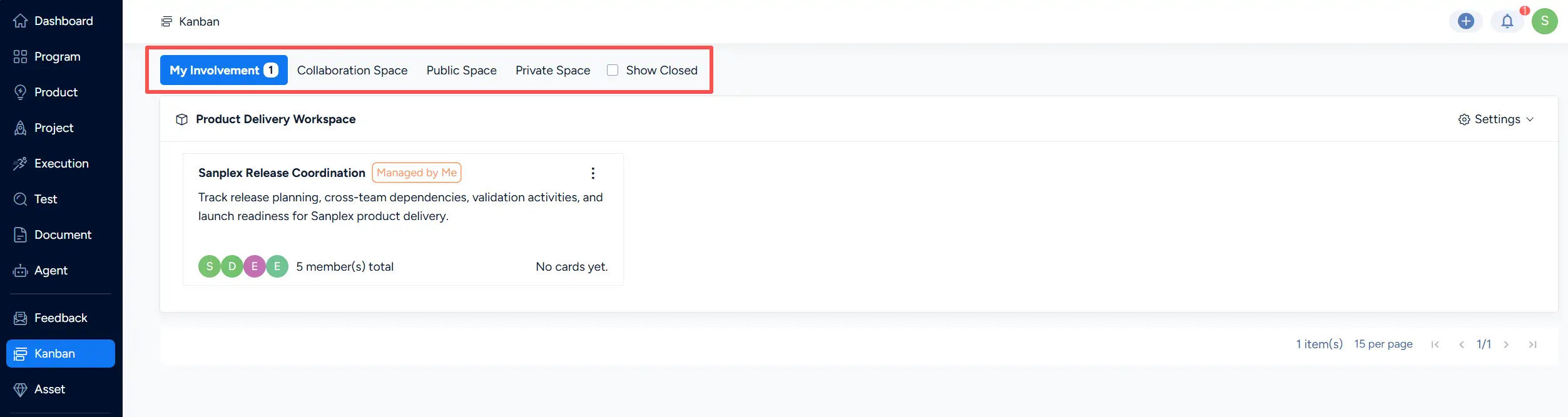
Kanban page showing the My Involvement, Collaboration Space, Public Space, and Private Space tabs, together with the Show Closed option and a Kanban space containing a board.

I. Assign Space Permissions

Before using General Kanban, go to Admin > Users > Permission and configure the required Kanban permissions for the relevant user groups.

Under the Kanban module, select the appropriate permission set and methods based on the responsibilities of each user group.
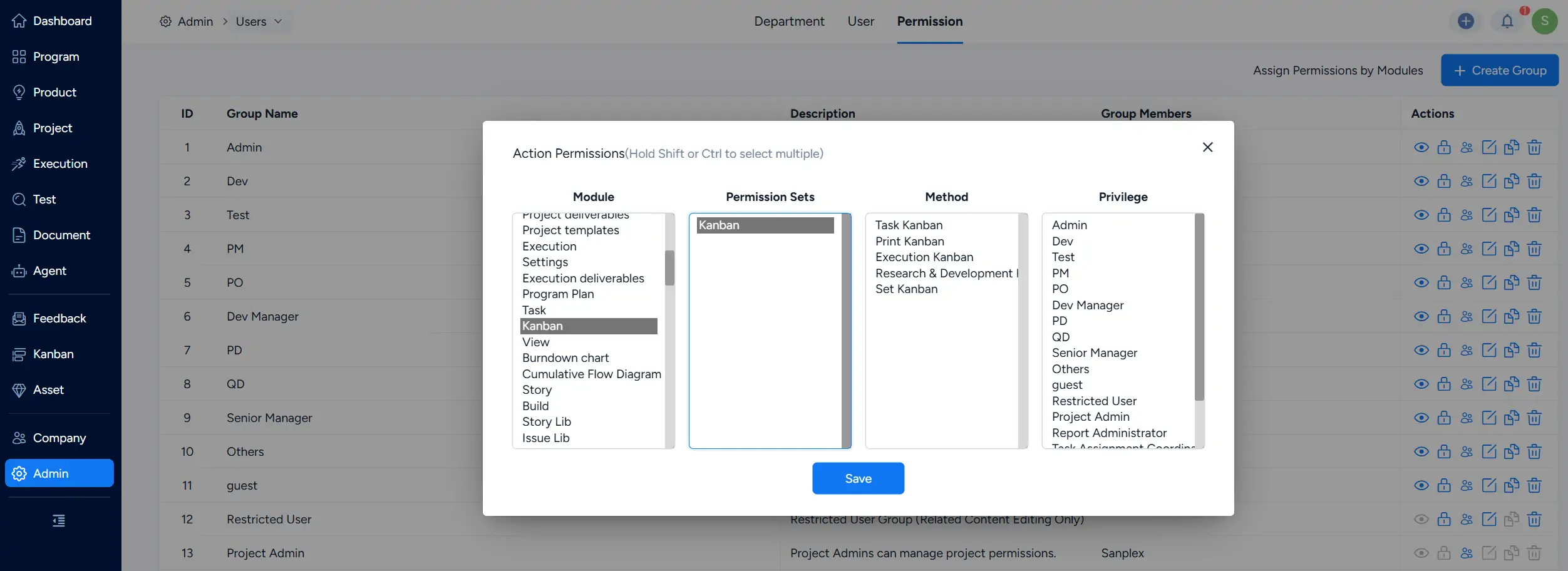
Admin permission dialog showing the Kanban module, Kanban permission set, available Kanban methods, and user privilege groups.

II. Create a Space

You can create a space as a Collaboration Space, Public Space, or Private Space, depending on your collaboration and visibility requirements.

Using a Collaboration Space as an example, go to the Kanban page and click Create Space.
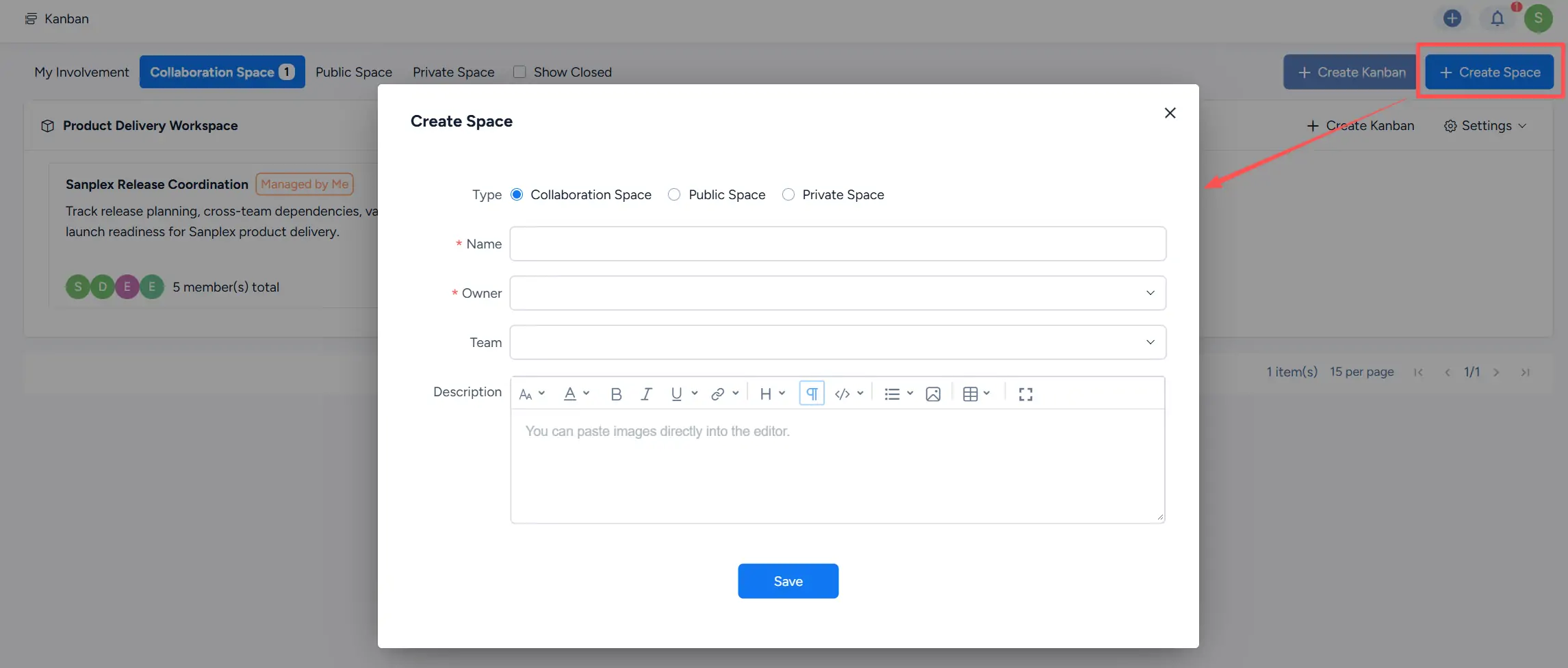
Kanban page with the Create Space button highlighted and the Create Space dialog open with Collaboration Space selected.

You can also create a Kanban space from the global action menu. Click the + button in the upper-right corner and select Space.
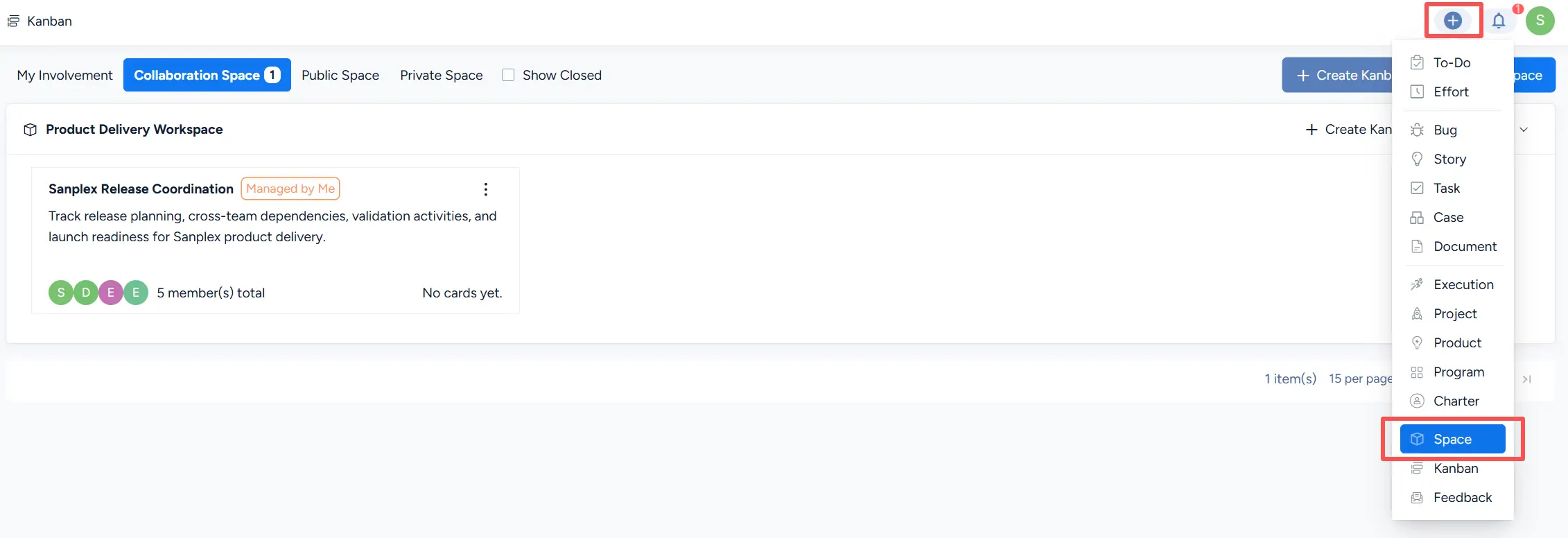
Global action menu opened from the plus button, with Space highlighted as one of the available creation options.

In the Create Space dialog, select the required space type and complete the available settings.

For a Collaboration Space or Public Space, specify the Name, Owner, Team, and Description. For a Private Space, specify the Name, Description, and, when needed, the Whitelist.

Click Save to create the space.
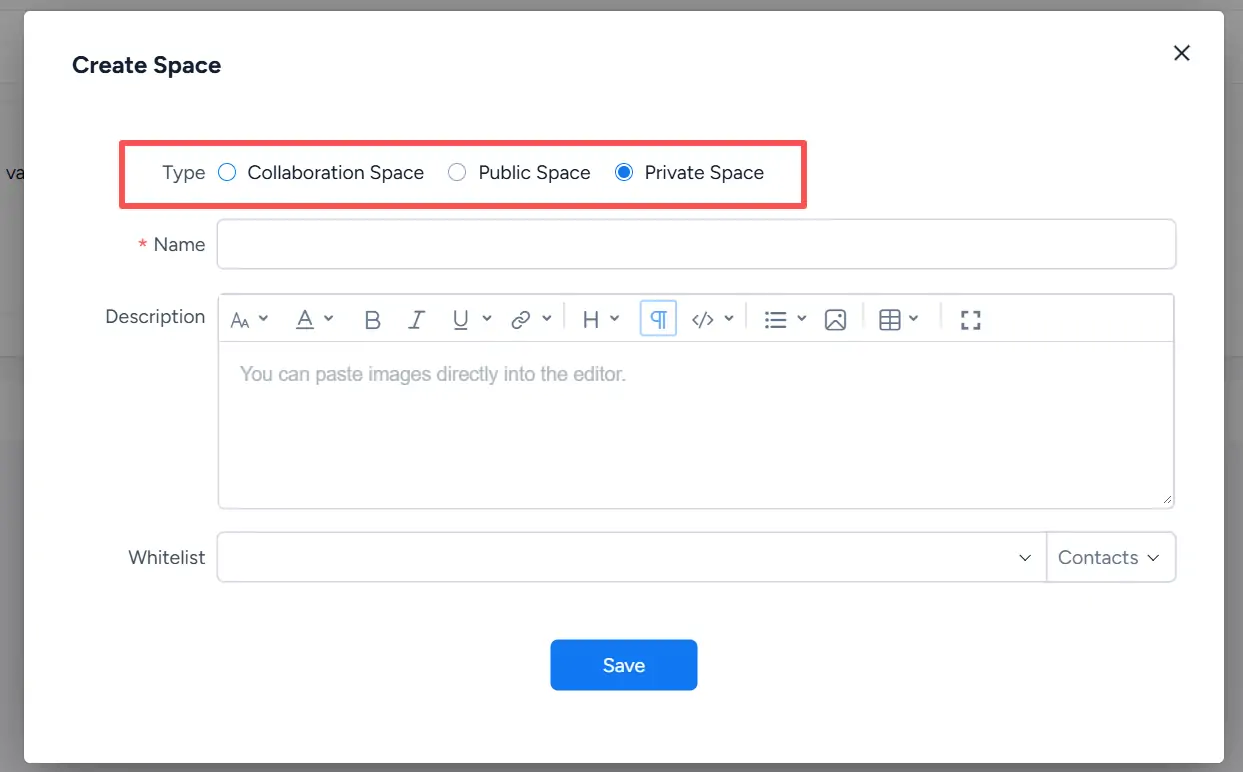
Create Space dialog showing Collaboration Space, Public Space, and Private Space type options, with fields displayed for configuring the selected space type.

1. Collaboration Space

A Collaboration Space is designed for work shared within a defined team.

  • Access is centered on the space Owner and Team members.
  • Kanban boards created within the space support collaboration among the members assigned to that space.
  • When configuring a Kanban board under a Collaboration Space, its owner and team are selected from the users associated with the space.

This model is suitable for coordinated work that should remain within a specific project or team.
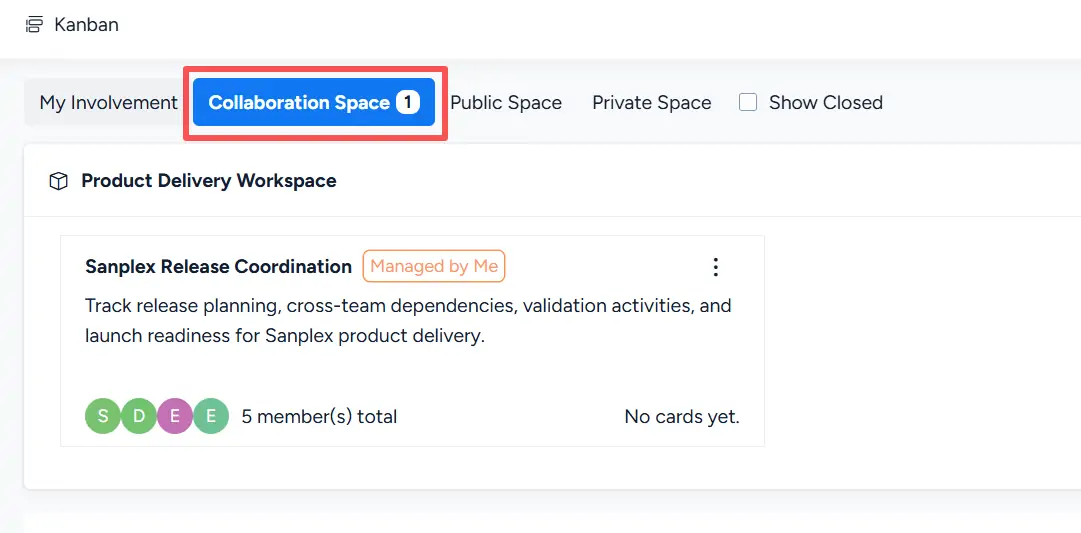
Kanban Collaboration Space tab showing the Product Delivery Workspace and the Sanplex Release Coordination Kanban board with its description and team members.

2. Public Space

A Public Space is suitable for work that benefits from broader visibility across the organization.

  • The space Owner and Team manage the work within the space.
  • Kanban boards under the space use members associated with that space for board ownership and team participation.
  • Other users can view the Kanban boards in the Public Space, providing broader visibility into shared work and progress.
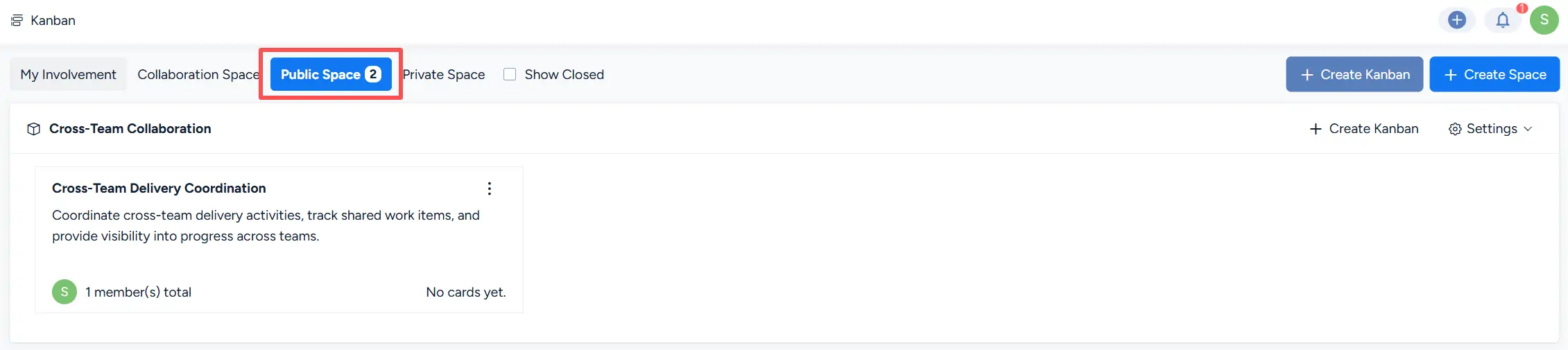
Kanban Public Space tab showing the Cross-Team Collaboration space and the Cross-Team Delivery Coordination Kanban board.

3. Private Space

A Private Space is intended for personal work that requires limited visibility.

The space owner manages the content of the space, while users added to the Whitelist can be granted view access.

This type of space is suitable for personal planning, private work tracking, or information that should be shared only with selected users.
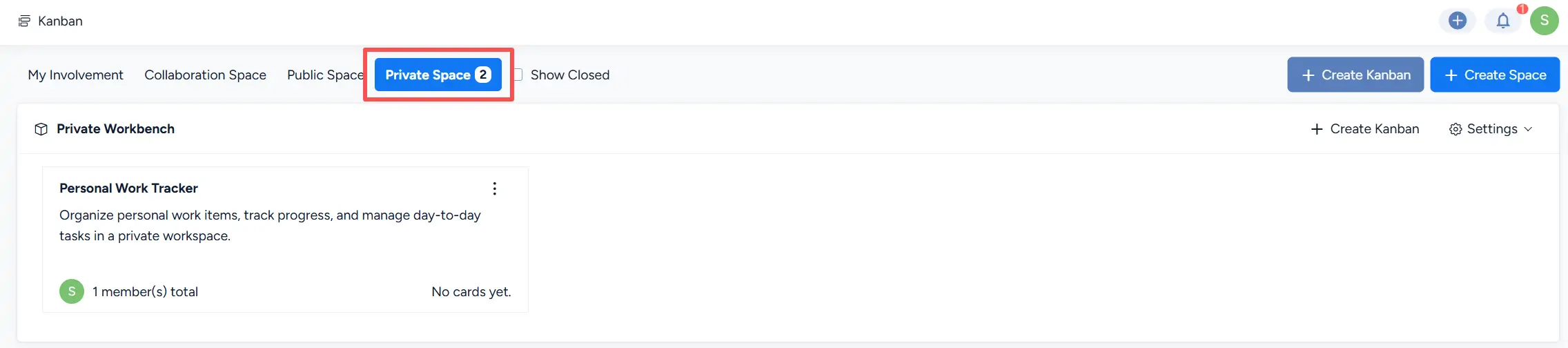
Kanban Private Space tab showing the Private Workbench space and the Personal Work Tracker Kanban board.

Write a Comment
Comment will be posted after it is reviewed.